


- Ghana’s Power Cushion is Too Thin: Jinapor Confronts the High Cost of Keeping the Lights On
Ghana’s electricity system may have enough generating assets to supply consumers under favourable conditions, but it does not have a sufficiently dependable cushion when a plant trips, fuel deliveries are interrupted or equipment is withdrawn for maintenance.
That distinction between total installed capacity and power that can reliably be called upon is at the centre of a warning from Energy and Green Transition Minister John Abdulai Jinapor.
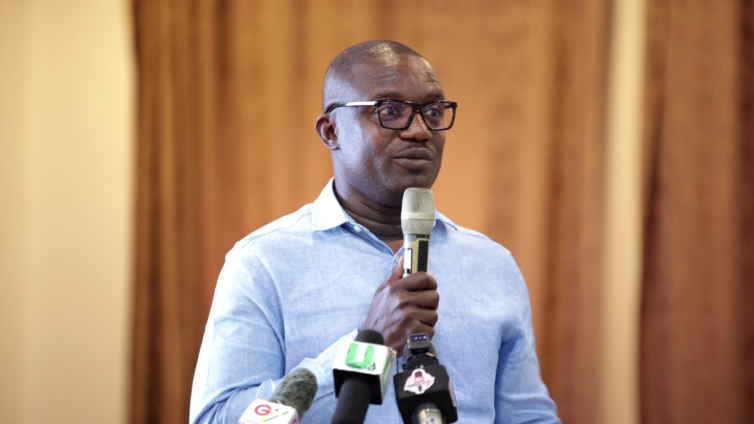
Speaking at the opening of the ministry’s 2026 Annual Review Meeting in Ho, Mr Jinapor acknowledged that Ghana currently lacks sufficient redundancy in its generation system. The weakness, he said, has undermined the country’s ability to guarantee reliable electricity while leaving the government with a difficult choice over whether to procure additional private power.
“The challenge we face, I need to be real, is that as we speak today, we don’t have enough redundancy in the generation sector, and so, as Minister, I would love to procure more power, but I am also careful,” he said.
The minister’s caution exposes the central dilemma confronting Ghana’s power sector. The country needs spare generation to protect households and businesses from outages. Yet procuring new capacity under poorly structured contracts could recreate the costly take-or-pay obligations and excess-capacity payments that have previously burdened the public finances.
Redundancy is therefore not simply a question of adding more megawatts. It is about building a dependable and financially sustainable electricity system in which enough capacity remains available when one or more generating units cannot operate.
A power plant’s nameplate capacity shows what it was designed to produce. It does not necessarily show what the plant can supply at any particular moment.
Generation can become unavailable because of equipment failure, scheduled maintenance, inadequate gas supply, low reservoir levels or transmission constraints. Older plants may also operate below their rated capacity, while some thermal units cannot generate economically without secure access to the appropriate fuel.
What matters for reliability is consequently dependable capacity: the generation that system operators can reasonably expect to be available when demand peaks.
A system with sufficient redundancy can absorb the sudden loss of a large plant without immediately rationing electricity. Ghana’s present system, according to Mr Jinapor’s assessment, does not possess enough of that buffer.
This means a technical failure that should ordinarily be manageable can quickly become a national supply problem. Planned maintenance becomes harder to schedule because removing one unit from service may leave inadequate capacity to satisfy demand. Grid managers may also be forced to run relatively expensive plants because cheaper units are unavailable.
For consumers, the result can be power interruptions, voltage instability and uncertainty. For businesses, particularly manufacturers, miners, cold-chain operators and digital service providers, the cost is larger than the value of the electricity not supplied.
An unexpected outage can halt production, damage equipment, spoil inventory and force companies to operate diesel generators. The lack of redundancy therefore functions as an economy-wide risk premium, raising the cost of operating in Ghana even when electricity tariffs themselves remain unchanged.
The government’s immediate response is to restore idle generating plants belonging to the Volta River Authority and improve the utilisation of the Akosombo Hydroelectric Dam.
Mr Jinapor said the objective was to return dormant VRA assets to service, increase dependable capacity and reduce reliance on more expensive private generation.
“And I am sure that even what we are doing, especially working with VRA to bring all their idle plants, we will be able to sail through, although it will come with challenges, but eventually when we have all these plants come on, we can reliably supply power at an affordable cost,” he said.
This approach has a strong economic logic. Restoring an existing asset can be cheaper and faster than procuring an entirely new plant, particularly where the necessary land, grid connections and supporting infrastructure are already available.
It could also strengthen VRA’s role in the generation market and provide the state with greater influence over the cost and availability of electricity.
But idle plants do not become dependable merely because they are recommissioned. Their reliability will depend on the quality of rehabilitation, access to replacement parts, maintenance funding and long-term fuel arrangements.
The government must therefore establish whether each dormant unit is economically recoverable. Spending heavily on obsolete or inefficient machinery could create the appearance of additional capacity without delivering a durable reserve margin.
A transparent assessment should compare the full cost of rehabilitating each unit with the cost of procuring flexible new generation, storage or demand-management capacity. The cheapest project on paper is not necessarily the asset offering the lowest lifetime cost.
Mr Jinapor’s reluctance to rush into new power-purchase agreements is equally significant.
Ghana’s earlier response to electricity shortages demonstrated how emergency procurement can solve an immediate supply crisis while producing long-term financial liabilities. When demand forecasts, fuel assumptions or currency risks prove inaccurate, government may still have to pay for capacity it does not use.
“If you love this country, you will treat this country as if it were your company; you will be guided,” the minister said, explaining that decisions on additional procurement had to protect the country’s financial interests.
The challenge is to avoid moving from insufficient redundancy to costly surplus capacity.
New procurement should therefore be competitive, transparent and tied to a regularly updated demand-and-supply plan. Contracts should allocate fuel, currency and demand risks to the parties best able to manage them, rather than automatically transferring those risks to the state and ultimately to electricity consumers.
Ghana also needs the right kind of redundancy. A large baseload plant that takes considerable time to start may not solve a short-term balancing problem. The system requires flexible resources that can respond quickly when another generator trips or when evening demand rises.
Those resources may include efficient gas-fired units, battery storage, upgraded hydroelectric facilities, demand-response arrangements and stronger regional electricity trading. Solar generation can reduce daytime fuel consumption, but its contribution to system security will be greater when paired with storage, flexible generation and network investment.
Mr Jinapor also disclosed that the government was working to mobilise US$500 million to strengthen Ghana’s transmission infrastructure through the Ghana Grid Company.
“GRIDCo is also important because we need to invest there. The Finance Minister is working with us to raise 500 million dollars to invest in the transmission system to strengthen that sector,” he said.
This investment is essential because new generation cannot secure supply if electricity cannot be transmitted from where it is produced to where it is needed.
Congestion, obsolete equipment and insufficient transmission capacity can leave one part of the country short of electricity even when generation is available elsewhere. A fragile network can also turn a single fault into a wider disruption.
The minister said supply stability had already improved following the procurement and installation of transformers under a wider programme targeting 10,000 units. Yet transformers at the distribution level, major transmission lines and substations must be considered as parts of the same reliability chain.
A credible redundancy strategy must consequently cover generation, fuel, transmission and distribution. Investing in one segment while neglecting another merely shifts the point of failure.
Ghana’s thermal generation fleet is heavily influenced by the availability and cost of fuel. When domestic gas is insufficient or its delivery is interrupted, operators may have to use more expensive liquid fuels or reduce generation.
That makes gas-processing infrastructure, pipeline reliability and payment discipline as important as power-plant construction.
The financial chain is equally important. If electricity distributors fail to collect enough revenue or do not transfer collections promptly generators struggle to pay fuel suppliers and undertake maintenance. Capacity that technically exists can then become commercially or operationally unavailable.
The government’s payment of US$1.47 billion in 2025 to clear legacy energy-sector obligations, including amounts owed to independent power producers and gas suppliers, provided breathing space. It also helped restore the World Bank-supported guarantee for gas supplies from the Offshore Cape Three Points project.
Debt clearance, however, cannot substitute for permanent reform. If tariffs, collections, losses and payment obligations remain misaligned, arrears will accumulate again.
The most valuable power-sector reform may therefore be one that prevents the next debt stock rather than merely settling the previous one.
Improving output from Akosombo could reduce the immediate need for expensive thermal generation, but hydroelectric power must be managed carefully.
Water in the reservoir is both an energy resource and a strategic reserve. Maximising generation in the short term without regard to inflows and long-term reservoir management could weaken security later, particularly as climate variability makes hydrological conditions less predictable.
“Full capacity” should therefore not mean running every turbine continuously regardless of water conditions. It should mean maintaining the dam and associated units so their dependable contribution is available within a technically and environmentally sustainable operating plan.
Ghana needs a diversified portfolio in which hydro, gas, solar, storage and eventually other technologies complement one another. Dependence on any single fuel, plant or river system recreates the same vulnerability that redundancy is supposed to resolve.
The warning arrives as Ghana seeks to accelerate industrialisation, mineral processing, digital infrastructure and the proposed 24-hour economy. Each ambition assumes reliable electricity.
Power demand is also likely to rise as households acquire more appliances, businesses expand and economic activity becomes increasingly electrified. The reserve margin that appears adequate today may become insufficient within a few years if investment does not keep pace.
This is why the government must look beyond extinguishing the current operational fires. It needs a rolling generation and transmission plan that anticipates demand, retires inefficient assets and procures replacement capacity before shortages become emergencies.
The plan should publish, at a minimum, installed capacity, dependable capacity, peak demand, available reserve margins, plant-outage schedules and fuel-supply assumptions. Without those data, the public cannot judge how serious the redundancy gap is or whether proposed investments offer value for money.
Mr Jinapor’s admission is valuable because it moves the power debate beyond the politically convenient question of whether Ghana has “enough megawatts.” It acknowledges that electricity security depends on what the system can deliver during stress, not what generating plants can theoretically produce.
The correct response is neither indiscriminate procurement nor complacency about headline capacity. Ghana must restore viable public assets, secure fuel, strengthen the grid and procure new flexible capacity only where transparent planning demonstrates a genuine need.
Redundancy costs money. But a system with no room for failure imposes a heavier bill—through disrupted production, emergency fuel purchases, damaged investor confidence and the recurring economic shadow of dumsor.

