

- Ghana’s rate-cut cycle nears a new test as cheaper money edges closer for households and firms
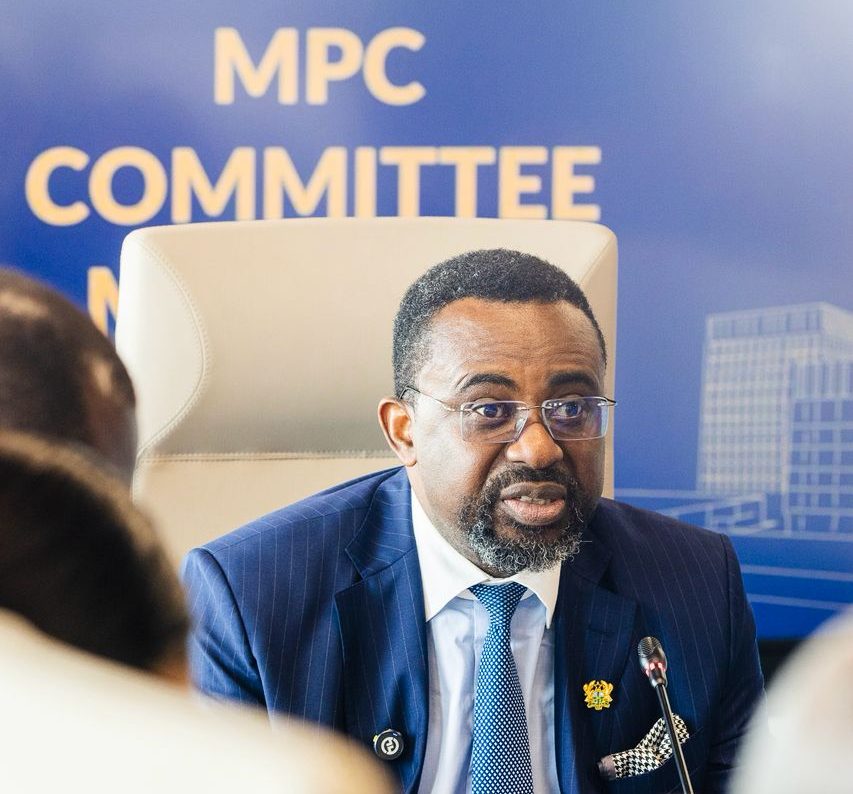
Ghana’s interest-rate story has moved with unusual speed. What began in 2025 as a cautious turn away from emergency-tight monetary policy has, by early 2026, become a full repricing of the cost of money across the economy. The Bank of Ghana’s latest data show a sharp fall in policy rates, interbank funding costs, Treasury yields and commercial lending benchmarks, setting the stage for today’s decision by the Monetary Policy Committee at the end of its 129th meeting. While some analysts have projected a 150 basis-point cut, the larger question is no longer whether rates are falling. It is how much further they can come down without unsettling the credibility of Ghana’s disinflation gains.
The starting point is striking. Ghana’s Monetary Policy Rate stood at 15.5 per cent in February 2026, unchanged from January but dramatically below the 27 per cent level of February 2025 and the 28 per cent peak reached in March through June last year. The interbank weighted average rate has also fallen sharply, dropping to 12.58 per cent in February 2026 from 27.04 per cent a year earlier.
That is not just a central-bank story. It is already feeding through the broader pricing structure of credit. The 91-day Treasury bill rate fell to 8.96 per cent in February 2026, down from 26.93 per cent a year earlier. The 182-day bill declined to 10.75 per cent from 27.69 per cent, while the 364-day bill dropped to 11.53 per cent from 28.90 per cent. At the retail end of the market, the average lending rate charged by banks eased to 19.17 per cent in February, from 30.12 per cent in February 2025. The Ghana Reference Rate, which helps guide loan pricing, also fell to 14.58 per cent from 29.96 per cent a year earlier.
Taken together, those numbers point to one conclusion: the price of money in Ghana has fallen fast, and more broadly, than at any point since the country entered its inflation and debt crisis. That shift has been made possible by a collapse in inflation. Headline inflation slowed to 3.3 per cent in February 2026, from 3.8 per cent in January, while food inflation eased to 2.4 per cent and non-food inflation to 4.0 per cent. For a central bank that spent much of the past two years fighting to restore price stability, those readings radically change the policy calculus.
They also explain why markets now see room for another cut today. The Bank of Ghana has already reduced the policy rate aggressively over the past three meetings: by 300 basis points in July 2025, 350 basis points in September 2025, and 350 basis points in November 2025, bringing the benchmark to 18 per cent before a further move to 15.5 per cent by January 2026 as reflected in the central bank’s March data pack. Media reports suggested ahead of the November 2025 decision that officials were increasingly focused on the risk that rapidly falling inflation could leave real borrowing costs too high for an economy shifting from recovery to expansion.
That leaves today’s MPC meeting with a delicate balancing act. A fresh cut would reinforce the view that Ghana is moving from stabilisation into support for growth. For consumers, that could mean gradually lower borrowing costs on new loans, more favourable pricing for mortgages and personal credit, and slightly easier repayment conditions over time. For businesses, especially those reliant on working capital, trade finance and bank credit, lower rates can reduce financing costs, improve cash flow and make expansion decisions less punishing. Small and medium-sized enterprises, which tend to be the most sensitive to high borrowing costs, would stand to benefit most if cheaper policy money is transmitted more fully through commercial banks.
“The real question is no longer whether rates will fall. It is whether borrowers will feel the drop fast enough to matter.”
Yet monetary easing does not move through the economy evenly. Deposit rates remain low and sticky. Savings deposits were unchanged at 5.0 per cent in February 2026, while 3-month and 6-month time deposits held at 10.5 per cent. That means savers are not seeing the same scale of adjustment as borrowers, even as the rate structure falls across the market. It also means banks may continue to reprice loans more slowly than borrowers hope, especially if lenders remain cautious about asset quality and sector-specific risks.
There is also the question of how much easing is too much. Ghana’s inflation path is benign, but not risk-free. The same BoG data pack shows Brent crude at US$91.4 per barrel in March 2026, up sharply from US$69.4 in February, while the US Dollar Index has firmed and the broader emerging-market currency gauge has weakened. That creates a less forgiving backdrop for a central bank that must protect both disinflation and currency stability. An overly aggressive cut today could raise questions about whether policy is getting ahead of itself just as imported risks begin to re-emerge.
Even so, the direction of travel is unmistakable. Ghana’s rate regime is no longer crisis-priced. It is being reset. If the MPC cuts again today, the signal will be clear: policymakers believe inflation has fallen far enough, and macro conditions improved sufficiently, to support cheaper credit without endangering stability. That would be welcome news for households, entrepreneurs and companies that have spent years operating under punishing borrowing costs. But the practical meaning will depend on transmission. A policy-rate cut only becomes economically meaningful when it turns into cheaper bank loans, more affordable business financing and a visible improvement in private-sector activity.
That is the real test of today’s decision.

