


- Ghana’s Renewable Energy Targets Could Create 353,000 Jobs, But Access Remains a Hurdle
Ghana’s updated Renewable Energy Master Plan will need more than US$10.8 billion in investment over five years, with the potential to create more than 353,000 jobs.
But the plan’s success will depend partly on whether young Ghanaian businesses can win contracts, obtain finance and navigate licensing requirements, the Strategic Youth Network for Development (SYND Ghana) has warned.
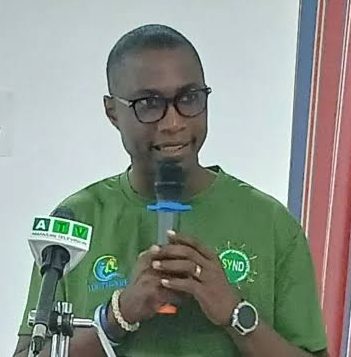
Addressing a press conference at SYND Ghana’s office on Monday, Executive Coordinator Chibeze Ezekiel said the 2026–2030 plan could not be delivered on time without young entrepreneurs. They were ready to contribute, he said, if the programme “opens its doors to them”.
The plan sets targets that include 440 mini-grids, 1.1 million solar lanterns, 125,000 solar street and community lights, solar irrigation across 10,000 hectares, 100 solar crop dryers and 4.5 million improved cookstoves.
These ambitions sit within Ghana’s wider climate and energy commitments, including its Nationally Determined Contributions, Energy Transition and Investment Plan and National Energy Transition Framework.
For SYND, the issue is not only how much investment the plan attracts, but who receives the work and builds the capacity to deliver it. Ghana Statistical Service figures cited in the statement show that 36.9% of the population is aged 15 to 35, while youth unemployment stands at 21.9%, against a national rate of 12.8%.
The previous plan offers both a warning and a guide. Between 2019 and 2025, utility-scale solar reached 183.1 megawatt-peak of a 347.5 megawatt-peak target, or 53%. No utility-scale wind capacity was delivered against a 275 megawatt-peak target, and only eight of 200 planned mini-grids were built.
SYND also pointed to institutional weaknesses: the Renewable Energy Fund was established but never made operational; the Renewable Energy Authority was not set up; and the Renewable Energy Master Plan Coordinating Unit was never created.
The requirement under Legislative Instrument 2354 for at least 60% of goods and services to be procured locally was also not met, the statement said.
Yet the review found stronger results where local businesses and supply chains were involved. Distributed solar reached 86 megawatt-peak against a target of 100 megawatt-peak. Improved domestic cookstoves exceeded their target, with more than 5.3 million delivered against 1.8 million planned. The plan credited local supply chains and carbon finance for that performance.
The contrast underpins SYND’s argument that local enterprise participation should be part of the delivery model from the outset. Distributed energy, off-grid solar, productive uses of electricity and clean cooking are areas where small and youth-led firms already operate.
SYND’s Young Green Entrepreneurs programme has incubated businesses since 2022. Its first cohort included about 40 start-ups, and more than 110 entrepreneurs have taken part across three cohorts.
The initiative now continues through the Young Green and Sustainability Entrepreneurs Consortium, which brings together businesses, public agencies, financiers and development partners.
At a SYND workshop, 18 youth-led energy businesses developed plans linked to the new master plan. Their proposals covered 16 of its 26 technology areas, including solar home systems, mini-grids, crop dryers, irrigation, water pumping, biogas, electric vehicle charging and battery storage.
Among the proposals, three firms plan to deliver 24 solar crop dryers against the national target of 100. Three firms identified capacity to provide 11 community water-pumping systems against a target of 20, while two firms proposed 15 agricultural and industrial biogas plants against a target of 20.
Two businesses proposed four mini-grids, and four firms outlined plans for more than 10 megawatt-peak of utility-scale, distributed and home solar photovoltaic systems.
Ezekiel stressed that these are business plans, not completed projects. Still, he said, they show that young firms understand the plan and can identify where they might contribute.
The proposals are notable in light of the previous cycle: only eight mini-grids were built, and 70 of 400 planned solar crop dryers were delivered. Young firms’ plans cover four mini-grids and 24 dryers under the new targets.
The workshop also revealed a gap. None of the 18 firms presented plans for improved cookstoves, even though the new plan targets 4.5 million and the previous cycle’s cookstove programme was its strongest result.
SYND described clean cooking as a large, labour-intensive market that could create opportunities for young businesses if training, product testing, certification and finance are accessible.
The group framed support for youth-led companies as an investment in employment and domestic capability. Based on the plan’s estimates, each US$1 million invested in renewable energy creates about 33 jobs.
SYND argued that firms winning contracts could generate formal employment, expand tax and social security contributions, and retain more spending in Ghana through local procurement. Replacing diesel equipment with solar-powered alternatives could also reduce fuel use and foreign-exchange demand over time.
But the statement said several barriers prevent young firms from competing. Research commissioned by SYND identified financing that does not match businesses’ stages of growth, gaps in technical and business skills, and fragmented policies and institutions. Entrepreneurs may also be unaware of incentives intended to support them, including a five-year tax holiday for youth-led businesses.
Ezekiel cited Takoradi-based FF Electricals and Engineering as an example of both the opportunity and the difficulty. The company converted a diesel-powered thresher by replacing its engine with a 20-horsepower electric motor powered by a 34-kilowatt off-grid solar system. It has served 200 customers across 20 districts.
Yet when FF Electricals bid to install a 250-kilowatt solar system, it was expected to pre-finance the first phase and wait at least 90 days after completion for payment.
The tender also required insurance cover of at least US$1 million, Energy Commission certification and tax-clearance documents. The firm must renew its installer certification even in years when it wins no contracts.
“These are not problems of skill or ambition,” the statement said. “They are rules written for large companies and applied to small ones.” SYND called for public contracts to have requirements proportionate to their size and risk, with mobilisation advances or payment within 30 days of completed phases.
Its recommendations include operationalising the Renewable Energy Fund in the 2027 budget with a dedicated window for youth-led and small businesses; breaking large targets into smaller procurement lots; reserving at least 10% of relevant lots or subcontracts for qualified local youth-led firms; and creating a dedicated clean-cooking programme.
SYND also called for one-stop renewable energy facilitation desks in 2027, a single published checklist for small businesses, reduced certification costs for smaller firms and public reporting on jobs and contracts by age and sex.
It wants youth enterprise representatives included in the Coordinating Unit and a successor to the National Green Jobs Strategy aligned with the renewable energy plan.
Through its consortium, SYND said it would present the firms’ plans to the Energy Ministry and Energy Commission, help members with registration and pre-qualification, connect entrepreneurs with buyers and financiers, and track results such as jobs and installed capacity.
The plan’s scale is clear; the route from targets to contracts is less certain. Whether young firms can help deliver Ghana’s energy transition will depend on turning stated targets into finance, accessible procurement and institutions that work. SYND’s proposals set out what it believes must change for the projected jobs and investment to translate into opportunities for local businesses.

