

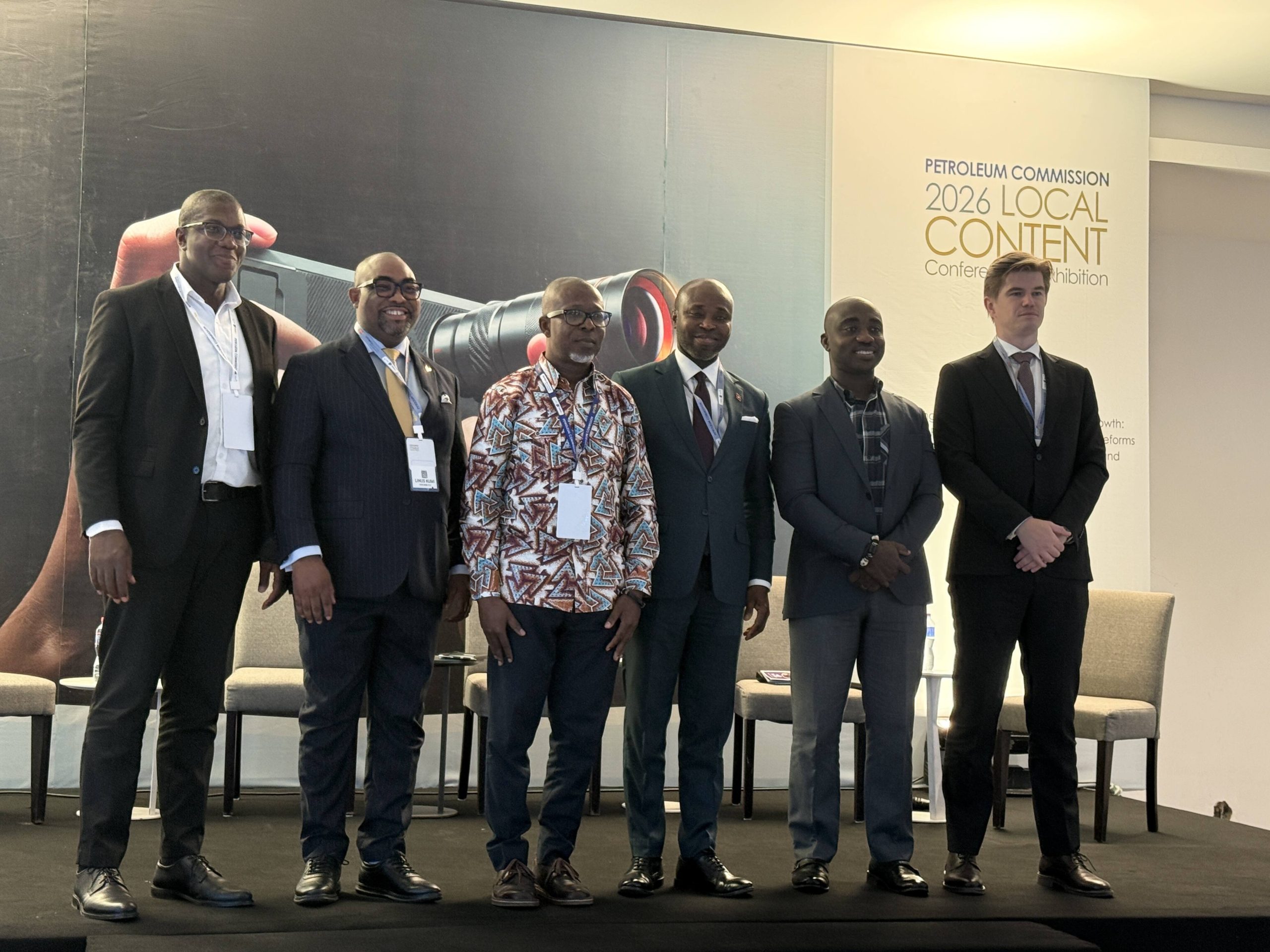

- UBA Ghana Pushes Tailored Funding Models to Strengthen Local Ownership in Petroleum Industry
Indigenous Ghanaian companies seeking greater participation in the country’s oil and gas industry continue to face substantial financing constraints, with limited access to capital preventing many businesses from translating petroleum licences and commercial contracts into sustainable operations, UBA Ghana has cautioned.
The bank has called for a more differentiated approach to financing domestic petroleum companies, arguing that conventional bank lending alone cannot adequately address the risks and capital requirements associated with exploration, production and oilfield services.
UBA Ghana Executive Director Daniel Sarpong made the call during the 2026 Local Content Conference and Exhibition (LCCE), organised by the Petroleum Commission in Takoradi, where discussions centred on strengthening indigenous participation and improving the competitiveness of Ghana’s upstream petroleum industry.
Speaking on the topic, Funding Models for Independents and Domestic Exploration Players in Ghana’s Oil and Gas Sector, Mr Sarpong identified inadequate access to financing as one of the principal obstacles confronting local operators.
He explained that while several indigenous businesses have secured regulatory permits and commercial contracts, their ability to undertake exploration, acquire equipment and expand operational capacity remains constrained by insufficient financial resources.
The challenge is particularly significant in an industry characterised by substantial initial investment, uncertain exploration outcomes and extended periods before commercial revenues are generated.
For Ghana, the financing gap raises wider questions about whether policies designed to increase local participation can deliver meaningful economic ownership without corresponding improvements in access to capital.
Mr Sarpong argued that financing arrangements must reflect the distinct commercial characteristics and risk profiles of different stages of the petroleum value chain.
Exploration, he explained, requires investment before the existence of commercially recoverable resources can be established.
At this stage, companies face geological uncertainty, potentially substantial drilling expenses and the possibility that exploration activities may not result in commercially viable discoveries.
These characteristics make conventional debt financing particularly difficult because lenders generally require evidence of predictable future cash flows and a credible repayment capacity.
Consequently, Mr Sarpong advocated greater reliance on equity financing and strategic partnerships for exploration-stage projects.
Such arrangements allow investors and project sponsors to share commercial risks while providing the capital needed to undertake exploration activities.
Unlike conventional loans, equity investment does not impose fixed repayment obligations irrespective of whether a project generates sufficient revenue.
However, equity financing involves ownership dilution and requires investors willing to accept the possibility of losing their investment.
The appropriate financing structure therefore depends on the project’s geological prospects, development stage, expected returns and risk allocation.
Once petroleum resources are established and commercial production becomes more predictable, debt financing can become a more viable option.
At that stage, lenders may be better positioned to assess projected revenues, operating expenses and the borrower’s capacity to meet repayment obligations.
The distinction is important because applying conventional bank lending requirements to early-stage exploration can exclude indigenous firms from opportunities that may be commercially attractive but are not yet capable of generating reliable income.
Beyond exploration, Mr Sarpong identified immediate opportunities for commercial banks to finance Ghanaian businesses already participating in the petroleum services sector.
These include contract financing, receivables financing and asset financing.
Contract financing can support companies that have secured credible supply or service agreements but lack sufficient working capital to execute them.
Receivables financing can help businesses obtain liquidity against payments expected from completed or certified work, reducing the financial pressure associated with delayed settlement.
Asset financing can enable local companies to acquire equipment and machinery required to deliver technically demanding petroleum contracts.
Together, these instruments could help address a persistent challenge facing indigenous service providers: the gap between securing business opportunities and possessing the financial capacity to execute them.
For many Ghanaian companies, winning a contract represents only the beginning of a substantial financing requirement.
Businesses may need to mobilise equipment, recruit specialist personnel, secure insurance and performance guarantees, and fund operations before receiving payment.
Without adequate working capital, even commercially viable contracts can become difficult to execute.
The financing challenge therefore extends beyond ownership of petroleum licences to the operational capacity of businesses throughout the supply chain.
The Petroleum Commission’s local content framework seeks to expand opportunities for indigenous companies, including through regulatory measures that reserve specified activities for Ghanaian businesses.
However, regulatory preferences alone cannot guarantee that local firms possess the technical and financial resources needed to compete effectively.
The Commission has recognised the importance of strengthening indigenous capacity, particularly through partnerships and measures designed to expand access to higher-value petroleum contracts.
The scale of the opportunity is illustrated by recent developments in the sector.
Figures presented during the 2026 conference showed that the value of services provided by indigenous Ghanaian companies increased from approximately US$227.50 million in 2024 to US$451.80 million in 2025.
That represents growth of approximately 98.59%, highlighting the expanding participation of local businesses in petroleum-related activities.
However, increasing contract values do not automatically translate into stronger profitability, sustainable business growth or greater ownership of producing petroleum assets.
Much depends on whether companies can retain earnings, develop technical capabilities and accumulate sufficient capital to compete for more complex assignments.
Ghana News Agency
Mr Sarpong’s intervention is particularly relevant to ongoing efforts to establish a more effective Local Content Fund for Ghana’s upstream petroleum sector.
The fund is provided for under Section 64 of the Petroleum (Exploration and Production) Act, 2016 (Act 919), with the objective of providing financial resources to citizens and indigenous Ghanaian companies engaged in petroleum activities.
During the 2026 Local Content Conference, the Petroleum Commission launched guidelines intended to support implementation of the fund.
The development provides a potential framework for strengthening financial assistance to indigenous enterprises, although the issuance of guidelines does not, by itself, establish that financing has been disbursed to qualifying businesses.
UBA Ghana’s position suggests that commercial banks could play an important role alongside the proposed financing arrangements rather than depending entirely on public-sector intervention.
A combination of private financing, targeted risk-sharing mechanisms and stronger institutional support could improve access to capital for businesses operating at different stages of the petroleum value chain.
Nevertheless, the effectiveness of any financing programme will depend on transparent eligibility requirements, sound credit assessment and appropriate safeguards against excessive lending risks.
A poorly structured financing intervention could expose banks, public institutions and indigenous businesses to unsustainable obligations.
The objective should therefore be to support viable enterprises rather than simply increase the amount of credit extended to the sector.
The wider economic question is whether Ghana’s local content policy can move beyond increasing the number of indigenous contractors towards creating financially strong domestic enterprises capable of undertaking higher-value petroleum activities.
Meaningful participation requires more than regulatory access to contracts.
It depends on the ability of local businesses to mobilise capital, acquire technology, develop specialist skills and meet the demanding operational standards of the international petroleum industry.
Improving financing access could also strengthen local procurement, employment and retention of economic value within Ghana.
However, these benefits will depend on whether indigenous companies build commercially sustainable operations and progressively expand their capabilities.
UBA Ghana’s participation in the conference reflects its stated commitment to supporting local enterprises through financial solutions suited to their operational requirements.
For policymakers, the challenge will be ensuring that local content regulations, financial institutions and industry development programmes operate within a coherent framework.
For banks, it will involve identifying commercially viable opportunities while managing the distinctive risks of petroleum financing.
And for indigenous companies, the priority will be building the governance, technical capacity and financial credibility required to attract sustainable investment.
Ghana has made progress in expanding local participation in petroleum services. The next stage will require greater attention to financing structures that enable domestic businesses not merely to secure contracts but to execute them profitably and participate in increasingly sophisticated segments of the industry.
The central message from UBA Ghana is that the future of indigenous participation will depend as much on access to appropriately structured capital as on the regulatory opportunities created through local content policies.

