

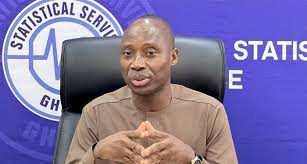

- Ghana’s Trade Surplus Triples to GH¢148.30bn as Gold Exports Surge
Ghana’s merchandise trade surplus more than tripled to GH¢148.30 billion in 2025 as gold, cocoa and petroleum-related exports lifted total trade to GH¢654.70 billion, according to the Ghana Statistical Service.
The country exported goods valued at GH¢401.50 billion during the year, compared with imports of GH¢253.20 billion. Total trade increased by 20.10% from GH¢545.10 billion in 2024, while the surplus rose from GH¢44.70 billion.
The results represent a substantial improvement in Ghana’s external trade position and indicate that export earnings expanded considerably faster than imports.
Exports exceeded imports in every month of 2025. Monthly trade surpluses ranged from GH¢5.60 billion in June to GH¢25.80 billion in December, when total trade reached a yearly high of GH¢66.10 billion. December exports alone amounted to GH¢46.00 billion.
The headline performance was, however, heavily concentrated in a small group of commodities.
Gold generated about GH¢253.30 billion and represented 63.10% of exports. Cocoa beans and processed cocoa products contributed GH¢56.20 billion, while mineral fuels and oils accounted for GH¢35.30 billion.
Together, the three commodity groups represented 85.90% of Ghana’s exports, up from 83.40% in 2024.
The increased concentration means the trade surplus remains highly exposed to global commodity prices, particularly gold.
While strong international gold prices have increased foreign-exchange earnings and supported the external balance, a downturn in commodity markets could quickly weaken export receipts.
The Ghana Statistical Service highlighted this vulnerability by distinguishing between nominal and real trade performance.
Although Ghana posted a nominal surplus of GH¢148.30 billion, it recorded a real trade deficit of GH¢3.40 billion after adjusting for price changes and inflation.
Nominal trade increased by 20.10%, while real trade expanded by 17.00%, suggesting that higher prices contributed materially to the improvement in the headline figures.
The finding indicates that Ghana’s trade performance was not driven entirely by an increase in the physical volume of exports.
Higher global prices, particularly for gold, increased the cedi value of exported goods and widened the nominal surplus.
Asia remained Ghana’s leading trading region. Its share of exports rose substantially, supported by gold shipments to the United Arab Emirates, India and other markets.
The United Arab Emirates received 40.80% of Ghana’s gold exports, followed by Switzerland with 22.40%, India with 20.70% and South Africa with 15.60%. Together, the four countries accounted for 99.50% of gold exports.
Ghana also strengthened its position as a net exporter within Africa.
Exports to African countries reached GH¢70.30 billion, more than double imports of GH¢35.60 billion, producing a regional trade surplus of GH¢34.70 billion.
South Africa remained Ghana’s largest African export market, while Nigeria was the leading source of imports from the continent, largely because of petroleum products.
The regional results reinforce the potential of the African Continental Free Trade Area to expand markets for Ghanaian businesses and support the development of regional value chains.
However, the structure of imports shows that Ghana continues to depend heavily on external suppliers for fuel, machinery, vehicles, industrial equipment and food.
Mineral fuels and oils accounted for 25.70% of imports, with the value rising slightly from GH¢64.30 billion in 2024 to GH¢65.00 billion in 2025.
Diesel and petrol imports alone exceeded GH¢51.00 billion, exposing the economy to oil-price volatility and exchange-rate pressures.
China remained Ghana’s largest source of imports, supplying machinery, vehicles, iron and steel, plastics and chemical products.
Food trade showed signs of gradual improvement. Exports increased on the back of cocoa products, cashew nuts, tuna and shea products, while food imports declined slightly.
Nevertheless, Ghana continued to import significant quantities of cereals, rice, poultry and processed foods, indicating that domestic production remains insufficient in several important categories.
The report, compiled from transaction-level data obtained through the Integrated Customs Management System, presents a trade economy that is stronger externally but still structurally vulnerable.
Ghana’s GH¢148.30 billion surplus provides valuable foreign-exchange support and improves external resilience. But the real test is whether the country can use the gains to expand manufacturing, process more raw materials locally and reduce dependence on imported fuel, machinery and food.
Without deeper diversification, Ghana’s trade position will remain closely tied to the price of gold and a narrow group of primary commodities.

