



- GIPA, GUTA Move to Protect Ghana’s Informal Retail Space from Foreign Encroachment
The Ghana Investment Promotion Authority and the Ghana Union of Traders Association have outlined a new enforcement roadmap aimed at protecting the country’s informal retail space for Ghanaian citizens, as concerns grow over unauthorised foreign participation and the use of local proxies to circumvent investment restrictions.
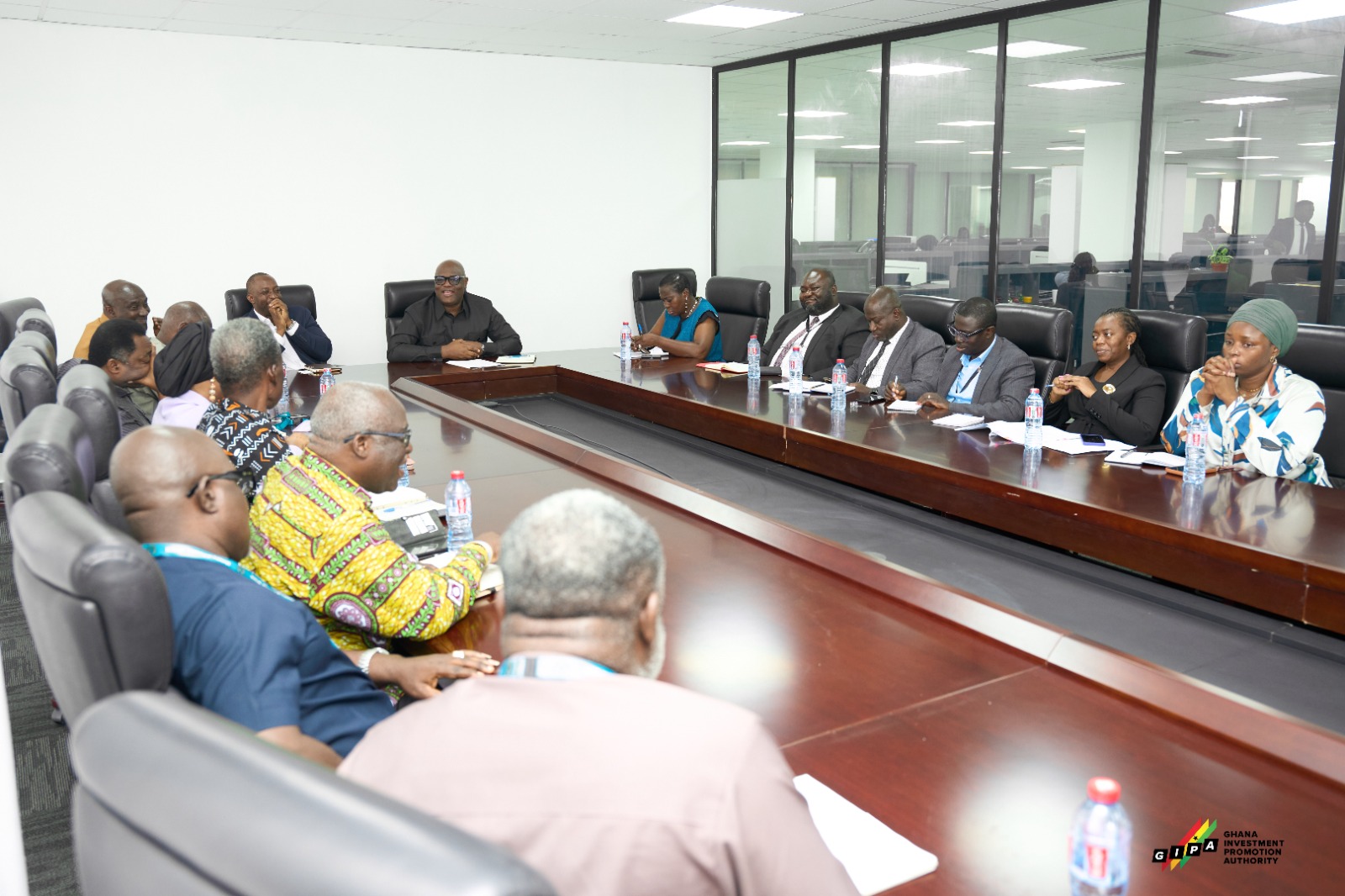
The meeting, convened under the direction of the Ministry of Trade, Agribusiness and Industry and led by GIPA Chief Executive Officer Simon Madjie, focused on tightening oversight, improving inter-agency coordination and establishing clearer mechanisms for reporting suspected breaches of the GIPA Act, 2026 (Act 1117).
Mr Madjie said the legal position on informal retail remains unequivocal, with open markets, kiosks, small shops and similar trading activities reserved exclusively for Ghanaian citizens. While foreign investors can participate in formal retail activities such as malls and supermarkets, he said they must comply fully with the country’s investment laws.
“The informal retail space by law is reserved exclusively for citizens of Ghana, and that is non-negotiable,” Mr Madjie said. “Regardless of the amount of money you bring, you cannot enter the informal retail space because that market is reserved for Ghanaians.”
The distinction is important because Ghana continues to seek foreign capital while simultaneously protecting specific economic activities for citizens. The policy challenge is therefore not to restrict legitimate foreign investment broadly, but to ensure that investment flows into sectors where non-citizen participation is permitted rather than displacing local traders from activities specifically reserved for them.
GUTA’s principal concern centres on fronting, where Ghanaian individuals or locally registered entities allegedly allow their names or companies to be used to disguise foreign ownership or control.
Such arrangements can make enforcement more difficult because a business may appear Ghanaian on paper while its financing, management or beneficial ownership sits elsewhere.
GUTA President Clement Boateng said the association’s position is not anti-foreign investment but pro-compliance. “We are not against foreigners. If you satisfy the law, we have no issue with you. But if you do not satisfy the law, your activities in our markets must be stopped to allow citizens to have the freedom to do their retail business in the retail market space,” he said.
The legal consequences under Act 1117 can be substantial. According to the framework discussed at the meeting, a non-citizen or non-wholly Ghanaian-owned enterprise engaging in a reserved activity can face an administrative penalty ranging from 5,000 to 10,000 penalty units, together with additional monthly penalties of between 500 and 1,000 penalty units for as long as the breach continues.
At a statutory rate of GH¢12 per penalty unit, that translates into an initial sanction of between GH¢60,000 and GH¢120,000, with further penalties of up to GH¢12,000 per month where the violation persists.
The law also criminalises the letting or subletting of a market stall or store to a foreigner for trading purposes, with offenders liable on summary conviction to fines ranging from 2,000 to 4,000 penalty units.
The enforcement challenge, however, goes beyond the existence of penalties. Ghana has grappled for years with disputes over foreign participation in retail, particularly in highly visible commercial centres, and the effectiveness of the new regime will depend on whether regulators can identify beneficial ownership, distinguish genuine joint ventures from fronting and apply sanctions consistently.
GIPA and GUTA therefore agreed to revive and strengthen an inter-agency task force involving GIPA, the Trade Ministry, local government authorities, security agencies and other regulators. The proposed structure is intended to improve coordination between institutions that hold different pieces of information relevant to business ownership, licensing, tenancy and compliance.
The two organisations also proposed creating a dedicated monitoring and enforcement unit supported by a direct reporting channel for traders. Such a system could allow suspected cases of foreign-owned informal retail businesses and fronting to be escalated more quickly, although its credibility will depend on robust verification procedures that prevent legitimate businesses from being targeted merely on the basis of allegation.
Public education forms another part of the strategy. GIPA and GUTA plan to explain the scope of reserved retail activities, the obligations imposed on foreign investors and the channels available for reporting suspected violations, which could reduce confusion between lawful formal-sector foreign investment and prohibited participation in informal retail.
The meeting also considered diplomatic engagement involving the Trade Ministry, the Ministry of Foreign Affairs and diplomatic missions in Ghana. The objective would be to explain Ghana’s legal position, clarify its obligations within ECOWAS and encourage partner countries to sensitise their nationals about the limits imposed by Ghanaian investment law.
That diplomatic component could prove important because enforcement against foreign traders can quickly become politically sensitive, particularly where regional integration and freedom of movement are involved.
Clear communication on the distinction between residence rights, business rights and activities specifically reserved for citizens will therefore be essential to avoiding unnecessary diplomatic friction.
For Ghanaian traders, the immediate concern is livelihood protection. Informal retail remains a major source of employment and household income, making enforcement of reserved-sector rules politically and economically significant, particularly at a time when access to formal employment remains constrained.
For policymakers, however, the longer-term test will be whether enforcement can be both firm and credible. Protecting reserved activities for citizens will only strengthen the investment environment if the rules are transparent, applied consistently and separated clearly from arbitrary hostility towards legitimate foreign businesses.
The roadmap agreed by GIPA and GUTA therefore marks a shift from repeated complaints about foreign participation towards a more institutional enforcement model.
Its success will depend on whether Ghana can close loopholes such as fronting, improve coordination among regulators and protect local traders without undermining the broader objective of maintaining an open and predictable investment climate.

