


- GoldBod Prepares to Launch Financing Support for Small-Scale Miners In 2027
GoldBod’s plan to finance artisanal and small-scale miners from 2027 could address one of the deepest contradictions in Ghana’s mining economy: the state demands legal, environmentally responsible operations from miners who often lack access to the capital, equipment and technical support required to meet those standards.
The proposed Artisanal and Small-scale Mining Formalisation and Financing Support Programme promises to improve productivity, create jobs, increase gold recovery and reduce mining’s environmental footprint. It will be implemented with the Ministry of Lands and Natural Resources and the University of Mines and Technology, with technical support from South Africa’s Rand Refinery.
At first glance, the programme appears to be a logical extension of GoldBod’s mandate. If the institution wants to secure more gold from licensed domestic producers, strengthen foreign-exchange reserves and improve traceability, it must help build a supply chain capable of producing gold legally and efficiently.
But financing small-scale mining is not an ordinary credit intervention. Poorly designed support could increase excavation capacity without improving environmental discipline, enabling miners to destroy land and water more quickly with publicly supported machinery.
The programme’s success must therefore be judged not only by how much money is disbursed or how much additional gold is recovered. Its central test will be whether financing changes behaviour, strengthens compliance and creates enterprises capable of operating without transferring their environmental costs to communities.
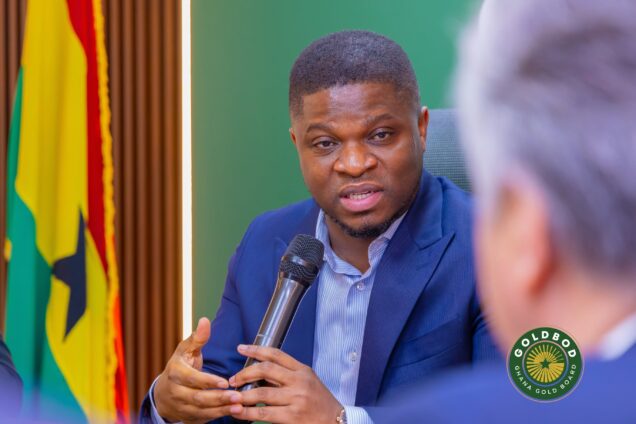
“Reform will endure only when compliance becomes a pathway to opportunity rather than hardships,” Mr Gyamfi said.
That argument identifies a weakness in Ghana’s historical approach to small-scale mining. Regulation has frequently concentrated on licences, enforcement operations, equipment seizures and periodic bans. Yet many operators encounter slow permitting, costly machinery, limited geological information, expensive credit and weak access to responsible processing technology.
When compliance is expensive and illegality offers quicker returns, enforcement alone may displace activity temporarily without changing the incentives that reproduce it. Making legality commercially viable could be more durable than treating every small-scale operator as an environmental offender.
Financing could help licensed miners acquire safer equipment, improve ore recovery and reduce the waste that pushes operators to disturb larger areas of land. Technical support could also improve mine planning, occupational safety, reclamation and the management of chemicals and tailings.
However, cheaper capital and better machinery create moral hazards if access is not tied to enforceable conditions. Beneficiaries must possess valid licences, approved operating areas and verifiable environmental plans. Financing agreements should require land reclamation, responsible water management, worker safety and the sale of output through authorised channels.
Disbursement should be phased against independently verified milestones rather than released entirely at the beginning. A miner who breaches environmental conditions, operates outside a concession or diverts financed equipment should face suspension, recovery action and exclusion from future support.
The state must also decide what financing form is appropriate. Direct loans, equipment leasing, guarantees and blended-finance arrangements carry different risks. Equipment leasing may offer stronger control over asset use, while guarantees could mobilise commercial lenders without requiring GoldBod to become a conventional retail bank.
Interest rates and repayment schedules should reflect the uncertain geology and cash flows of mining, but concessionary terms must not become subsidies for politically connected operators. Transparent eligibility criteria, published beneficiary information and external audits will be essential to protecting public confidence.
Ghana must guard against elite capture. The phrase “small-scale miner” can describe both genuinely local operators and well-capitalised interests using nominees to access concessions, machinery or financing intended for smaller businesses.
Beneficial ownership checks should therefore form part of the approval process. Financing limits should prevent a few connected companies from absorbing the programme, while women, youth and mining communities should have fair opportunities to participate.
The involvement of UMaT creates an opportunity to make technical competence a condition of finance. Applicants could undergo training in geology, mine planning, environmental protection, bookkeeping, occupational health and responsible gold handling before funds are approved.
Mr Gyamfi said properly formalised and financed mining could support livelihoods, generate foreign exchange, strengthen reserves and local economies, grow indigenous enterprises and advance development sustainably.
The foreign-exchange argument is powerful. Gold has become central to Ghana’s reserve strategy and currency management. Bringing more legal small-scale production into transparent purchasing channels could improve official gold flows and reduce smuggling.
But production targets must not overwhelm regulatory judgment. GoldBod’s interest in securing supply could conflict with the need to sanction producers whose environmental conduct is unacceptable. The programme should therefore separate financing decisions, gold purchasing and compliance enforcement through clear institutional controls.
The Minerals Commission and Environmental Protection Authority must remain central. GoldBod should not certify environmental compliance merely because it finances or buys gold from an operator. Independent regulators must inspect sites, verify boundaries and publish enforcement outcomes.
Traceability must extend beyond knowing the seller. Gold entering official channels should be linked to a licensed site, recorded production and auditable chain of custody. Digital tracking could help identify improbable output volumes that suggest gold is being aggregated from illegal sources.
The 2027 launch leaves time to design the programme properly. Before implementation, GoldBod should publish its funding source, budget, financial products, eligibility rules, environmental safeguards, recovery procedures and performance indicators.
Success should be measured through loan repayment, formal jobs, increased recovery, traceable gold purchases, reclaimed land and improved water quality. Reporting only tonnes of gold and amounts disbursed would tell an incomplete story.
The programme offers Ghana a chance to replace a failed binary choice between suppressing small-scale mining and tolerating destructive informality. Responsible miners need a route into finance, technology and markets; communities need protection from operators who treat public rivers and farmland as expendable inputs.
GoldBod can help reconcile those interests if support is conditional, transparent and rigorously monitored. If financing merely expands machinery and production, the programme could deepen the crisis it intends to solve.
That balance will determine its long-term legitimacy.
The defining question is therefore not whether Ghana can lend to small-scale miners. It is whether the country can use finance to make lawful, productive and environmentally responsible mining more profitable than illegality.

