


- Government Eyes Dormant Bank Funds for Development Projects Under New Legal Framework
The government is preparing a new legal and regulatory framework that could allow dormant balances held in banks and other financial institutions to be channelled into national development projects, as Ghana searches for additional domestic financing without resorting to higher taxes or excessive borrowing.
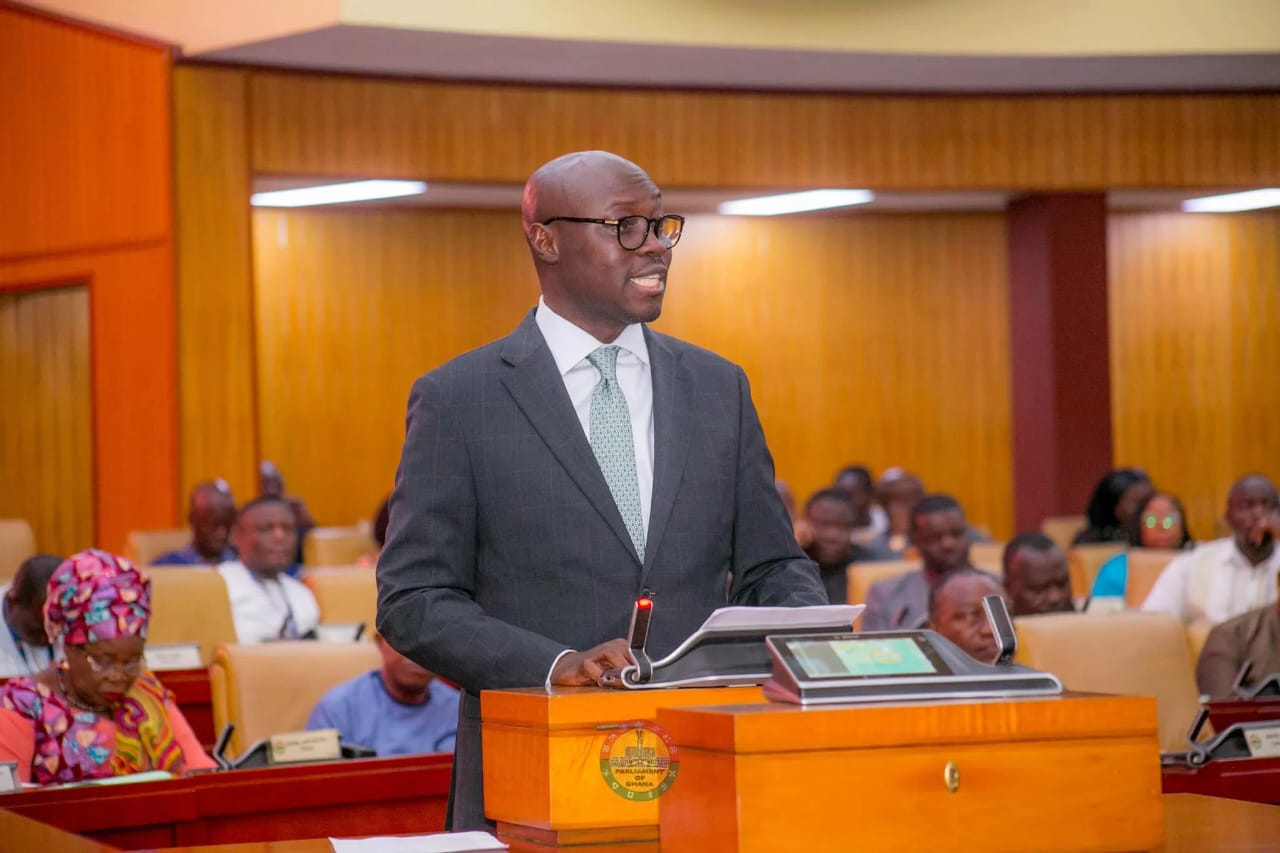
Finance Minister Dr Cassiel Ato Forson said the proposed framework would establish rules governing the treatment and utilisation of unclaimed financial assets while preserving the rights of account holders to recover their money where legitimate claims are subsequently made.
“Government is developing a policy framework for the utilisation of dormant accounts to support national development while safeguarding the interests of rightful owners,” Dr Forson said.
The proposal represents a potentially significant shift in Ghana’s domestic resource mobilisation strategy, moving beyond the traditional focus on taxation and borrowing towards identifying financial resources already sitting within the economy but remaining unused.
Under the concept being considered, balances in accounts that have remained inactive for a legally defined period could eventually be transferred into a centrally managed dormant-assets pool and deployed towards public-interest investments.
Ownership of the funds would remain with the account holder, meaning individuals or their beneficiaries who subsequently establish a valid claim would retain the right to recover the money through prescribed procedures.
The government would therefore temporarily utilise otherwise idle funds rather than permanently take ownership of private savings.
That distinction is expected to become one of the most important elements of the legislation, given the sensitivity surrounding private deposits and public confidence in the banking system.
For Ghana, the proposal comes at a time when government faces the difficult task of expanding fiscal space while maintaining the gains made under the ongoing fiscal consolidation programme.
Infrastructure, healthcare, education, social protection and other development priorities continue to compete for limited fiscal resources, while government simultaneously seeks to restrain debt accumulation and reduce dependence on costly external borrowing.
Dormant financial assets could therefore provide an alternative pool of domestic capital. If structured carefully, the mechanism could allow government to support selected development projects without immediately adding to public debt or introducing additional taxes. It would also fit into a broader policy shift towards deeper domestic resource mobilisation.
Authorities have increasingly placed emphasis on improving tax administration, optimising state assets, strengthening public financial management and finding new ways of mobilising capital already available within the domestic financial system. The dormant-accounts initiative would extend that approach into banking and other financial assets.
But its implementation is likely to raise difficult legal and regulatory questions. One of the first would be determining exactly when an account qualifies as dormant.
Regulators would have to establish the period of inactivity required before funds can be classified as dormant, the number and form of notifications that financial institutions must send to customers and the process banks must follow before transferring balances into any national scheme.
There would also have to be clarity around who manages the funds, where they can be invested, how investment returns are treated and what happens when an account holder later seeks to reclaim the original balance.
Any perception that government is appropriating private savings could undermine confidence in financial institutions and discourage individuals from keeping money in the formal banking system.
Financial-sector stakeholders are therefore likely to scrutinise provisions governing customer notification, waiting periods, reporting obligations, institutional oversight and the right of reclamation.
The framework may also require strong public disclosure rules to ensure citizens can see how dormant assets are being used and whether the funds remain available to meet future claims. International precedent suggests that such systems can function effectively when ownership rights are clearly preserved.
Countries including the United Kingdom, Japan and Australia operate dormant-assets programmes under which unclaimed financial balances can be directed towards social investment, community development and financial inclusion initiatives while maintaining mechanisms through which rightful owners can recover their money.
The Ghanaian proposal appears to follow a similar principle: mobilise inactive financial resources while maintaining the legal claim of the original owner.
Financial institutions may need to improve systems for identifying inactive accounts, updating customer information and locating account holders before balances become eligible for transfer.
That could encourage banks to strengthen customer engagement and improve data management. It may also lead institutions to intensify efforts to reactivate dormant accounts before funds are transferred out of their books.
The broader economic significance of the proposal will ultimately depend on the size of dormant financial assets in Ghana. No official aggregate figure has yet been disclosed for the total value of dormant balances across banks and other financial institutions. Without that figure, it remains unclear how substantial a financing source the initiative could become.
But even a relatively modest pool could provide additional funding for targeted development programmes if managed transparently and invested prudently. The policy also raises an important question about how the state should define the appropriate use of such funds.
Dormant assets are fundamentally different from conventional tax revenue because the underlying ownership remains private. That could strengthen the case for ring-fencing the funds for specific public-interest projects rather than allowing them to disappear into general government expenditure. Clear rules around eligible investments may therefore become crucial to maintaining public confidence.
After years in which government relied heavily on taxation, domestic borrowing and external financing, policymakers are increasingly being pushed to think differently about how existing national resources can be mobilised more efficiently.
Handled transparently, with strong legal protections and independent oversight, the framework could unlock an additional source of development financing while leaving the rights of depositors intact.
Handled poorly, it could trigger disputes over property rights and deepen mistrust in the financial system. The success of the initiative will therefore depend less on the amount of money sitting in inactive accounts than on the credibility of the governance architecture surrounding it.
For government, the opportunity is to turn idle financial resources into productive capital. For depositors, the test will be whether the state can do so without weakening their fundamental right to reclaim what remains legally theirs.

