


- Government Spends GH¢33.72m As Private Support Lifts South Africa Evacuation Funding to GH¢49.72m
Ghana has spent GH¢49.72 million to evacuate about 1,900 citizens from South Africa following renewed xenophobic attacks, turning an emergency diplomatic intervention into a significant public-finance event. The operation, which began in May and concluded in September, covered far more than airfare, extending to accommodation, feeding, ground transport, medical support and reintegration assistance for returning citizens.
Of the total amount, GH¢38.84 million was used for the immediate logistics of the evacuation, while GH¢10.80 million was allocated to reintegration financial support and transportation allowances. A further GH¢84,274 was spent on repatriating the remains of two Ghanaians who died during the unrest, illustrating the human as well as financial cost of the crisis.
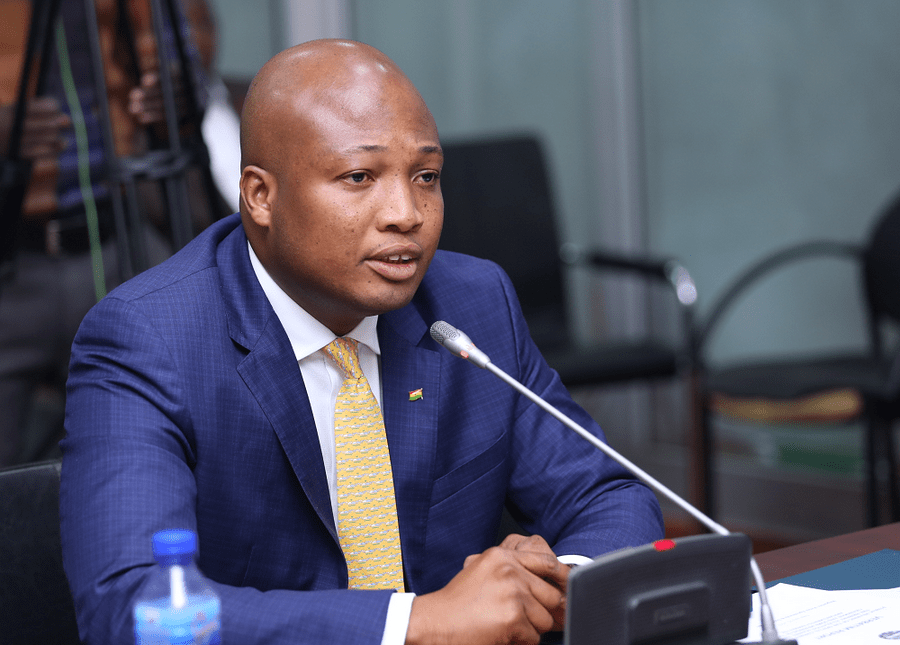
Foreign Affairs Minister Samuel Okudzeto Ablakwa described the intervention as evidence that government would not abandon citizens caught in dangerous situations abroad. He said the operation reflected a national commitment to protecting Ghanaian lives regardless of where they are located, but the scale of the expenditure also raises questions about how emergency evacuations should be financed and accounted for.
At an average of roughly GH¢26,168 per returnee, the headline amount is substantial, although that figure should not be interpreted as the cost of a plane ticket. It incorporates multiple emergency expenses, including shelter, medical care, logistics and post-arrival assistance, meaning the per-person figure provides a measure of the fiscal scale of the intervention rather than a unit transport cost.
The episode highlights a difficult principle in public finance: some spending cannot be judged solely by whether it creates an immediate economic return. Evacuating citizens from danger does not produce a conventional revenue stream or physical asset, but its value lies in lives protected, families reunited and people removed from harm.
That humanitarian justification, however, does not remove the need for accountability. Because public resources were involved, citizens should be able to see how charter arrangements were priced, which suppliers were contracted, how accommodation and transport costs were determined and how reintegration payments were distributed among returnees.
The financing structure also requires an important qualification. Government has clarified that its direct expenditure was GH¢33.72 million, while Engineers and Planners, owned by businessman Ibrahim Mahama, contributed GH¢16.00 million, bringing the combined value of the intervention to GH¢49.72 million.
The private contribution therefore reduced the direct burden on the state by roughly 32.18% of the total evacuation cost. That distinction matters because describing the full GH¢49.72 million as government expenditure would overstate the amount borne directly by the public purse.
The contribution also raises a broader policy question about whether the emergency protection of citizens abroad should depend partly on philanthropic or corporate intervention. While private support can be valuable during crises, a more predictable model would require the state to maintain its own contingency arrangements capable of funding urgent evacuations even when private assistance is unavailable.
The more difficult phase may now be reintegration. Government says returnees have received financial assistance, transport allowances, medical and psychosocial support, free health-insurance registration and continuing employment assistance, recognising that an evacuation does not necessarily end the economic consequences of displacement.
Many of those returning may have left behind businesses, employment, housing, investments and social networks built over years in South Africa. If reintegration support remains limited to short-term welfare, the state risks replacing an emergency evacuation cost with a longer social-support burden, but if assistance is linked to employment, entrepreneurship, skills and access to finance, the GH¢10.80 million allocation could help affected households return to productive activity.
The incident also exposes the economic consequences of xenophobic violence in one of Ghana’s most important relationships on the continent. South Africa remains a significant destination for Ghanaian professionals, traders, students and businesses, meaning attacks on migrant communities can destroy income, inventory, property and remittance flows before governments are forced to absorb the cost of humanitarian intervention.
The reported deaths of four Ghanaians during the unrest underline why the crisis cannot be reduced to financial arithmetic. The GH¢49.72 million bill captures only one part of the cost, while the loss of lives, livelihoods and economic security carries consequences that are much more difficult to quantify.
The experience may strengthen the case for Ghana to develop a more systematic overseas citizen-protection framework. Such a system could include emergency registration for citizens abroad, rapid-response diplomatic teams, contingency evacuation funding, insurance mechanisms and standing agreements with airlines and transport operators that can be activated when crises emerge.
Ghana has demonstrated through the South Africa operation that it is prepared to mobilise significant resources when citizens are in danger. The next test is whether future interventions can be planned in ways that are faster, more transparent and less fiscally disruptive, particularly when several competing demands are already placed on limited public resources.
The evacuation may have ended with the return of the final group of citizens, but the accountability phase is only beginning. Government will ultimately need to show not only that people were brought home safely, but that the emergency was financed efficiently, private and public contributions were clearly separated and reintegration support delivers measurable economic outcomes.

