


- Government to Receive GH¢30m from GACL as Airport Traffic Grows
Ghana Airports Company Limited (GACL) has set aside GH¢30 million for payment to the Government, marking a significant shift in the relationship between the state-owned airport operator and its sole shareholder. The proposed dividend comes as the company faces persistent liquidity pressures and invests in airports beyond its main commercial hub.
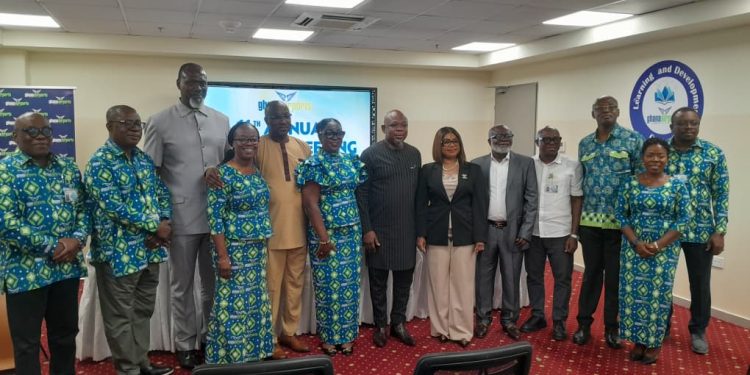
Managing Director Yvonne Afriyie Opare announced the allocation at GACL’s 11th Annual General Meeting, where she presented management’s report for the year ended December 31, 2025. The Government owns 100 per cent of the company.
“GACL has earmarked an amount of 30 million Ghana cedis to pay to a hundred percent shareholder,” Opare said, describing it as the first payment since the company’s establishment in 2007. The wording calls for a qualification: an Auditor-General’s review of GACL’s 2013–2017 performance recorded a GH¢20,000 transfer from the company’s 2016 profit to the Consolidated Fund. The same audit said GACL had not declared dividends during the period. The GH¢30 million may therefore be the company’s first formally declared dividend, rather than its first transfer of funds to the state.
The distinction matters because the payout is being presented as a milestone in public returns from a company that manages nationally important infrastructure. It also raises a practical question: how much of GACL’s reported profit can be distributed while it continues to fund airport operations, debt obligations and capital projects?
GACL manages Kotoka International Airport and is responsible for developing, maintaining and operating other airports, including those in Kumasi, Tamale, Sunyani and Ho. Opare said domestic operations and the regional airports were not yet profitable. “Domestic business operations and all other regional airports are not yet profitable,” she said.
That burden creates a tension between GACL’s commercial role and its public-service responsibilities. Regional airports can support connectivity, tourism and economic activity, but if they do not cover their operating costs, the company must finance the gap from other revenue or external borrowing. A dividend to Government may demonstrate improved capacity to return value to its owner, but it does not by itself show that the broader airport network is financially self-sustaining.
The latest public figures also make the company’s earnings story more complex than a single profit number suggests. The 2025 State Ownership Report by the State Interests and Governance Authority (SIGA) puts GACL’s net profit at GH¢355.94 million, down 30.64 per cent from GH¢513.17 million in 2024. It records operating revenue falling 9.15 per cent to GH¢1.83 billion, while total income rose 10.57 per cent to GH¢2.48 billion, helped by GH¢578.28 million in other operating gains.
At the AGM, however, the company’s 2025 profit was reported as GH¢354.6 million, up from approximately GH¢336 million the previous year. That comparison conflicts with SIGA’s net-profit series, which shows a higher 2024 figure and a year-on-year decline. The information presented does not explain whether the difference reflects distinct accounting measures, reporting bases or a revision. The two comparisons should not be combined as if they describe the same series.
The divergence is material. A dividend decision should be assessed against the company’s audited accounts, the basis used to determine distributable profit and the amount of cash available after operating and financing commitments. Accounting profit can include non-cash gains and does not necessarily translate into funds that can be distributed without affecting investment or liquidity.
SIGA’s figures underline that distinction. GACL’s current ratio improved from 0.57 to 0.73 in 2025, but remained below one, indicating that current assets were still insufficient to cover short-term liabilities. Operating cash flow fell to GH¢715.79 million from GH¢2.26 billion in 2024, although SIGA said the earlier result had benefited from an exceptional working-capital inflow. The company also reported GH¢6.95 billion in total liabilities and GH¢492.16 million in finance costs.
The debt picture includes infrastructure financing. GACL secured approval to restructure and refinance its syndicated loan, extending the repayment period by eight years and providing a one-year moratorium on principal repayments. The arrangement is intended to ease cash-flow pressure, but it does not erase the company’s obligations. It shifts repayment over a longer period, leaving GACL responsible for servicing debt while maintaining airports and pursuing investment.
Passenger and cargo activity grew in 2025. Passenger traffic increased by 6 per cent to 3.6 million from 3.4 million a year earlier; aircraft movements rose by 2.2 per cent to 47,270, and cargo volumes grew by 4.8 per cent to 44,826 tonnes. These indicators suggest stronger use of the airport system, especially Kotoka, but the rise in traffic did not prevent the decline in core operating revenue recorded in the State Ownership Report. Passenger numbers alone do not reveal how much revenue GACL earns per traveller, how much costs have increased or whether regional operations are moving towards break-even.
For Government, the GH¢30 million allocation would provide a direct return from its ownership of GACL. The amount is also a reminder that state companies are expected to balance public obligations with financial discipline. A distribution that is too high could constrain maintenance or investment; one that is too low, or absent despite sustainable earnings, could deny taxpayers a fair return.
The next test is therefore transparency around the payment: whether the GH¢30 million has been formally declared and paid, which financial year’s distributable profits support it, and how management will protect liquidity and fund airport development after the transfer. Clear reconciliation of the AGM profit figures with SIGA’s reported results would also help the public understand the company’s financial position.
GACL’s proposed dividend is a notable step, but it is not conclusive evidence that the company’s finances are on a durable footing. Its significance will depend on whether the payout can be sustained alongside debt service, investment and the cost of operating airports that management says remain unprofitable.

