


- Government Turns to Cedi Debt and Infrastructure Bonds as Eurobonds Stay Off the Table
Ghana has ruled out a return to the international Eurobond market for the next few years, signalling a significant shift in sovereign financing strategy as the government seeks to rebuild the domestic bond market and avoid a rapid return to the foreign-currency borrowing that contributed to the country’s recent debt crisis.
Dr Theo Acheampong, Technical Advisor at the Ministry of Finance, said the government had no immediate plans to issue Eurobonds despite improving macroeconomic conditions and renewed investor appetite for Ghanaian sovereign debt.
Speaking during a panel discussion at the Fidelity Bank Debt Capital Markets Conference 2026, Dr Acheampong said the government intends instead to deepen reliance on domestic financing while rebuilding confidence in longer-dated government securities.
“My minister has also indicated very clearly the Eurobond market for the next few years is out of the equation. He said that we are not in a hurry to go to the international capital market,” he said.
The position marks an important break from the financing strategy Ghana pursued for much of the decade before the 2022 debt crisis, when international capital markets became a major source of funding for budget deficits, infrastructure projects and foreign-exchange needs.
Eurobonds provided Ghana with access to large pools of capital and longer maturities than were often available domestically, but they also increased the government’s exposure to foreign-exchange risk and global interest-rate conditions.
Those vulnerabilities became more severe when the cedi depreciated sharply, increasing the local-currency value of dollar-denominated obligations and contributing to a rapid deterioration in debt-service capacity.
The eventual result was sovereign default and a restructuring of both domestic and external public debt.
The latest policy stance suggests government is determined not to rebuild those vulnerabilities simply because international market conditions have improved.
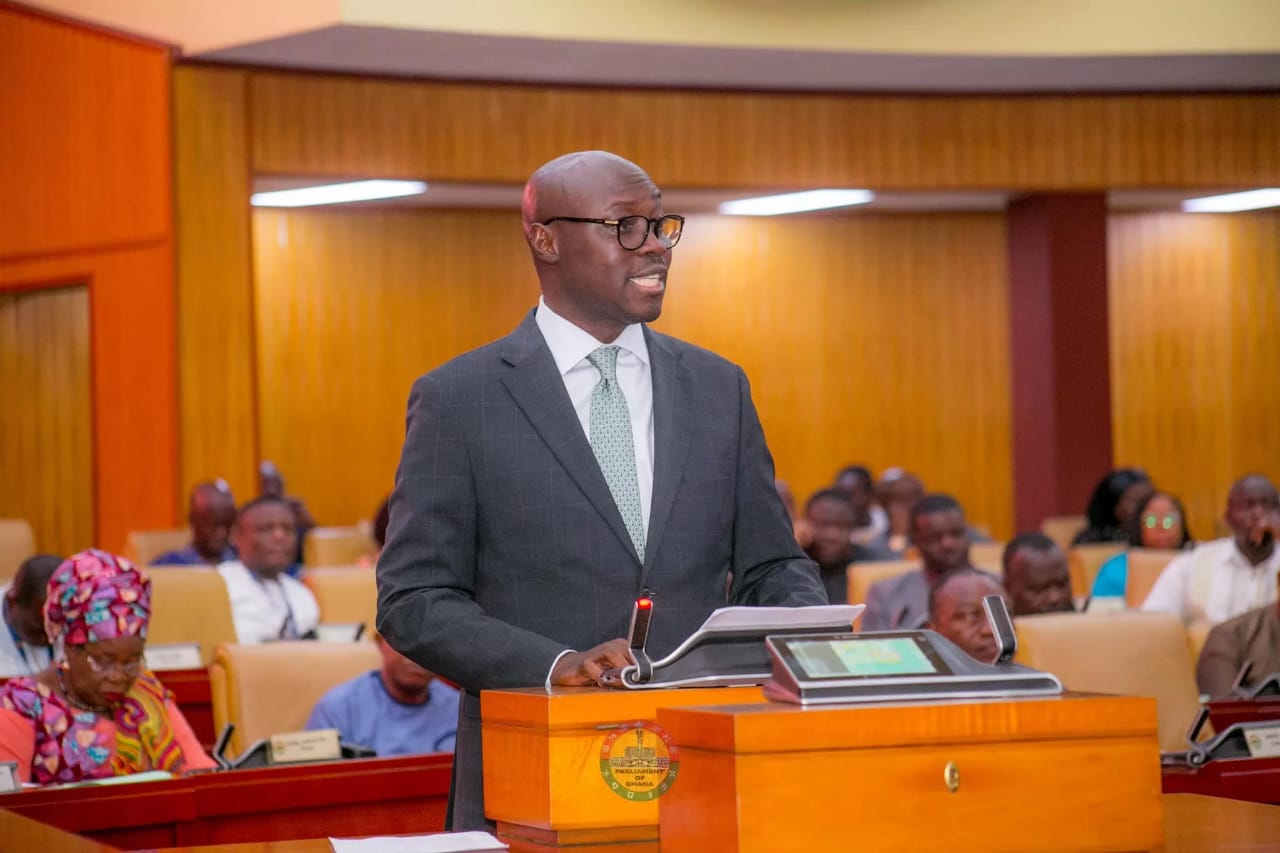
Finance Minister Dr Cassiel Ato Forson made that position clear during the 2026 Mid-Year Budget Review.
“Three years ago, Ghana could not borrow on the international capital markets at any price. Today, the markets are inviting us, but we are not in a hurry,” he told Parliament.
Ghana’s Eurobond yields had fallen by about 300 basis points since the beginning of 2026, according to the Finance Minister, reflecting stronger investor confidence following improvements in inflation, fiscal performance, foreign-exchange reserves and the broader debt outlook.
“This is not just a number. It is the market’s vote of confidence in our economy and our reforms,” Dr Forson said.
The restraint is particularly significant because Ghana has made substantial progress in normalising relations with external creditors.
In July, government settled US$700 million in Eurobond obligations ahead of schedule, comprising US$525.20 million in principal and US$174.80 million in interest.
That payment brought total payments to Eurobond holders since January 2025 to about US$2.10 billion.
Rather than using that progress as a springboard for another international bond sale, policymakers appear focused on rebuilding Ghana’s domestic yield curve.
Restrictions on new domestic bond issuance introduced after the Domestic Debt Exchange Programme have expired, allowing government to return to longer-term cedi-denominated borrowing.
Domestic government bond issuance resumed in April, according to the International Monetary Fund, after a period in which the Treasury had depended heavily on short-term Treasury bills.
That dependence created considerable refinancing risk because large volumes of debt had to be rolled over within relatively short periods.
Longer-dated domestic bonds potentially offer the government a way to spread repayments across several years while also re-establishing benchmark securities needed for a functioning local debt market.
Dr Acheampong indicated that the government intends to increase domestic bond issuance while preserving fiscal credibility.
Authorities are also considering infrastructure bonds capable of mobilising long-term capital from institutional investors, particularly pension funds, towards productive projects.
That could provide an important alternative to foreign-currency borrowing.
Pension funds and other domestic institutional investors control growing pools of long-term savings that could potentially finance roads, energy, transport and other infrastructure without exposing the sovereign directly to the exchange-rate risks associated with Eurobonds.
But the pivot towards domestic borrowing carries risks of its own. If government demand for local capital becomes excessive, sovereign issuance could absorb liquidity that might otherwise be available to businesses.
That could crowd out private-sector borrowers at precisely the point when policymakers are seeking to stimulate investment, jobs and industrial expansion.
The challenge will therefore be to deepen the sovereign bond market without allowing government securities to dominate Ghana’s financial system.
Government paper accounts for the overwhelming majority of trading on the Ghana Fixed Income Market, while corporate bond activity remains comparatively thin.
The imbalance illustrates the paradox confronting policymakers: Ghana needs a stronger domestic government debt market to reduce refinancing and foreign-exchange risks, but it also needs a deeper corporate debt market capable of channelling savings towards productive enterprises.
Fidelity Bank Managing Director Kingsley Opuni said falling interest rates should become an opportunity to broaden financing rather than merely make government borrowing cheaper.
“The next task for us is to convert the stability we have into productive investment, sustainable growth and shared prosperity,” he said.
The IMF’s latest debt sustainability assessment provides another reason for caution.
Although Ghana’s risk of debt distress has improved from high to moderate, the Fund’s baseline still assumes carefully managed external borrowing and continued fiscal discipline over the medium term.
For Ghana, therefore, staying away from Eurobonds represents more than a market-timing decision.
It is a test of whether the country can break with the financing model that characterised the years before the debt crisis.
Less Eurobond borrowing means reduced exposure to dollar-denominated debt, global interest-rate shocks and sudden shifts in international investor sentiment.
But the durability of the new strategy will ultimately depend on what replaces external commercial borrowing.
If stronger fiscal balances, longer-term domestic bonds, infrastructure financing and a deeper corporate capital market emerge together, Ghana could build a more resilient financing architecture.
If domestic borrowing simply substitutes for external borrowing without controlling deficits, however, the underlying debt problem would merely migrate from international markets back into the local financial system.
For policymakers, keeping the Eurobond door closed may prove easier than the more difficult task ahead: ensuring Ghana does not need to reopen it prematurely.

