


- Governor Dr Johnson Pandit Asiama Calls for Stronger IMF Support for Africa’s AI Transition
Bank of Ghana Governor Dr Johnson Pandit Asiama has urged the International Monetary Fund to deepen its support for Africa’s digital transformation, warning that the continent risks falling further behind unless governments and development partners urgently address gaps in regulation, cybersecurity, infrastructure and financing.
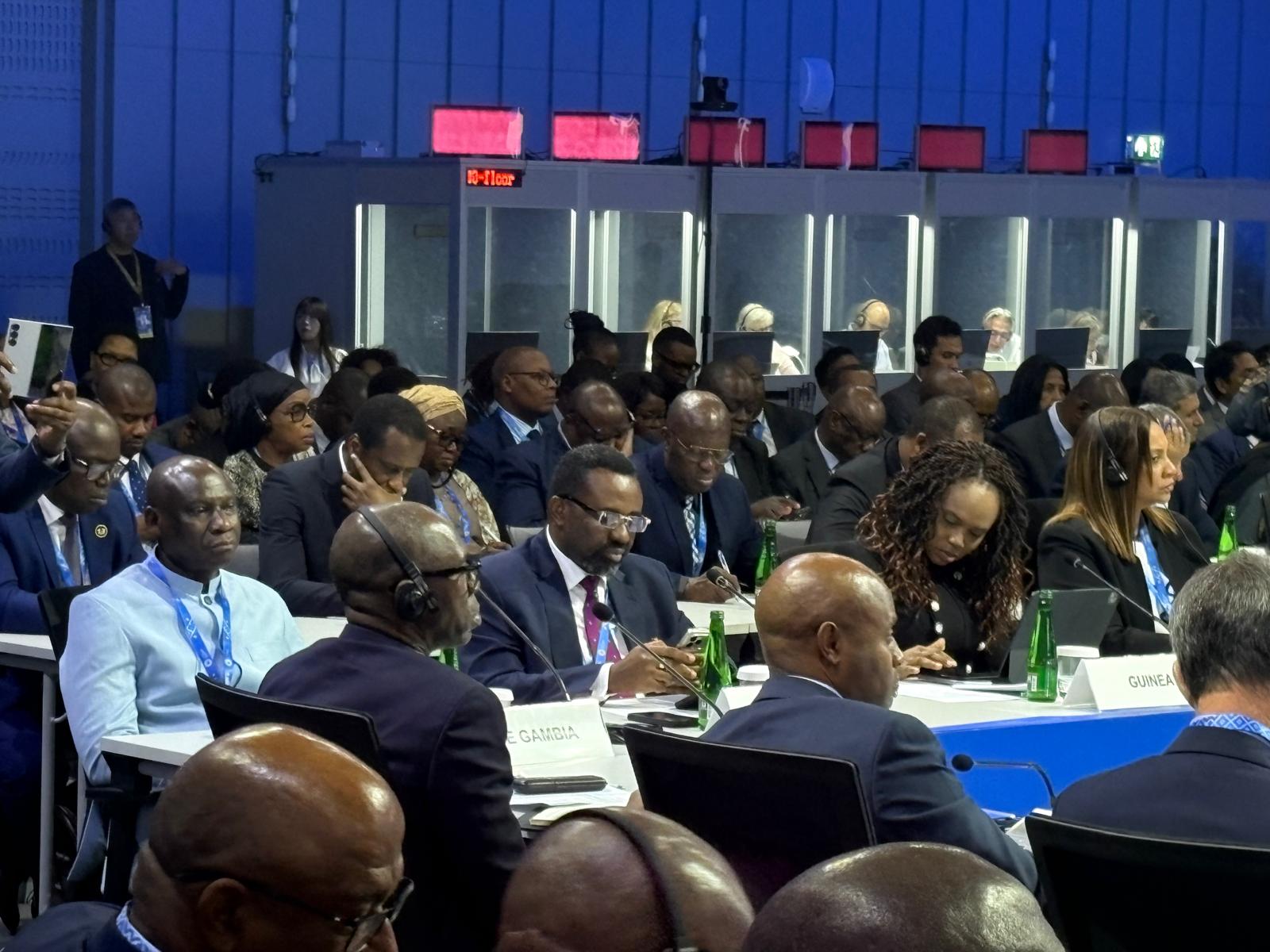
Delivering an intervention on Africa’s digital sovereignty and artificial intelligence for structural transformation at the 2026 Annual Meetings, African Caucus Meeting with the IMF Managing Director in Bangkok, Thailand, Dr Asiama said AI was already changing productivity, competitiveness, governance and finance, making it necessary for African economies to build the capacity to shape the technology rather than remain passive consumers.
“Without urgent and coordinated action, the continent risks falling even further behind,” he said, calling for a stronger partnership between African countries and the IMF.
The Governor’s argument places digital sovereignty at the centre of Africa’s development debate. For the continent, sovereignty does not necessarily mean building every technology domestically or disconnecting from global platforms. It means developing the institutions, infrastructure, skills and policy authority required to determine how data and digital systems are used within African economies.
Dr Asiama acknowledged that Africa had already made “giant leaps” in digital payments, identification systems, AI-enabled financial services and financial technology. Mobile money, instant payments and digital identification have helped parts of the continent overcome traditional infrastructure limitations and expand access to financial services.
But technological adoption has moved faster than institutional readiness in several markets. Weak cybersecurity arrangements, fragmented regulations, inadequate data protection and limited financing can turn rapid digitalisation into a source of financial and social vulnerability.
The Governor therefore set out two broad requests to the IMF. The first was for expanded, country-specific capacity development that would help African states create AI governance, supervisory technology, cybersecurity and digital-risk management systems.
“We first call upon the Fund to scale up tailored capacity development and to support a stronger Africa’s voice in shaping global digital norms,” Dr Asiama said on behalf of his fellow governors.
The emphasis on tailored assistance is significant. African economies differ considerably in digital maturity, institutional capacity and financial-market structure. A regulatory approach designed for a sophisticated economy with advanced data infrastructure may not work in a country where connectivity remains expensive, electricity supply is unreliable and supervisory agencies have limited technical resources.
Capacity development must consequently extend beyond seminars and policy documents. Regulators require access to specialists, testing environments, data tools and continuous training. Central banks and financial supervisors also need systems capable of examining increasingly complex fintech businesses and AI-driven products in real time.
Cybersecurity is equally important. The expansion of digital payments and interconnected financial platforms increases the number of entry points available to criminals. A significant disruption at a payment provider, telecommunications company or public digital platform could quickly spread across institutions and national borders.
Africa’s digital transformation must therefore be accompanied by common security standards, incident-reporting mechanisms and cross-border co-operation. Otherwise, the region could achieve greater financial inclusion while simultaneously exposing newly connected users to fraud, identity theft and service disruptions.
The Governor’s second request concerned the IMF’s analytical work. He called on the Fund to strengthen its leadership on the convergence of AI, digital transformation and macro-financial stability.
This would include incorporating relevant AI risks and opportunities into the IMF’s regular economic surveillance and Financial Sector Assessment Programmes. Such assessments traditionally examine banking soundness, financial regulation and systemic vulnerabilities. AI now introduces additional questions about model risk, operational dependence, employment disruption and the concentration of digital infrastructure among a small number of global companies.
Dr Asiama asked the Fund to deepen its analysis of AI’s implications for productivity, employment, financial resilience and inclusive growth. These areas are interconnected. AI could improve output and reduce transaction costs, but the gains may be concentrated among businesses with access to capital, computing infrastructure and skilled labour.
Workers performing routine tasks could face displacement before economies create enough new opportunities. Financial institutions may use AI to extend credit more efficiently, but opaque algorithms could also exclude households and small businesses without conventional data profiles.
The Governor additionally called for policy coherence on data governance, digital trade and cross-border AI regulation. Fragmented national rules could make it expensive for African technology companies to expand across the continent, weakening the scale benefits promised by the African Continental Free Trade Area.
Common principles would not require identical laws in every country. They could, however, establish shared expectations for data protection, algorithmic accountability, cybersecurity and consumer redress. That would reduce regulatory uncertainty while making cross-border digital services safer.
Financing remains another obstacle. Dr Asiama urged support for mobilising affordable capital for secure digital public infrastructure and narrowing the digital divide. The need extends from broadband networks and reliable electricity to identity platforms, payment rails, cloud services and local computing capacity.
The appeal to the IMF is also a demand for representation. Global standards governing AI, data and digital finance are being developed rapidly. If African countries lack a meaningful voice, they may become rule takers within systems built around the priorities and risk assumptions of wealthier economies.
Africa’s digital sovereignty will ultimately depend on its ability to combine international partnerships with domestic capability. External technical assistance can accelerate progress, but countries must invest urgently in regulators, engineers, researchers, entrepreneurs and public institutions able to sustain reforms.
For Ghana, which has built an expanding digital-payments ecosystem, the next stage must connect innovation with security, competition and productive investment. Digital adoption should improve access to credit, reduce business costs and support trade rather than simply increase transaction volumes.
Dr Asiama’s intervention presents AI as both an economic opportunity and a governance test. Africa can use the technology to accelerate structural transformation, but only if it develops the power to regulate, secure and shape the systems entering its economies.
The alternative is digital dependence: adopting tools designed elsewhere, storing strategic data beyond effective national oversight and responding to risks only after they materialise. The Governor’s warning is therefore timely. Africa’s technological future will be determined not merely by how quickly it adopts AI, but by whether it builds the institutions required to govern it.

