

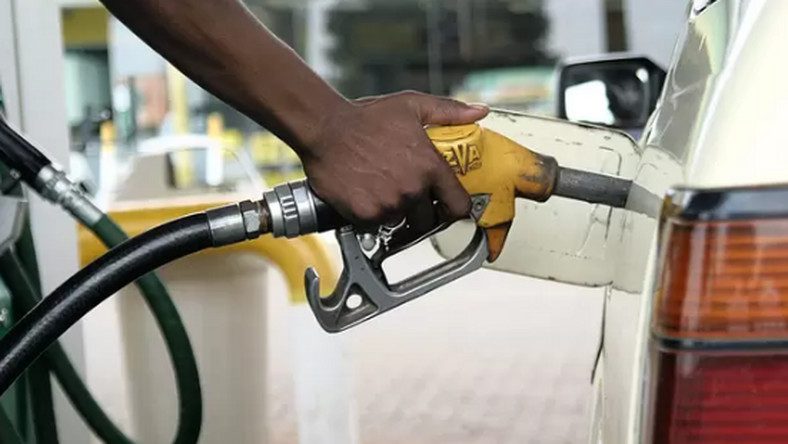

- Gov’t Extends GH¢2 Diesel Relief as Oil Shock Threatens New Pump-Price Surge
Ghana’s government has extended its GH¢2-per-litre diesel intervention for another two months, seeking to shield transport operators and businesses from a steep increase in international petroleum costs and renewed pressure on the cedi.
The relief will remain in force for October and November, but the way it is financed will change.
Under the revised arrangement, GH¢1 of the relief will come from a reduction in statutory petroleum margins, while the remaining GH¢1 will be provided through the temporary suspension of the Energy Sector Shortfall and Debt Repayment Levy, commonly known as the D-Levy.
Consumers will therefore continue to receive an effective GH¢2 reduction on each litre of diesel, even though the burden is being shifted between industry margins and government revenue.
The suspension applies specifically to the additional GH¢1 component imposed on diesel under the Energy Sector Levies (Amendment) Act, 2025.
“All other levies, rates and charges under the Energy Sector Levies Act, 2015, as amended, shall continue to apply and be collected in accordance with the law,” a government directive to the Ghana Revenue Authority said.
The Commissioner-General of the GRA has been instructed to implement the suspension at the relevant collection points and notify the National Petroleum Authority, oil marketing companies, bulk distribution companies and other industry participants.
The extension comes as the Chamber of Petroleum Consumers forecasts a 22.91 per cent increase in diesel prices during the first pricing window of October.
COPEC estimates that the average retail price could rise from GH¢18.24 to GH¢22.42 per litre without sufficient intervention. Petrol is projected to increase by 5.21 per cent, from GH¢16.90 to GH¢17.78.
The GH¢2 diesel relief would therefore cushion only part of the projected GH¢4.18 increase.
If the forecast passed through fully before the intervention, the effective price could still approach GH¢20.42 per litre, although actual pump prices will differ among oil marketing companies and depend on their pricing decisions.
The arrangement should consequently be understood as a reduction in the scale of the increase rather than a guarantee that diesel prices will remain unchanged.
Higher diesel prices have broad economic implications because the fuel is heavily used in commercial transport, haulage, agriculture, construction, mining and power generation.
A sustained increase feeds into the cost of moving food and other goods, raises operating expenses for businesses and can eventually add to consumer inflation.
Transport fares have already been increased by 8 per cent, limiting the extent to which the latest government intervention can reverse pressures that have begun to pass through the economy.
The latest extension marks the government’s fourth intervention to cushion consumers against petroleum price increases.
A burden-sharing framework involving the government and petroleum industry was introduced on April 16, 2026. The GH¢2-per-litre diesel intervention was subsequently announced on August 3 and took effect the following day after international oil prices surged.
It was initially presented as a temporary one-month measure but was extended into September and has now been renewed through November.
The repeated extensions show that what began as short-term emergency relief is becoming a more persistent feature of domestic fuel pricing.
That persistence reflects the severity of the external shock. International crude and refined-product prices remain elevated, while the cedi has weakened against the US dollar.
Ghana imports a large share of its refined petroleum requirements in dollars. Even when international prices remain unchanged, cedi depreciation increases the domestic cost of bringing fuel into the country.
The government can reduce levies or margins to moderate pump prices, but it cannot permanently insulate consumers from both global prices and exchange-rate movements without imposing a cost elsewhere.
The latest arrangement does not increase the stated GH¢2 relief. It changes its composition.
Previously, the intervention was financed largely through reductions in regulatory and industry margins. For October and November, half will come from those margin reductions and half through the suspension of a tax intended to help address energy-sector shortfalls and debt.
Reducing margins affects the revenues received by institutions and businesses along the petroleum supply chain. Suspending the D-Levy directly reduces government revenue earmarked for energy-sector obligations.
The intervention may therefore lower the immediate price paid at the pump while reducing resources available to deal with accumulated energy-sector debt.
This creates a difficult policy trade-off. Collecting the levy in full would protect energy-sector revenue but expose consumers to a sharper diesel-price increase. Suspending it provides immediate relief but weakens one of the funding streams created to address liabilities within the power sector.
The government has not disclosed the expected revenue loss from the two-month suspension or the total fiscal and industry cost of maintaining the complete GH¢2 intervention.
It has also not published the projected volume of diesel to which the support will apply.
Without those numbers, the public cannot independently calculate the full cost or assess whether a universal subsidy offers better value than targeted support for public transport, agriculture and food distribution.
There are also concerns about outstanding payments to oil marketing companies for the diesel relief provided in August.
Delayed settlement could shift the financing burden temporarily onto private companies, placing pressure on their cash flow and working capital.
The risk is particularly important when international prices are high. Importers and distributors require more cedis to purchase the same volume of products, while delays in recovering agreed support increase their financing costs.
A subsidy that is announced but not settled promptly can eventually create supply risks, pricing disputes or reluctance among companies to participate in future interventions.
The government-industry arrangement will therefore be judged not only by the price displayed at filling stations but by whether the state honours its side of the burden-sharing mechanism.
The diesel intervention provides visible relief and may slow the transmission of energy costs into transport fares and food prices.
But it does not change Ghana’s underlying exposure to imported fuel, foreign-exchange movements and international supply disruptions.
Nor does it resolve the tension between protecting consumers today and raising revenue to settle energy-sector liabilities accumulated over several years.
The decision to suspend part of the D-Levy is defensible as a temporary response to an exceptional price shock. Its sustainability becomes more questionable if the support is repeatedly extended without a published cost, clear funding arrangement or predetermined exit trigger.
The government has said further instructions on the status of the levy after November will be communicated later.
That leaves the policy facing a familiar problem: temporary fuel interventions are politically easy to introduce but difficult to withdraw when prices remain high.
For the next two months, diesel consumers will receive GH¢2 per litre of relief. The more difficult question is who ultimately bears that GH¢2 petroleum companies through reduced margins, the government through foregone revenue, or taxpayers and energy consumers through liabilities deferred into the future.

