


GRA Assures Parliament of Strong Revenue Outlook Following VAT Adjustments
The Ghana Revenue Authority (GRA) has maintained that it is on course to meet the GH¢225 billion revenue target for 2026, despite fears that recent tax policy changes could negatively affect collections.
The reassurance comes against the backdrop of concerns that the scrapping of selected COVID-19-era taxes, together with a cut in the effective Value Added Tax (VAT) rate from 21.9 per cent to 20 per cent and an increase in the VAT registration threshold, may constrain government revenue.
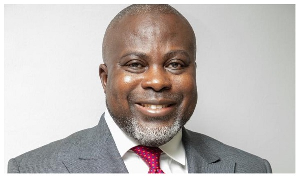
Speaking to the media after appearing before Parliament’s Public Accounts Committee, the Commissioner-General of the GRA, Anthony Sarpong, said the authority has put in place a series of interventions to preserve revenue flows while ensuring that the reforms deliver relief to consumers.
Mr Sarpong noted that initial observations indicate a favourable response from both businesses and the general public to the revised VAT regime.
“Our early indications show that the reforms have been positively received by businesses and Ghanaians,” he said.
He explained that the authority has stepped up on-the-ground monitoring to assess compliance. “As of last week, following visits to markets and inspections at major retail outlets, we are reasonably satisfied that most businesses have complied with and implemented the new VAT measures,” he stated.
According to the Commissioner-General, the adjustments are already easing the financial burden on households, while remaining consistent with the government’s revenue mobilisation goals.
“This is helping consumers to enjoy the benefits from the removal of the levy, while also ensuring that the government’s objective—which is expected to return nearly GH¢6 billion to households—is beginning to materialise,” he said.
Mr Sarpong added that the GRA will sustain its compliance, enforcement and education initiatives to ensure the durability of the reforms.
“We will continue with enforcement and taxpayer education to make sure these changes are entrenched in our systems. At the same time, we will leverage the VAT framework to generate the revenue required to support the government’s priorities for 2026 and the years ahead,” he said.
In spite of lingering concerns about possible revenue shortfalls, the Commissioner-General expressed strong confidence in the authority’s ability to deliver on its mandate.
“The revenue target announced by the Finance Minister in the 2026 Budget is GH¢225 billion. Revenue mobilisation is our core responsibility, and we are fully prepared, from the start of this year, to work diligently to meet that target,” he said.
He emphasised that robust revenue generation remains fundamental to national development and the implementation of government policy.
“Revenue mobilisation is central to our national development efforts. Without adequate revenue, the president’s development agenda cannot be realised,” he noted.
Mr Sarpong further indicated that the authority’s ambition goes beyond merely meeting the target.
“Our focus is not only on achieving the GH¢225 billion target, but also on surpassing it in a way that enables the Ministry of Finance and the government to deliver fully on the commitments laid before Parliament for the country’s development,” he said.

