


- Haaland Derby Goal Error Costs VAR Officials Premier League Appointments
Two video assistant referees involved in the controversial decision to allow Erling Haaland’s winning goal in Manchester City’s derby victory over Manchester United have been removed from Premier League appointments after the refereeing authorities admitted the goal should have undergone further review.
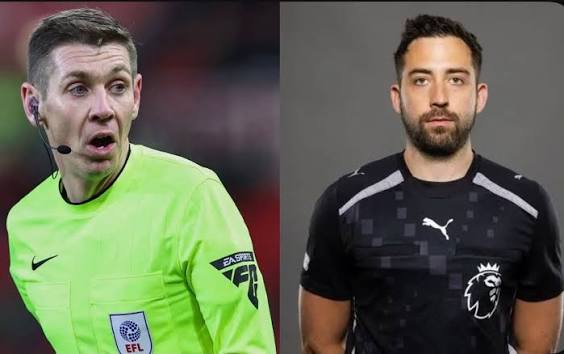
Matt Donohue, who served as VAR at Old Trafford, and assistant VAR Blake Antrobus have not been appointed for this weekend’s Premier League fixtures following Manchester City’s 1-0 victory over United on Sunday.
The decision was taken by Pro Ref chief refereeing officer Howard Webb and the organisation’s management team after an internal assessment concluded that the VAR team made an “error of judgement” when overturning the initial offside decision against Haaland. Reuters reported that both officials are expected to remain out of Premier League duty until after the forthcoming international break.
The controversy centres on City’s decisive goal in the 60th minute. Josko Gvardiol delivered a cross towards the far post, where Haaland converted to put City ahead. The assistant referee initially flagged the Norwegian striker offside, but VAR intervened after determining that Manchester United defender Patrick Dorgu had played Haaland onside.
The difficulty was that the review concentrated heavily on Haaland’s position while failing to properly assess the involvement of City midfielder Enzo Fernandez.
Fernandez was standing in an offside position and appeared to attempt to head the cross before it reached Haaland. Although he did not make contact with the ball, his movement created a subjective question over whether he had interfered with play or influenced United’s defenders.
Pro Ref subsequently concluded that the issue should have been referred to the match referee for an on-field review.
“It was established that Enzo Fernandez did not play the ball and therefore that makes any offside offence subjective,” Pro Ref said.
The refereeing body added that VAR failed to recognise the likely impact of Fernandez’s position and should have recommended that the referee review the incident himself.
Webb has since gone further, describing the failure as a case of VAR “tunnel vision”.
The former Premier League referee said officials correctly established that Haaland himself was onside but focused so narrowly on that factual question that they did not sufficiently consider the involvement of another attacking player in an offside position.
That explanation goes to the heart of one of the continuing challenges surrounding VAR.
Technology can provide multiple camera angles, calibrated lines and slow-motion footage, but the quality of the final decision still depends on officials identifying the correct incident and applying the appropriate law.
In this case, determining Haaland’s position was relatively straightforward. The more complicated issue concerned Fernandez and whether his attempt to play the ball amounted to interference.
The cameras captured both. The failure occurred in how the evidence was assessed.
Pro Ref contacted Manchester United after the match to acknowledge the mistake, while the incident has been subjected to a formal review.
The admission is particularly significant because Haaland’s goal was the only one of the derby.
Manchester City had already been reduced to 10 players when Phil Foden was shown a straight red card in the 23rd minute after kicking out at United captain Bruno Fernandes.
United subsequently created several opportunities, with Marcus Rashford and Kobbie Mainoo both hitting the woodwork, but City defended their advantage and left Old Trafford with a 1-0 victory.
That meant the disputed VAR intervention directly determined the scoreline.
Manchester United manager Michael Carrick questioned the decision after the match, while defender Lisandro Martinez described the outcome as an injustice. Pro Ref’s subsequent admission effectively confirmed that United’s complaints over the review process were justified, even though the result itself remains unchanged.
The standing down of Donohue and Antrobus therefore represents an unusually visible consequence for officials after a high-profile VAR mistake.
Premier League refereeing authorities have faced persistent pressure to improve transparency around major decisions, particularly where video reviews overturn calls made on the pitch.
The latest episode demonstrates both the benefits and limitations of that push. Pro Ref has acknowledged the mistake, explained the technical reason it occurred and taken immediate action over the officials involved. That degree of disclosure gives clubs and supporters greater insight into how refereeing decisions are assessed after matches.
But it also raises a more difficult question about consistency. If VAR exists principally to correct clear errors, then mistakes occurring after several officials have access to replay technology can be more damaging to public confidence than an incorrect split-second decision made by a referee or assistant on the field.
The Manchester derby incident is particularly instructive because the technology itself did not fail.
VAR successfully identified that Dorgu’s position meant Haaland was not guilty of the straightforward offside offence initially flagged. What officials failed to do was widen the review to determine whether Fernandez’s actions created a separate offence.
That distinction makes Webb’s description of “tunnel vision” important.
It suggests that improving VAR may increasingly depend less on adding technology and more on strengthening review protocols so officials systematically examine the entire attacking phase rather than concentrating solely on the most obvious question.
For Donohue and Antrobus, the immediate consequence is removal from Premier League duties.
For Pro Ref, the greater challenge is ensuring the same procedural failure is not repeated.
The incident provides another reminder that VAR cannot remove judgement from football. It can only give officials better evidence on which to exercise it.
In the Manchester derby, the evidence was available. The problem was that the review did not ask every question it needed to answer.

