

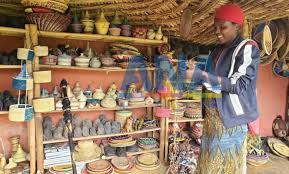

- Handicrafts Lead Ghana’s Non-Traditional Export Growth With 500.00% Jump
Ghana’s handicrafts industry has emerged as the fastest-growing segment within the country’s non-traditional export sector, recording a 500.00% increase in export performance as global demand for authentic cultural and artistic products continues to rise.
The milestone was disclosed by Rashid Raymond Kramer during the Eye on Port media forum, where he highlighted the growing international appeal of Ghanaian-made ornaments, Adinkra-inspired products, paintings, woodcrafts and other handcrafted artefacts.
The sharp increase points to a widening opportunity for Ghana’s creative economy, particularly at a time when global consumers are showing stronger interest in handmade products, cultural storytelling and ethically produced goods.
According to Mr Kramer, changing consumer preferences are increasingly favouring products that carry identity, heritage and craftsmanship. This shift has created new opportunities for Ghanaian exporters whose products reflect the country’s artistic traditions and cultural depth.
The strong export performance also comes at a time when Ghana is seeking to expand non-traditional exports and reduce dependence on a narrow basket of commodities such as gold, cocoa and crude oil.
For years, policy conversations around exports have focused largely on agriculture, manufacturing and processed goods. But the latest performance of handicrafts suggests that cultural products could also become a meaningful part of Ghana’s export diversification strategy.
They are not only traded as consumer goods. They carry cultural meaning, design identity and tourism appeal. Products such as Adinkra-themed pieces, carved wooden items, paintings, baskets, ornaments and home décor can command higher value when properly branded, packaged and marketed to international buyers.
It suggests that Ghana’s creative products are finding stronger acceptance beyond the domestic market. It also shows that the country’s cultural heritage can be converted into export earnings if producers receive the right support.
Industry stakeholders believe the sector could become a stronger contributor to foreign exchange earnings, especially if supported through quality improvement, branding, market access and better coordination among producers.
Many artisans operate informally and on a small scale. While this preserves creativity and community-based production, it can also limit access to finance, export documentation, packaging support and international buyers.
To sustain the current momentum, Ghana will need to help artisans move from isolated production to structured export value chains.
This means improving product finishing, standardising quality, supporting design innovation and connecting producers to e-commerce platforms, trade fairs, tourism outlets and international retail networks.
Global demand for cultural products is not driven only by utility. It is driven by meaning. Buyers want to know the story behind the product, who made it, what tradition it represents and how it connects to a specific place.
Its symbols, textiles, visual art, woodcraft traditions and historical identity are internationally recognisable. Adinkra symbols, for instance, already carry philosophical and cultural meaning that can be embedded in fashion, décor, jewellery, stationery and lifestyle products.
But cultural recognition must be matched with export readiness.
A product may be beautiful, but international buyers also require consistency, durability, timely delivery, reliable supply and clear pricing.
This is where public institutions, export agencies and private sector partners must work together.
The Ghana Export Promotion Authority has also identified textiles, garments and fashion products as another promising export frontier. The authority cited rising international demand for Ghanaian fabrics such as kente and other culturally inspired designs.
This is important because handicrafts, fashion and textiles can reinforce each other.
A stronger creative export strategy could link kente, Adinkra, leather goods, jewellery, woodcrafts, paintings, home décor and contemporary fashion into one broader Ghanaian cultural products brand.
Such an approach would support artisans, designers, small manufacturers and exporters while strengthening Ghana’s image in international lifestyle markets.
The development also aligns with the government’s industrialisation and 24-hour economy agenda.
Creative exports can support jobs across production, design, packaging, logistics, digital marketing, retail and tourism. Many of these jobs can be created outside Accra, especially in communities with strong craft traditions.
If properly developed, the handicrafts sector could support rural incomes, women-led enterprises and youth employment.
Access to affordable finance remains a major constraint for small producers. Many artisans are unable to scale because they lack working capital for raw materials, tools, packaging and bulk orders.
Export compliance can also be difficult for small operators unfamiliar with documentation, standards, shipping procedures and international payment systems.
Training will be necessary in areas such as product design, pricing, digital sales, intellectual property protection and export logistics.
Ghana must also protect the authenticity of its cultural products. As demand grows, there is a risk that foreign producers could imitate Ghanaian designs and sell cheaper versions in global markets.
This makes intellectual property protection and origin branding increasingly important.
A national certification or “Made in Ghana” cultural products label could help distinguish authentic Ghanaian handicrafts from imitations while giving buyers confidence.
The rise in handicrafts exports also offers an opportunity to link trade and tourism.
Visitors who encounter Ghanaian crafts during tourism experiences can become future buyers or brand ambassadors. Online platforms can then allow them to continue purchasing after leaving the country.
This connection between culture, tourism and exports should be strengthened.
The latest export performance shows that Ghana’s creative economy is no longer peripheral to trade policy. It can be a source of foreign exchange, jobs and national branding.
But the 500.00% surge should be treated as a starting point, not a final achievement.
To turn the moment into sustained growth, Ghana must invest in quality, branding, finance, market access and producer organisation.

