


- High Taxes and Fragmented Oversight Are Holding Back Ghana’s Insurance Industry — IBAG
Ghana’s insurance brokers have called for tax relief, streamlined regulation and stronger enforcement of compulsory cover, arguing that the present framework is constraining the industry’s ability to expand protection to households and businesses.
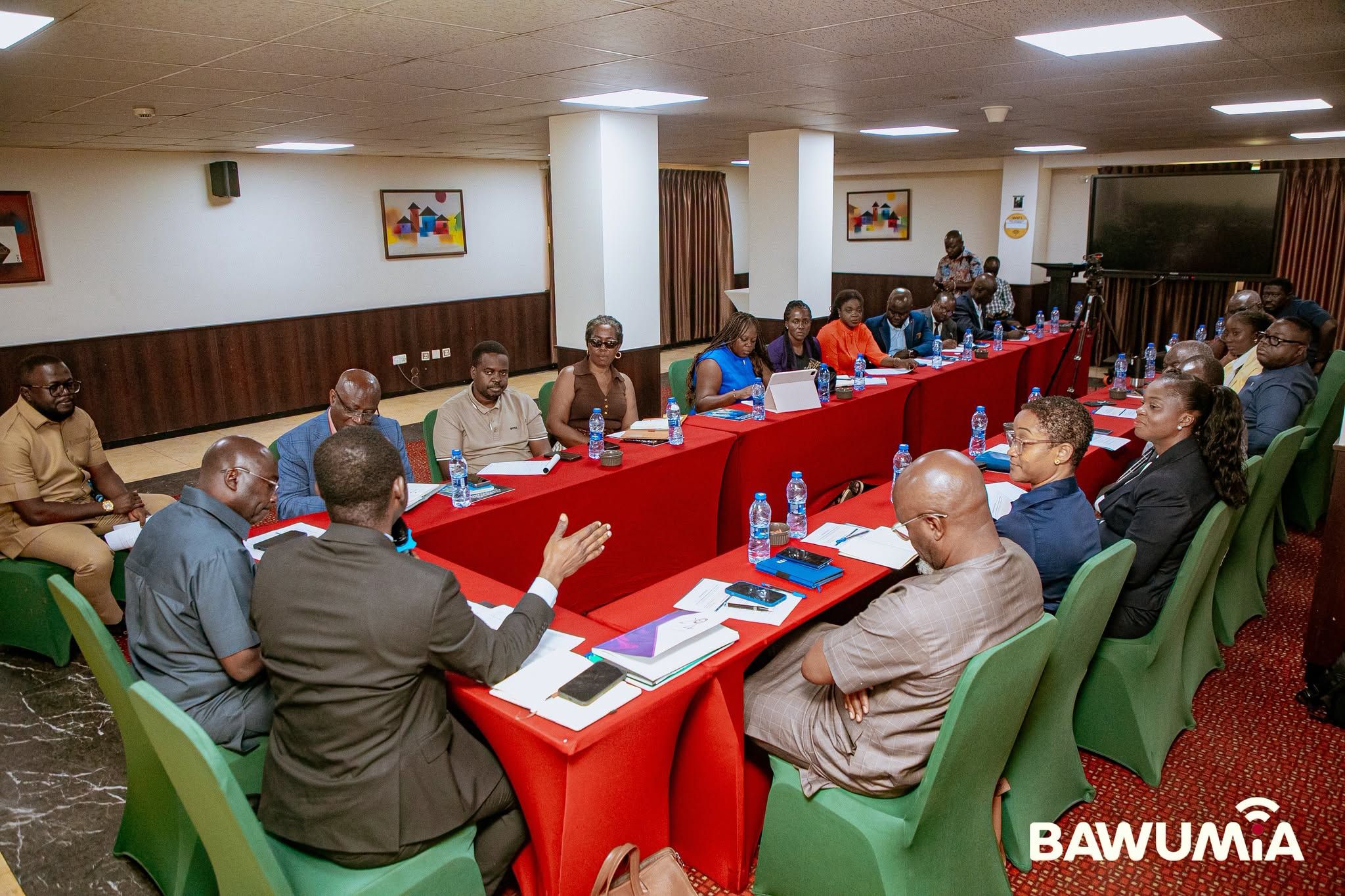
Stephen Kwarteng Yeboah, president of the Insurance Brokers Association of Ghana, raised the concerns during a meeting with New Patriotic Party flagbearer Mahamudu Bawumia on September 30.
The association’s proposals include exempting microinsurance products from value-added tax, creating a single regulatory structure, expanding state-supported agricultural insurance and enforcing the compulsory use of local brokers.
IBAG is also seeking compulsory group life and workers’ compensation insurance, as well as the introduction of decennial liability cover for road construction projects.
Dr Bawumia said the proposals made “strong policy sense” and could transform Ghana’s insurance brokerage industry. He indicated that his team would continue engaging the association as it develops its policy programme.
The proposals speak to a deeper weakness in Ghana’s financial system. Insurance is expected to protect households and businesses against shocks, but taxation, limited public understanding and uneven enforcement continue to restrict coverage.
The result is an economy in which risks are widely distributed but formal protection remains concentrated among a relatively small share of individuals and companies.
IBAG’s call to exempt microinsurance from VAT raises an important question about the government’s revenue strategy.
Taxes on insurance may generate immediate public revenue, but they can also increase the price of protection and discourage low-income households from buying policies. The effect is particularly significant for microinsurance, where customers are highly sensitive to small changes in premiums.
Microinsurance products are designed to cover lower-income households against events such as death, illness, crop failure, accidents and damage to small businesses. These customers frequently operate outside formal employment and may have limited savings.
When insurance becomes unaffordable, the cost of emergencies does not disappear. It is transferred to families, informal support systems or, eventually, the state.
A VAT exemption would therefore represent a policy trade-off. The government could surrender some near-term tax revenue in return for wider coverage, greater household resilience and a deeper insurance market.
However, any exemption would need to be carefully defined. Without clear eligibility rules, conventional insurance products could be repackaged as microinsurance to obtain preferential tax treatment.
The reform would work best if linked to premium limits, defined target groups, simplified policy terms and measurable expansion in the number of previously uninsured customers.
IBAG’s concern about overregulation and its call for a single regulator also require careful examination.
Insurance companies, brokers, pension trustees, banks and other financial-sector actors sometimes operate across overlapping markets. A product may involve insurance protection, investment management, pensions and digital payments, exposing providers to several regulatory requirements.
Multiple supervisors can strengthen scrutiny, but they can also produce duplicated reporting, inconsistent rules and higher compliance costs.
For smaller brokers, these costs can consume resources that might otherwise support technology, product development or expansion into underserved areas.
A single regulator could reduce duplication, but institutional consolidation alone would not guarantee better supervision. Combining regulatory bodies without addressing skills, enforcement capacity and information-sharing could merely create a larger bureaucracy.
The more immediate objective should be regulatory coherence: one clear set of obligations, shared reporting systems and defined responsibility for each institution and product.
IBAG’s proposal for government-supported agricultural insurance is particularly relevant as climate volatility places farmers and food supply chains under increasing pressure.
Drought, flooding, pests and changing rainfall patterns can wipe out an entire production cycle. Yet many farmers lack the financial records, collateral and predictable income required to access conventional insurance.
Agricultural insurance is also difficult for private insurers to provide without public support because a single event can affect thousands of farmers simultaneously. Unlike motor accidents, which are distributed across individual policyholders, a regional drought can generate widespread claims at the same time.
Government participation could take the form of premium support, reliable weather and production data, reinsurance arrangements or the integration of cover with agricultural credit and input programmes.
But subsidies would need to reward genuine risk reduction rather than become another agricultural transfer programme with weak accountability.
The success of such a system would depend on credible loss assessment and timely claim payments. Farmers will not continue paying premiums if compensation arrives long after the planting season has passed.
The brokers also want stronger enforcement of group life and workers’ compensation cover.
This exposes a recurring weakness in Ghana’s regulatory system: several forms of insurance may be required in principle but remain inconsistently enforced in practice.
Compulsory cover can improve worker protection and reduce the burden placed on families after workplace injuries or death. But enforcement must extend beyond large formal companies to contractors, medium-sized enterprises and other employers where occupational risks may be higher.
IBAG’s call for compulsory use of local brokers similarly seeks to retain more insurance value within Ghana. Local brokers can provide market knowledge, claims support and domestic capacity-building, especially for major commercial and public-sector risks.
Yet compulsion should not become protection from competition. Local participation rules must be accompanied by professional standards, adequate capital and the technical ability to handle complex risks.
The proposed introduction of decennial liability insurance for road construction could be one of the association’s most consequential recommendations.
Such cover would hold contractors, engineers and other professionals financially accountable for serious structural defects discovered over an extended period, potentially up to 10 years after completion.
For Ghana, where premature road deterioration repeatedly creates additional costs for the state, long-term liability insurance could shift part of the risk away from taxpayers and towards the parties responsible for design and construction.
It could also encourage insurers to scrutinise contractors, materials and engineering standards before agreeing to provide cover.
The danger is that insurance could become another project cost without improving quality. For the policy to work, liability must be clearly assigned, construction standards independently verified and claims enforceable.
IBAG has presented a broad reform agenda rather than a narrow request for industry concessions. Its proposals touch taxation, consumer protection, agricultural resilience, infrastructure quality and domestic participation.
The decisive question is whether policymakers treat insurance as another taxable financial service or as economic infrastructure that allows households, businesses and the state to absorb risk.
Ghana’s insurance industry will not deepen through compulsion alone. It requires affordable products, credible claims settlement, proportionate regulation and public confidence that a policy will provide real protection when disaster occurs.

