

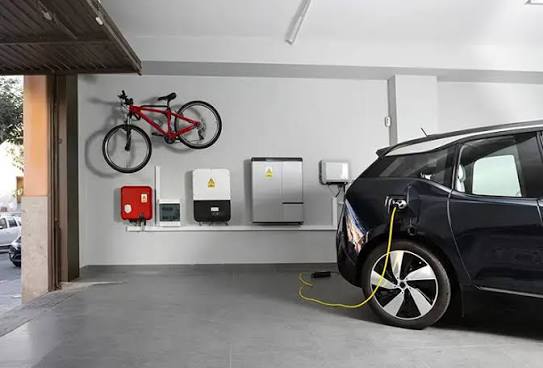

- Home Charging Determines Whether Electric Cars Deliver Real Savings
Electric vehicles can recover their higher purchase costs in less than two years, but the financial case for switching depends heavily on the model selected, annual mileage and whether the owner can charge cheaply at home.
An October 2026 study commissioned by Acorn Insurance found that the Peugeot E-2008 54kWh offered the quickest break-even period among 12 models examined. Compared with the petrol-powered Peugeot 2008 PureTech 130, the electric version was estimated to recover its additional cost after 12,600 miles, equivalent to approximately 1.80 years of driving.
Its estimated three-year ownership cost was £19,500 under the study’s most favourable charging assumptions.
The result appears to strengthen the argument that electric vehicles can become more economical than petrol cars within a normal ownership period. However, the findings also expose a structural divide within the transition to electric mobility: drivers with access to private, overnight charging face a very different cost calculation from those dependent on workplace or public infrastructure.
“Driveway charging produces the most optimistic numbers,” said Adam Croughan, Personal Lines Operations Director at Acorn Insurance.
That advantage is significant because domestic electricity tariffs—particularly overnight rates—are generally cheaper and more predictable than commercial rapid-charging prices. Drivers can also recharge while their vehicles would otherwise be parked, reducing both the financial and practical inconvenience associated with finding charging facilities.
But the study said 28.00% of surveyed drivers identified the absence of home charging as an obstacle to adopting an electric vehicle, while 33.00% reported difficulty locating chargers during journeys.
These findings suggest that the debate about electric-car affordability cannot be separated from housing and infrastructure.
A homeowner with a driveway can install a private charger and take advantage of off-peak electricity. A tenant, apartment resident or household relying on on-street parking may have no such option. That driver could pay substantially more for electricity while spending additional time locating and waiting at public chargers.
The report describes its lowest driveway-charging cost measure as £1.77 per mile and a daytime workplace scenario as £12.56 per mile. Taken literally as electricity costs per mile, however, those figures appear exceptionally high and would make even the cheaper scenario uneconomical.
They may instead represent the cost of a charging session, a standardised journey or another element of the study’s total-cost model. The precise unit should therefore be clarified before those numbers are presented as literal energy costs per mile.
The broader conclusion remains credible: where and when a vehicle is charged can materially change the ownership economics.
This has important implications for policymakers. Subsidising vehicle purchases may increase initial demand, but it will not produce an equitable transition if affordable charging remains concentrated among households with driveways.
Public charging must become sufficiently widespread, reliable and competitively priced to prevent electric mobility from becoming cheaper primarily for wealthier homeowners.
Mr Croughan said 55.00% of drivers surveyed believed they had received insufficient financial assistance or had not been provided with an environment that made switching practical. Only between 7.00% and 8.00% of petrol- and diesel-car drivers said they had considered an electric alternative.
The challenge is therefore not simply persuading consumers that electric vehicles are environmentally preferable. Governments and manufacturers must demonstrate that the financial case works under the real conditions in which different households live and travel.
The study’s hybrid findings further complicate assumptions about the transition.
The Peugeot 2008 Hybrid 145 recorded the strongest hybrid performance, with an estimated break-even period of 2.80 years. By contrast, Vauxhall hybrid models required between 8.50 and 9.50 years to recover their additional costs, while the Volkswagen Golf eHybrid had an estimated payback period of 18.70 years.
Such timelines exceed the period for which many motorists retain a vehicle. A buyer could sell or replace the car long before its fuel savings compensate for its higher purchase price.
This demonstrates why broad labels such as “electric,” “hybrid” and “petrol” are insufficient for making financial decisions. Battery size, vehicle price, efficiency, charging behaviour, insurance, annual mileage and resale value can matter more than the powertrain category.
A hybrid is not automatically the financially safer compromise between a petrol vehicle and a fully electric model. If its initial price premium is high and its fuel savings are modest, it can take considerably longer to break even than either alternative.
The Kia Niro 1.6 GDi Hybrid reportedly required no payback period in its comparison because it was already cheaper than the diesel model against which it was assessed. This reinforces the study’s central finding: the exact vehicle pairing can matter more than fuel type alone.
Depreciation, another major concern for prospective electric-car buyers, also appears less damaging than commonly assumed.
The study estimated that electric vehicles retained an average of 41.40% of their original value after three years, compared with 41.70% for petrol cars. The difference of just 0.30 percentage points challenges the perception that electric cars universally lose value much faster.
However, the results varied substantially by model. The Renault 5 110kW Techno Comfort 52kWh reportedly retained 48.40% of its purchase price after three years, while the best-performing electric model in the wider analysis retained 56.00%.
Depreciation remains particularly important because it is often the largest cost of owning a new vehicle. A small saving on electricity can be overwhelmed by a sharp fall in resale value, just as strong value retention can improve an electric car’s economics even when its purchase price is higher.
The findings also have implications for employers and commercial fleets. Working drivers typically cover more miles than private motorists, allowing fuel savings to accumulate faster. Yet their vehicles may also spend more time away from home and rely more heavily on public or workplace chargers.
Businesses considering fleet electrification must therefore analyse routes, downtime, depot capacity and charging tariffs rather than relying on a national average. Installing workplace chargers may require upfront investment, but it can prevent employees from depending on expensive rapid-charging networks.
The report ultimately presents neither a universal endorsement nor a rejection of electric vehicles. It shows that switching can produce meaningful savings, but only when the vehicle and charging arrangement fit the driver’s circumstances.
For policymakers, the central lesson is that purchase incentives alone will not sustain the transition. Affordable electricity, reliable public charging, access for tenants and transparent cost information will be equally important.
For consumers, the decision must begin with a model-by-model calculation. The real question is no longer simply whether an electric vehicle is cheaper than a petrol car. It is whether a particular electric vehicle, charged in a particular way and driven for a particular distance, is cheaper for the person buying it.

