

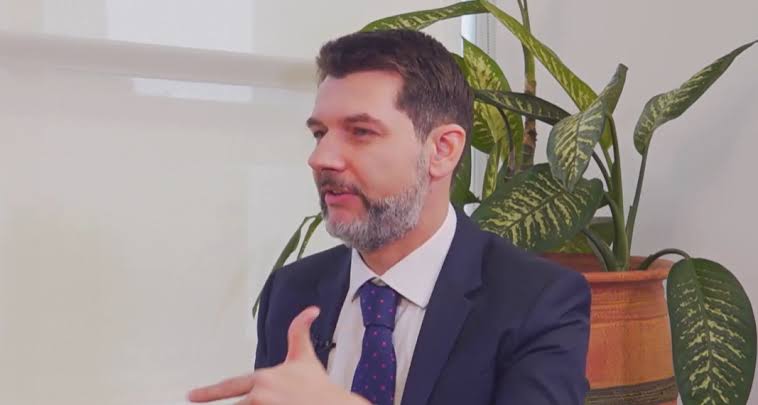

- IMF Warns Reform Fatigue Could Put Ghana’s Economic Recovery at Risk
Ghana’s economic recovery is entering a more fragile phase in which the greatest danger may no longer be the crisis conditions that pushed the country into debt distress, but the temptation to relax reforms as headline indicators improve, according to the International Monetary Fund.
Dr Adrian Alter, the IMF’s Resident Representative in Ghana, has warned that policy complacency now ranks among the most important risks to the country’s outlook, even as private-sector credit growth and improving macroeconomic conditions provide early signs that recovery is beginning to reach businesses.
“I would say the key risk is policy complacency. That’s the number one risk. The private sector should be the one creating jobs and boosting growth,” Alter said in an interview with Bernard Avle on Channel One TV’s The Point of View.
Ghana’s immediate crisis management has centred on fiscal consolidation, debt restructuring, inflation control and exchange-rate stabilisation. But as those pressures ease, the policy challenge is becoming more complex: ensuring that stabilisation is not mistaken for structural recovery.
That distinction matters because macroeconomic improvements can reverse quickly if the reforms that underpin them are weakened.
Lower inflation, a more stable currency and stronger reserves may create the impression that the hardest phase of adjustment is over. But if expenditure controls loosen, revenue reforms stall or fiscal discipline weakens, confidence can deteriorate long before the effects become visible in headline data.
Alter’s message is therefore straightforward: Ghana’s recovery is conditional.
“I would say that the recovery is sustainable if the reform momentum continues,” he said.
One of the more encouraging signs is the improvement in credit to businesses.
Alter said private-sector credit had expanded by about 40.00% year-on-year, based on the latest Bank of Ghana data.
That is significant because stronger credit growth can indicate that lower macroeconomic risk is beginning to feed through into business activity. Firms require financing to invest in machinery, expand inventories, hire workers and increase production.
A durable recovery requires lending to productive businesses rather than an expansion driven primarily by government-related activity or short-term consumption.
The IMF’s emphasis on private-sector-led growth reflects a broader concern that Ghana cannot sustainably return to an economic model in which government expenditure acts as the dominant engine of expansion.
That model would risk recreating the fiscal vulnerabilities that contributed to the country’s recent crisis.
The stronger route is one in which the state creates the conditions for private investment while maintaining fiscal discipline.
That means improving tax predictability, energy reliability, access to finance, infrastructure and regulatory certainty.
Without those ingredients, stronger macroeconomic indicators may not translate into enough investment and employment to make the recovery visible to households.
Businesses create most durable jobs, but they do so only when they have confidence that demand, financing costs and policy conditions justify expansion.
A private-sector recovery therefore depends on more than aggregate credit growth. It requires confidence that the operating environment will remain stable enough for companies to commit capital over several years.
This is where reform fatigue becomes particularly dangerous. A government emerging from crisis can face intense political pressure to ease adjustment measures quickly.
Citizens want lower taxes, better services and more public investment. Businesses want cheaper credit and reduced operating costs. Politicians face incentives to respond to those demands.
But moving too quickly can undermine the very stability needed to deliver them sustainably.
That is the paradox confronting Ghana. The better the economy looks, the easier it becomes to argue that fiscal restraint is no longer necessary.
Yet the IMF’s position is that maintaining discipline during recovery may be even more important than imposing it during crisis. The Fund is also concerned about the structure of Ghana’s external earnings.
“Other risks obviously include weaker commodities, gold in particular, but also it could be cocoa prices, it could be energy prices, which are all jointly affecting the current account balance,” Alter said.
Gold is particularly important because of its growing contribution to export receipts and foreign-exchange inflows.
Strong gold prices can support reserves, improve the current account and strengthen confidence in the cedi.
But that creates a dangerous dependence on a variable Ghana cannot control.
“Gold, because of the concentration on the export side, gold prices are a relevant risk for the economy, and that’s why diversification is key,” Alter said.
If gold prices fall sharply, Ghana’s export receipts could weaken. If cocoa earnings deteriorate at the same time, the external position would come under further pressure. If imported energy costs rise, the effect could be compounded through a higher import bill.
That combination would test the durability of the country’s current account improvement and put renewed pressure on foreign-exchange reserves.
Diversification is therefore more than a development aspiration. It is a form of macroeconomic insurance.
A broader export base would reduce the risk that one or two commodities determine the trajectory of the entire external sector.
That could come from greater agro-processing, manufacturing and tradable services. Processing more cocoa domestically, for example, could allow Ghana to capture more value from each tonne exported.
Expanding manufacturing could reduce dependence on imported finished goods while creating new export streams. Services such as technology, finance and business-process outsourcing could provide additional foreign-exchange earnings with less direct exposure to commodity cycles.
Alter pointed to climate shocks and international conflicts as threats capable of disrupting Ghana’s outlook. Climate-related disruptions can reduce agricultural output, raise food prices and weaken rural incomes.
Geopolitical tensions can increase fuel and shipping costs, tighten global financing conditions and disrupt trade flows.
For an economy emerging from debt distress, those shocks become more dangerous when policy buffers are still being rebuilt. That means the current recovery period should be used to strengthen reserves and fiscal space rather than to assume that external conditions will remain favourable.

