

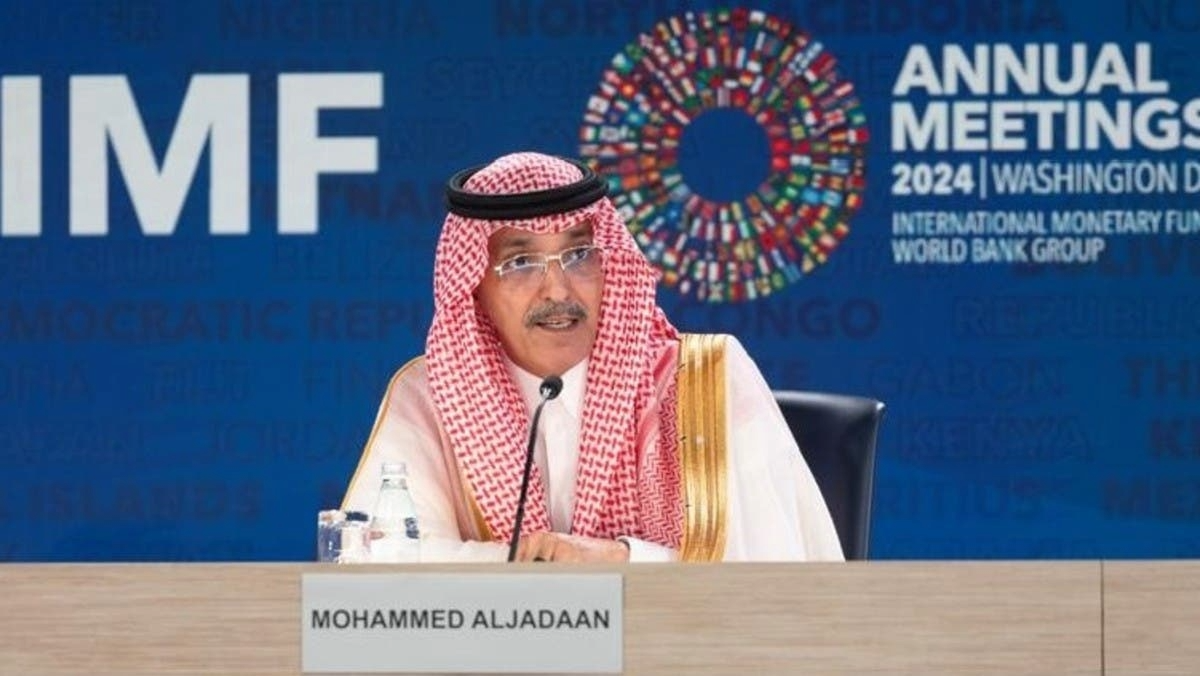

- IMFC Extends Mohammed Aljadaan’s Chairmanship to Sustain Reform Momentum
Members of the International Monetary and Financial Committee have extended the tenure of Mohammed Aljadaan, Saudi Arabia’s Finance Minister, as chair of the influential IMF advisory body by one year, prioritising continuity as the global financial system confronts significant reforms and persistent economic risks.
Mr Aljadaan’s three-year term was scheduled to end on January 3, 2027. Following a request from committee members, he accepted an extension that will keep him in the position for another year.
The IMFC said its members valued Mr Aljadaan’s leadership and believed retaining him would maintain momentum on the committee’s priorities, including ongoing institutional reforms.
The decision comes amid high sovereign debt, geopolitical conflict, volatile commodity prices and demands for institutional reform.
Although the IMFC does not make operational decisions for the Fund, it plays an important role in shaping the political direction of IMF policy. Its discussions influence debates on surveillance, lending arrangements, debt sustainability, quota reforms, international liquidity and the resilience of the global monetary system.
The committee comprises 25 finance ministers and central bank governors, reflecting the constituency structure of the IMF Executive Board. Each IMF member country, or group of countries electing an executive director, appoints a representative to the committee.
It normally meets twice each year: during the IMF–World Bank Spring Meetings and at the institutions’ Annual Meetings in the fall.
Continuity in the chairmanship could help the committee preserve consensus at a time when disagreements over debt treatment, climate financing, trade fragmentation and voting power are becoming more pronounced.
Mr Aljadaan’s additional year may also provide more time to advance reforms already under discussion without introducing a leadership transition during a sensitive implementation period.
However, continuity will be valuable only if it produces measurable progress.
Developing economies continue to argue that the international financial architecture does not adequately reflect their growing economic importance or financing needs. African countries, in particular, have called for stronger representation, more affordable financing and reforms that respond more effectively to debt distress and external shocks.
The IMFC’s effectiveness therefore depends on its ability to turn broad political agreement into guidance that influences the IMF Executive Board and management.
Mr Aljadaan was originally selected in 2023 to serve a three-year term. His continued leadership also sustains Saudi Arabia’s visibility within global economic governance as the kingdom expands its role in international finance and development.
The extension avoids an immediate contest over the chairmanship and provides institutional stability. It does not remove the difficult negotiations facing the committee.
Members must still reconcile the priorities of advanced economies concerned about financial stability and fiscal risk with demands from developing countries for greater policy flexibility, development financing and representation.
The next year will consequently test whether leadership continuity can generate policy momentum or merely preserve existing debates.
For Mr Aljadaan, the extension represents both endorsement and responsibility. The value of the additional year will ultimately be judged by whether the committee advances reforms capable of strengthening the IMF’s legitimacy, responsiveness and relevance in an increasingly fragmented global economy.

