


- Inside Yad Vashem: A Journey Through Humanity’s Darkest Failure and Its Urgent Warning
There are places one visits as a journalist and leaves with notes. There are others one visits as a human being and leaves with a wound. Yad Vashem, the World Holocaust Remembrance Centre in Jerusalem, is one of those places.
I entered the museum expecting history. I left carrying a burden.
The story of the Holocaust is often told in numbers: six million Jews murdered, millions more destroyed by war, entire communities erased, children killed before they could grow, families separated without farewell, names reduced to records, bodies reduced to ashes. But inside Yad Vashem, the numbers slowly give way to faces. The statistics become children, mothers, fathers, rabbis, teachers, shopkeepers, musicians, students, workers, believers and non-believers. They become people who woke up under blue skies, ate bread, argued with parents, went to school, fell in love, sang songs, made plans and believed, like all of us do, that tomorrow would come.
That was the first truth that struck me.

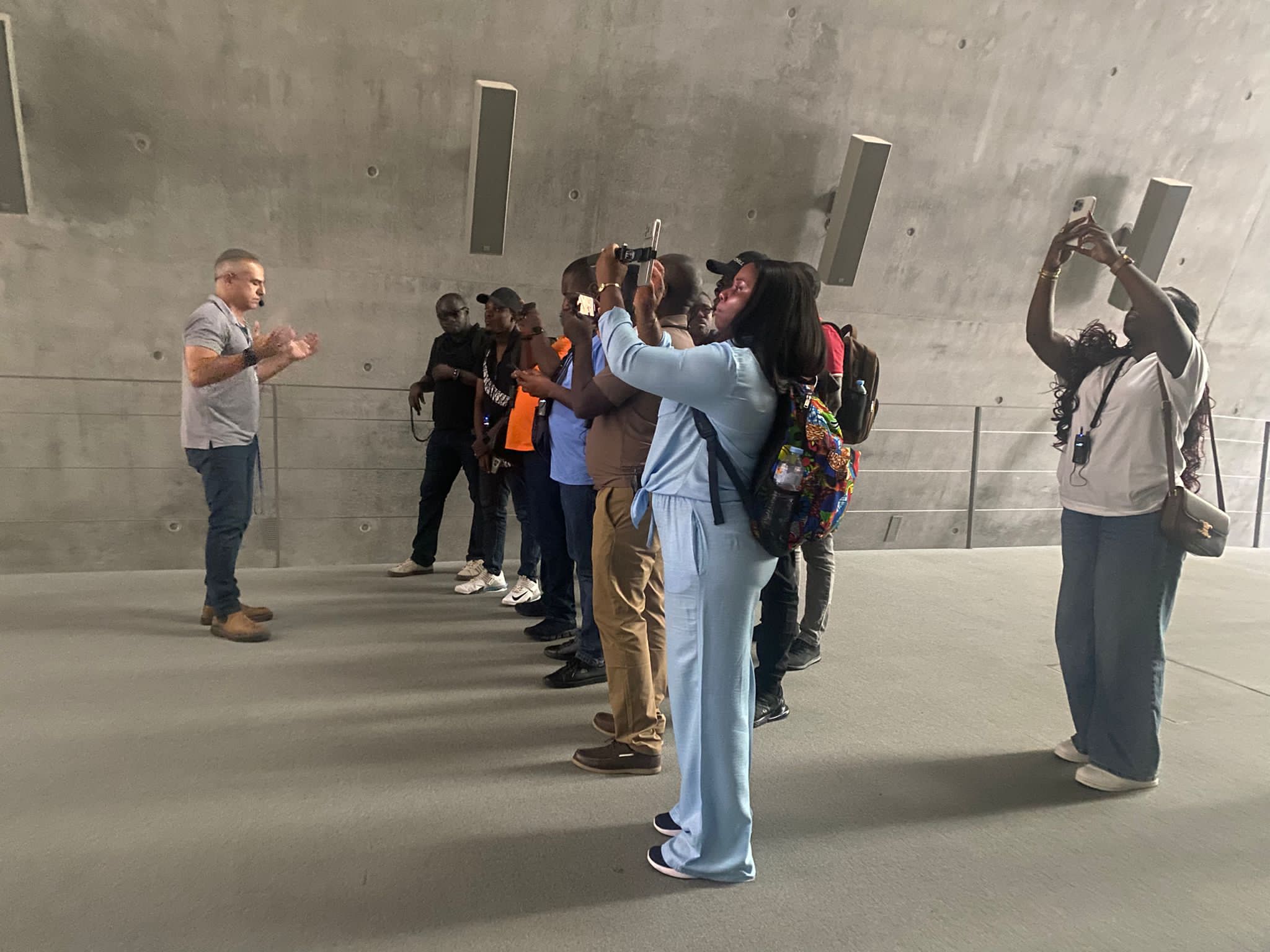
The Holocaust did not happen to shadows. It happened to human beings. At the beginning of the tour, our guide, Amir, drew attention to the architecture of the museum itself. He explained the meaning of the triangular shape, linking it to the Star of David, made of two triangles, and the absence of one triangle as a symbol of what was lost. Even before the full story began, the building had already started speaking. It was not merely a museum. It was a scar shaped into stone.
Then came the images of Jewish life in Europe before the Holocaust: orchestras, schools, religious life, secular life, children learning the Hebrew alphabet, families, singers, artists and ordinary citizens. The footage was black and white, and that alone can deceive the modern eye into thinking those lives belonged to another planet. But Amir challenged that assumption. He reminded us that those people lived in colour. When a Jewish child opened his window, the sky was blue. When he ate an orange, it was orange. When he returned from school, his mother could call him. He could quarrel with his parents. He could want to play with friends rather than continue lessons. In other words, the people we were seeing were not distant figures trapped in history. They were like us.
That point is essential because one of the great dangers in remembering atrocities is to unconsciously remove them from ordinary life. We tell ourselves that such evil belongs to another time, another culture, another civilisation, another kind of people. We comfort ourselves by pretending that the Holocaust happened in a world completely different from ours.
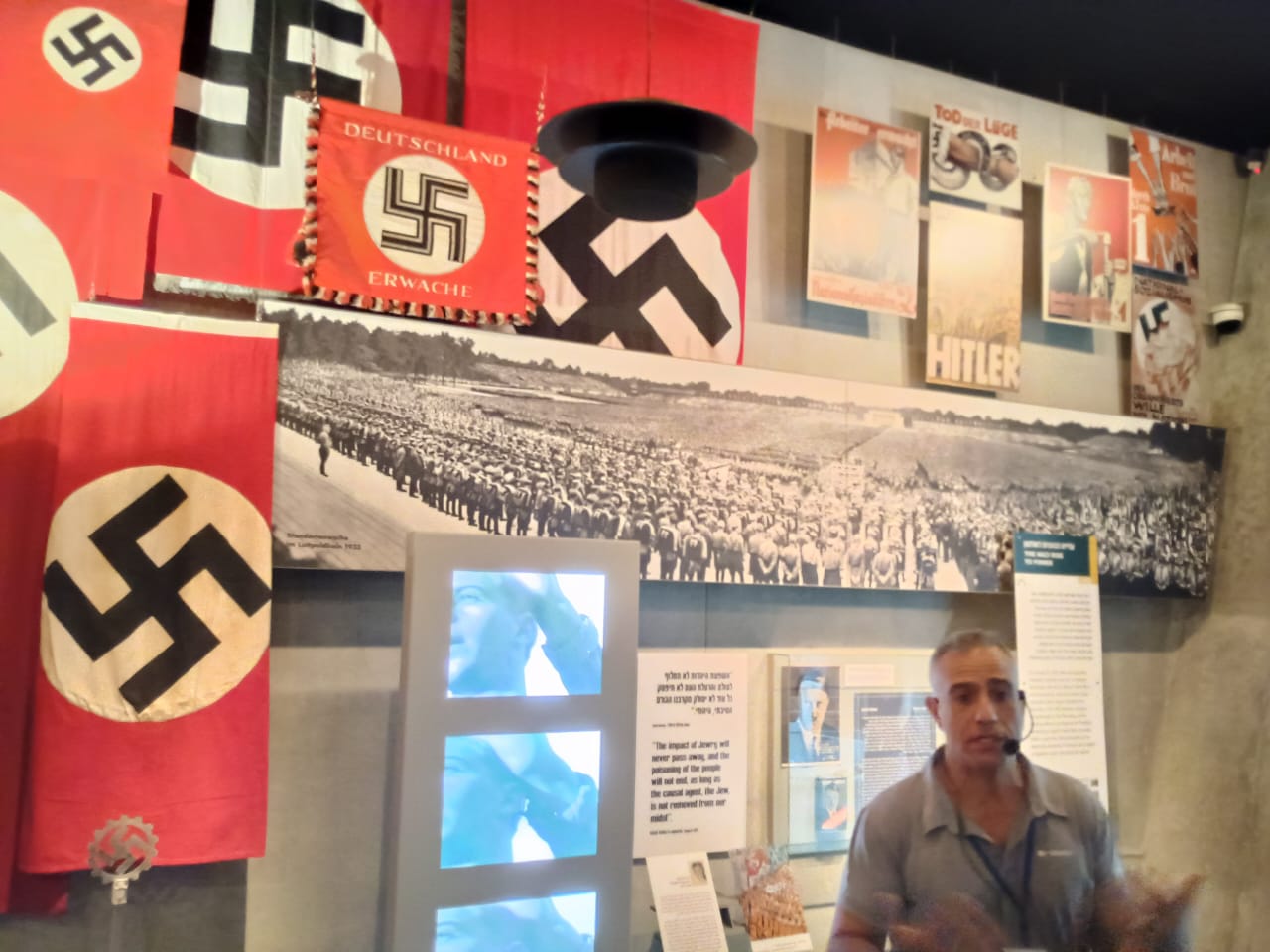
But Yad Vashem strips away that comfort. The Holocaust was not carried out by monsters from outside civilisation. It was planned and executed in one of Europe’s most educated societies. It was administered through documents, laws, trains, offices, uniforms, propaganda, police orders, engineering, medical language, military logistics and bureaucratic efficiency. It did not begin with gas chambers. It began with ideas. It began with words. It began with the slow poisoning of public imagination.

Before the killings came the lies. The Nazis did not invent antisemitism, but they industrialised it. They inherited centuries of prejudice and converted it into state policy. Religious suspicion, economic jealousy, racial theory and political paranoia were fused into a deadly ideology. Jews were blamed for everything and opposite things at the same time. They were accused of controlling capitalism and communism. They were portrayed as both powerful and subhuman, both conspirators and parasites. The contradiction did not matter. Hatred does not need logic; it needs repetition.
At Yad Vashem, I saw how propaganda prepared ordinary people to accept the unacceptable. Posters promised work and bread to a humiliated German population after the First World War. Economic depression created fear. Fear created anger. Anger needed an enemy. The Nazi Party gave the people one. Step by step, Jews were isolated from the national community. Boycotts came. Laws followed. Businesses were marked. Human beings were turned into categories. Categories were turned into targets.
This is where the museum becomes not only a place of memory but a warning about politics.
No genocide begins with mass murder. It begins when language changes. It begins when people are described as a problem to be solved, a contamination to be removed, an enemy within, an obstacle to national renewal. It begins when neighbours stop seeing neighbours. It begins when institutions choose convenience over truth. It begins when the crowd applauds cruelty because it has been taught that the victim deserves it.
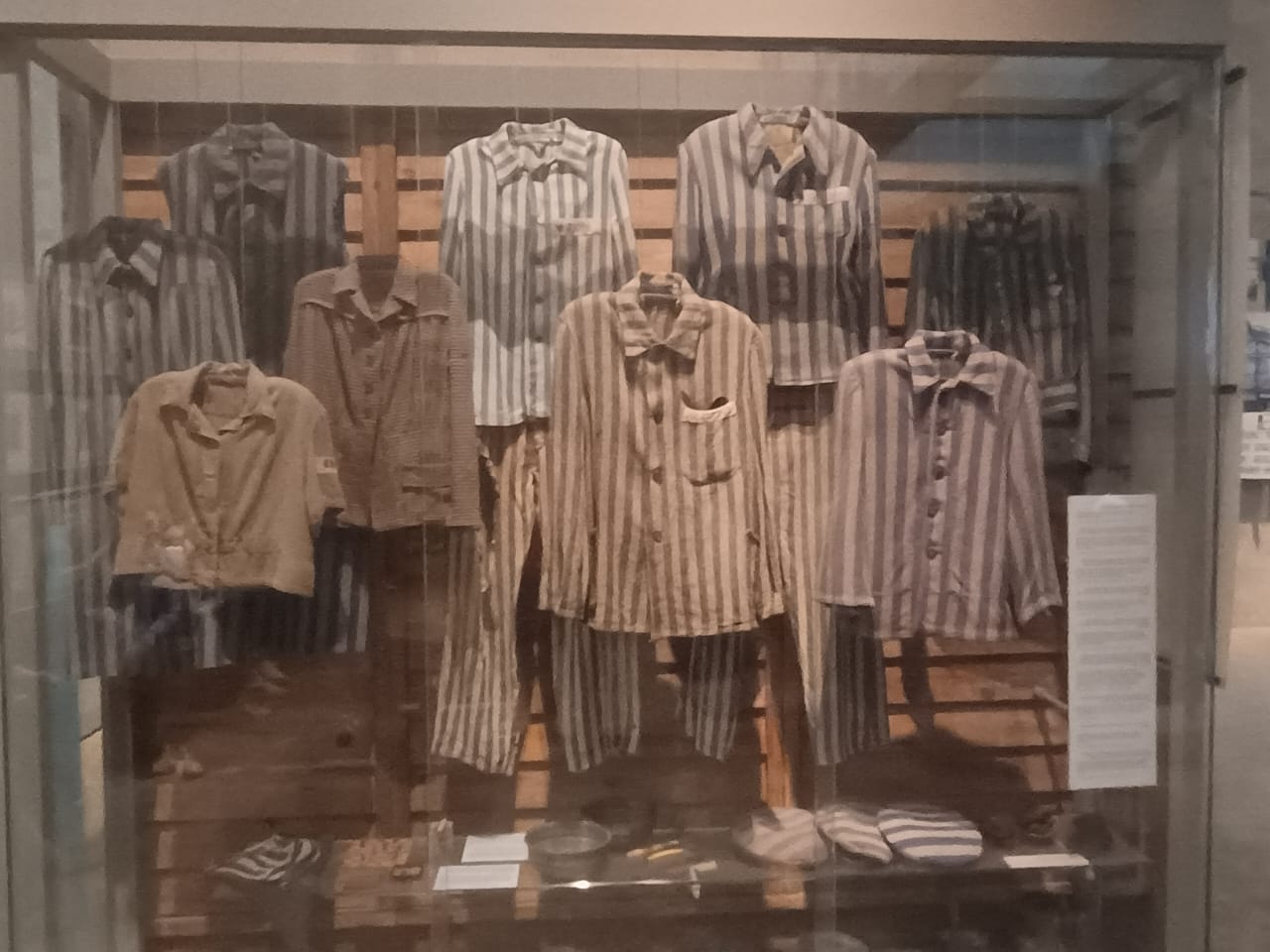
The yellow star was one of the most painful symbols in the museum. Jews were forced to wear it so they could be identified, humiliated, attacked and excluded. A mark on clothing became a licence for abuse. A symbol that should have belonged to identity and faith was turned into an instrument of degradation. The purpose was not only administrative. It was psychological. It told the victim: you are no longer fully human in the eyes of the state. It told the public: this person may be treated differently.
History teaches us that once a society accepts that some people can be marked for humiliation, it has already crossed a dangerous line.
The ghettos revealed another stage in the descent. Jewish communities were forced into overcrowded spaces, cut off from normal life and deprived of food. In the Warsaw Ghetto, people were made to survive on starvation rations. Disease, hunger and despair became tools of destruction. Yet even there, human dignity resisted. People formed councils, taught children, kept diaries, drew pictures, prayed, sang, wrote and tried to preserve meaning in a world designed to erase them.
One of the most haunting stories was that of Peter Ginz, a young boy who dreamed of going to the moon. He drew the moon’s surface, imagining the earth from above, but he was murdered in Auschwitz at age 16. Years later, Israeli astronaut Ilan Ramon took a copy of that drawing into space aboard the Columbia shuttle. The dream of a child murdered in the Holocaust travelled beyond the earth, even though the child himself never had the chance to live.
That story broke something open in me. The Holocaust did not only kill people. It killed futures. It killed inventions, songs, books, families, unborn children, discoveries, friendships and dreams. It killed the doctor someone might have become, the teacher a child might have grown into, the grandmother who would have told stories, the artist who would have painted beauty, the scientist who would have solved problems, the ordinary father who would have walked his daughter to school.
When we say six million Jews were murdered, we must understand that we are not speaking only of six million deaths. We are speaking of generations violently removed from the human story.
The mass shootings in Eastern Europe showed evil in its rawest form. Jewish men, women and children were taken out, ordered to dig pits or brought to killing sites, stripped, lined up and shot. At Babi Yar, near Kyiv, tens of thousands of Jews were murdered in two days. The guide described the horror of people falling into pits, some dead, some wounded, some buried under bodies, the earth itself seeming to move because the wounded were still trying to live.

There are images and descriptions the mind does not want to hold. But we must hold them. Not because we enjoy pain, but because forgetting is a second violence.
Then came the so-called “Final Solution,” discussed and organised with chilling administrative calm. The Nazis sat in rooms, counted Jewish populations by country and planned mass murder as if they were designing a transport system or production schedule. That is one of the most terrifying lessons of the Holocaust: evil can be organised politely. It can sit at a table. It can write minutes. It can calculate. It can speak in euphemisms. It can turn murder into procedure.
The trains exposed another cruelty: deception. Jews were told they were being relocated. In some places, they were made to buy tickets for the journey that would take them to death. Signs suggested return routes. Instructions created the illusion of order. People were told to remember where they placed their clothes so they could retrieve them after bathing. The lie was intentional. It was designed to preserve hope long enough to prevent resistance.
At Yad Vashem, the phrase that kept returning was: “Everything is okay.” Again and again, people were made to believe that everything was okay, even when everything was moving toward catastrophe. That phrase is one of the most disturbing truths about human vulnerability. People need hope. The Nazis weaponised it.
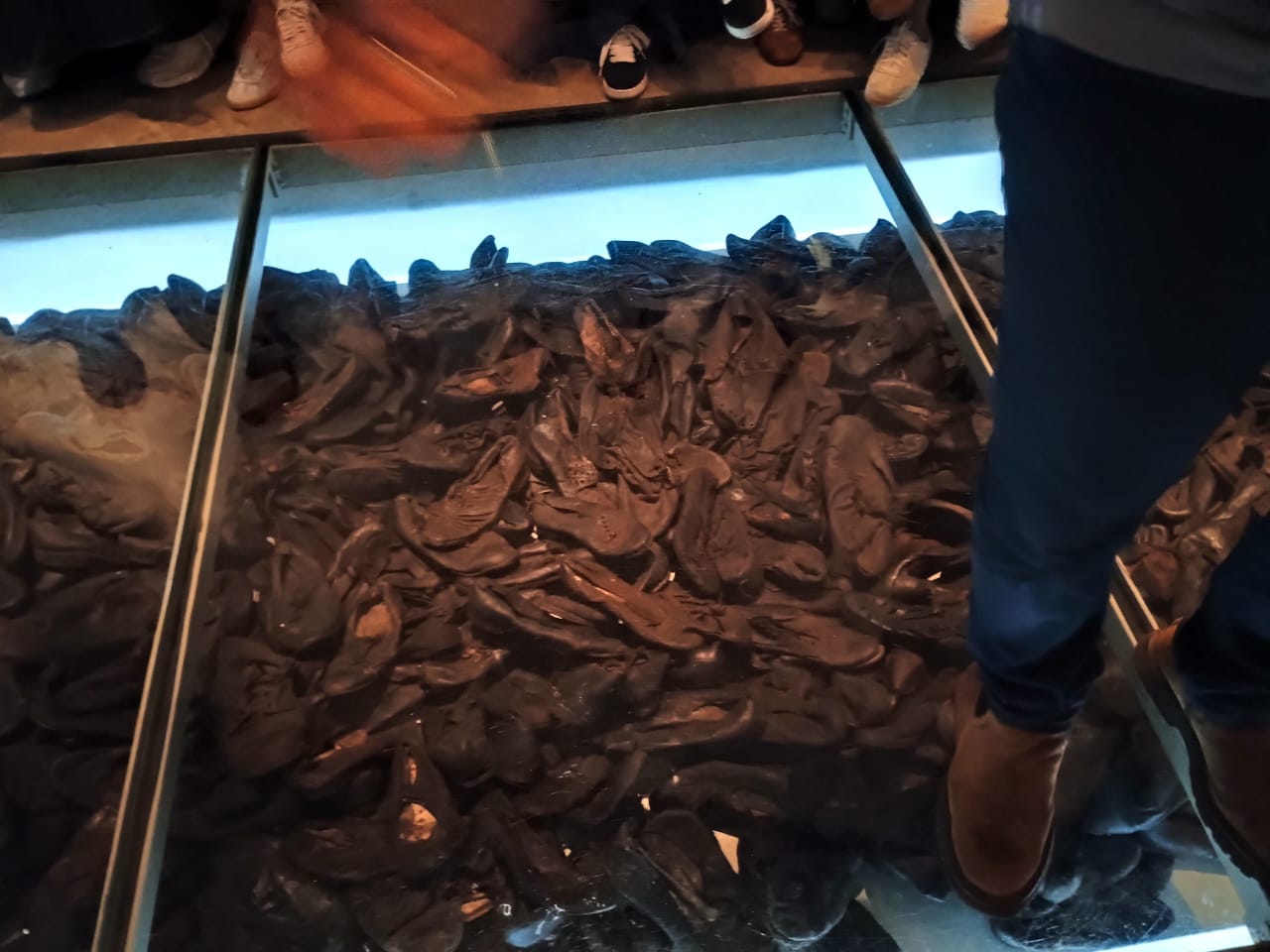
Auschwitz and Birkenau represent the darkest point of that machinery. There, murder was industrialised. Selection determined who would be worked to death and who would be killed immediately. Gas chambers replaced bullets because they were considered more efficient. Bodies were burned. Hair, shoes, suitcases and possessions were collected. What remained were traces: shoes that once held feet, suitcases that once carried clothes, names written by people who believed they would need their belongings again.
The shoes affected me deeply. Shoes are ordinary things. They carry people through life. Children run in them. Workers stand in them. Mothers walk in them. Travellers move in them. At Yad Vashem, shoes become witnesses. They say: someone was here. Someone walked. Someone hoped to continue walking. Someone was stopped.
By the time we reached the end of the museum, the story had moved from life to exclusion, from exclusion to ghettos, from ghettos to bullets, from bullets to gas chambers, from gas chambers to ashes, from ashes to memory. The physical movement through the museum felt like a descent into darkness and then a slow rise toward light.
That final movement matters. The Holocaust is not only a story of death. It is also a story of survival, remembrance and moral responsibility. The survivors who emerged from camps were often alone in the world. Many had no parents, children, siblings or homes to return to. Some died even after liberation because their bodies could no longer process food. Liberation did not instantly restore life. It only opened the painful beginning of survival.
And yet, the Jewish people survived. The museum ends not in darkness but with light, looking out toward Jerusalem. That view does not erase the horror. Nothing can. But it says something profound: memory must not end in despair. It must become responsibility.
For me, as an African journalist, this visit carried another layer of meaning. The Holocaust is a Jewish tragedy, but it is also a human warning. No people, continent or civilisation is immune from hatred. Africa has known slavery, colonial violence, ethnic massacres, civil wars, religious extremism and political brutality. Ghana, like every country, must learn that peace is not automatic and human dignity is never permanently secured. It must be defended in law, in schools, in media, in politics, in churches, in mosques, in homes and in public speech.
The Holocaust teaches that silence is dangerous. Indifference is dangerous. Propaganda is dangerous. Dehumanising language is dangerous. State power without moral restraint is dangerous. A population taught to hate can become an instrument of destruction.
It also teaches that journalism matters. The journalist’s first duty is not merely to report what has happened, but to resist the lie before it becomes policy, to question power before it becomes persecution, to expose hatred before it becomes violence, and to defend the humanity of those whom society is being trained to despise.
The world failed the Jews in many ways. Some participated. Some looked away. Some claimed not to know. Some knew enough but did too little. That failure must remain part of our moral memory. The Holocaust was not only the crime of those who killed. It was also the shame of a world that allowed hatred to grow, borders to close, propaganda to spread and human beings to be abandoned.
At Yad Vashem, I understood that remembrance is not passive. It is not simply placing flowers, lighting candles or speaking solemn words once a year. Remembrance must disturb us. It must make us uncomfortable with injustice in the present. It must sharpen our eyes when minorities are demonised, when migrants are scapegoated, when political opponents are dehumanised, when religious hatred is normalised, when ethnic identity is weaponised, when lies are repeated until they sound like truth.
The Holocaust did not begin when the first gas chamber opened. It began when enough people accepted that the dignity of others could be negotiated.
That is the truth Yad Vashem brought to light for me. As I left the museum, I did not leave with the feeling that I had simply visited a historical site. I left with the sense that I had stood before evidence in the trial of humanity. The verdict was painful: civilisation can fail. Education can fail. Religion can fail. Law can fail. Government can fail. Neighbours can fail. The world can fail.
But memory must not fail. The names must not disappear. The faces must not disappear. The children must not disappear. The warning must not disappear.
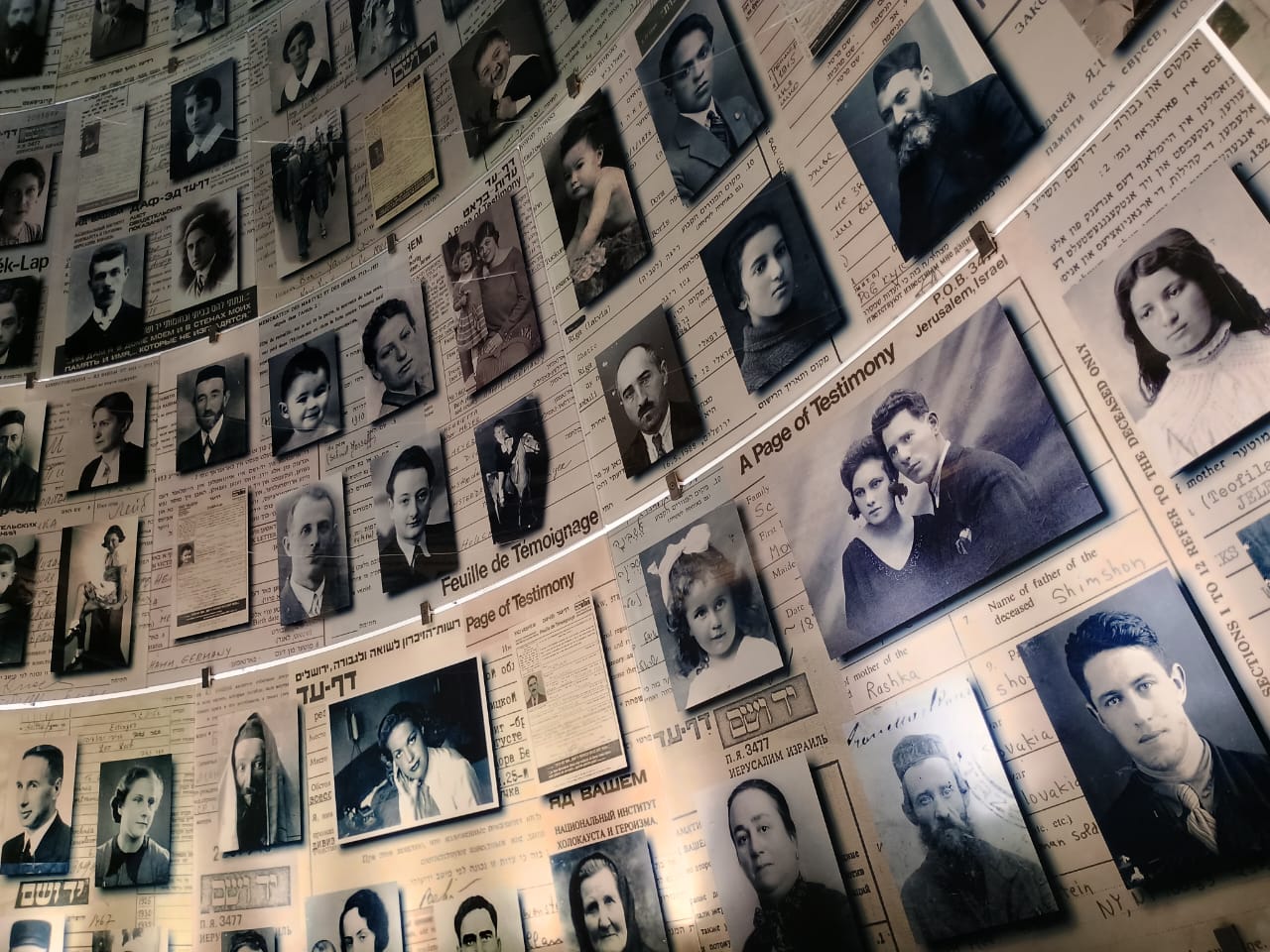
The Holocaust is the story of what happens when hatred is organised, when lies are institutionalised, when prejudice is made patriotic, when silence becomes policy and when human beings are stripped of humanity before they are stripped of life.
For the Jewish people, Yad Vashem is a sacred house of memory. For the rest of us, it is a mirror. It asks what we would have done then. More importantly, it asks what we are doing now.
That is why the lesson cannot be left in the past.
Never again should any people be marked for destruction. Never again should the world look away while hatred becomes law. Never again should children be loaded onto trains to death. Never again should human beings be reduced to numbers, ashes and shoes behind glass.
Never again should the world ever be made to experience such darkness.
Never again.
Never again
Never again

