

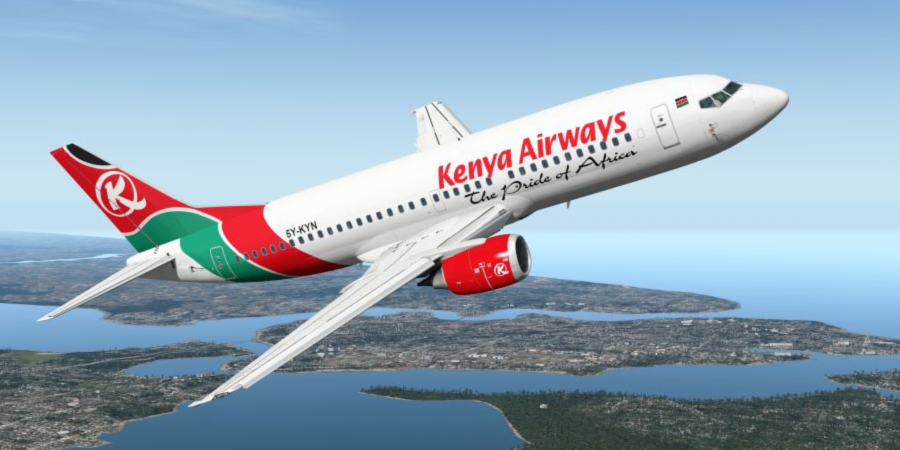

- Kenya Approves US$350m Lifeline for Kenya Airways as Losses and Fuel Costs Deepen
Kenya’s Cabinet has approved US$350m in shareholder financing for Kenya Airways, providing the loss-making national carrier with emergency liquidity as it confronts rising fuel costs, maintenance delays and urgent financial obligations.
President William Ruto’s office said the financing was intended to stabilise the airline and support the continued provision of services.
The decision offers immediate relief but raises a more difficult question: whether the new funding will serve as a bridge towards a credible commercial turnaround or become another state-backed intervention that postpones the airline’s underlying financial problems.
Kenya Airways reported a pre-tax loss of KSh15.92bn, approximately US$123m, in the first half of 2026. That compared with a loss of KSh12.17bn during the corresponding period in 2025.
The deterioration came despite strong passenger demand, highlighting the severe cost pressures affecting the airline.
Fuel expenditure increased by 72 per cent during the first half of the year as the conflict in the Middle East pushed up international oil and refined-product prices. Fuel accounted for as much as half of Kenya Airways’ total operating costs.
The conflict also disrupted deliveries of spare parts and maintenance services, constraining the airline’s ability to return grounded aircraft to service and fully utilise available demand.
The US$350mn facility must therefore perform two functions: meeting immediate obligations and creating sufficient operational capacity for the airline to generate stronger revenue.
If the financing is used mainly to settle overdue bills without restoring aircraft, improving schedules and reducing structural costs, its effect may prove temporary.
Kenya Airways has said it is seeking both financial and strategic investors as part of its restructuring programme.
Chairman Kiprono Kittony disclosed in August that the airline had received interest from potential investors in the United States, China, South Africa and Singapore.
“We have received interests from local and international investors who will inject

