


- KFC Drops Pepsi for Coca-Cola in US but Keeps African Partnership Intact
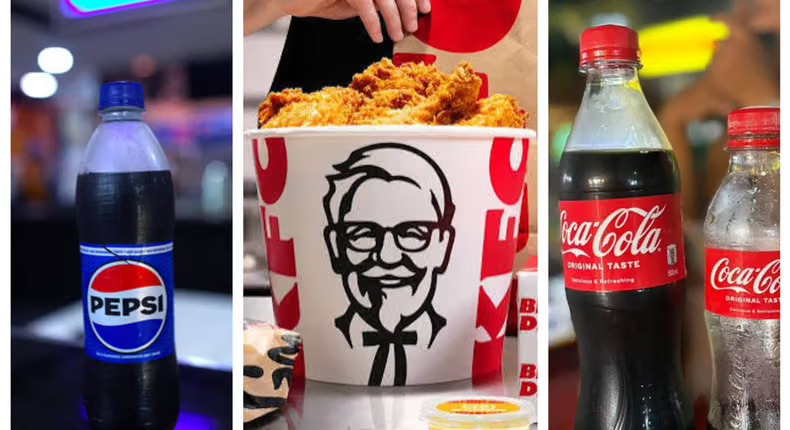
KFC’s decision to replace Pepsi with Coca-Cola across its 3,600 United States restaurants ends a relationship stretching back nearly four decades, but the exclusion of more than 1,500 African outlets reveals something larger than a beverage preference: global brands are often far less globally uniform than their logos suggest.
The transition will begin in January 2027 and is expected to be completed by spring. It ends a US supply relationship dating to 1986, when PepsiCo acquired KFC. Although PepsiCo separated its restaurant operations in 1997, the fast-food chain continued serving Pepsi beverages in its American stores.
KFC US President Catherine Tan-Gillespie presented the Coca-Cola agreement as part of a wider effort to modernise restaurants and improve customer engagement. “This partnership is about more than what’s in the cup,” she said, describing it as a step towards strengthening the chain and creating a more relevant customer experience.
The language is revealing. Fountain-drink contracts are not simply procurement decisions. They influence menu combinations, marketing campaigns, equipment, customer data, delivery logistics and promotional spending. A beverage partner can support restaurant refurbishment, branded experiences and advertising in ways that make the relationship strategically broader than the price of syrup.
For Coca-Cola, winning KFC’s US network adds a prominent restaurant channel and further strengthens its competitive position in out-of-home consumption. For PepsiCo, losing 3,600 restaurants is a setback at a time when the company is confronting weaker demand, rising costs and sluggish North American sales growth.
Yet the impact should not be overstated. PepsiCo remains a diversified food-and-beverage group, and its relationship with KFC International continues. The financial effect will depend on sales volumes, contract economics and how much business PepsiCo can replace elsewhere. The symbolic loss may be more immediately visible than the eventual earnings impact.
Africa illustrates why the KFC announcement cannot be read as an automatic worldwide realignment. The continent’s restaurants are outside the US deal because PepsiCo recently renewed its supply arrangements with KFC International. African customers will therefore continue encountering Pepsi products even as American outlets begin changing to Coca-Cola.
KFC operated 1,573 restaurants across 22 sub-Saharan African countries in 2025 and employed more than 40,000 people, according to its inaugural regional impact report. The company aims to reach 3,000 outlets by 2035, making Africa an increasingly important growth market rather than a peripheral extension of the US business.
That scale gives the beverage relationship commercial significance. A network approaching 3,000 restaurants would create substantial demand for carbonated drinks, water and other packaged beverages. It would also provide the supplier with everyday visibility among a young, urbanising consumer base across markets including South Africa, Nigeria, Kenya, Ghana and Uganda. That opportunity grows more valuable as urban consumption expands.
The decision to retain Pepsi reflects the power of existing international contracts and local operating systems. Beverage supply requires bottling capacity, cold-chain equipment, distribution routes, maintenance services and reliable delivery to restaurants across different cities. Replacing a supplier across multiple African countries would involve negotiations with franchisees and bottlers, new equipment and potentially significant disruption.
Africa is also not a single consumer market. Preferences, purchasing power, franchise structures and bottling arrangements differ considerably between countries. A deal that makes strategic sense in the United States may not produce the same economics in Ghana, Nigeria or South Africa. Global restaurant groups therefore combine worldwide brand standards with regional commercial flexibility.
This helps explain the contrast with Marriott International, which earlier in 2026 ended a 34-year PepsiCo relationship in favour of a global Coca-Cola agreement covering nearly 10,000 hotels, including African properties. Marriott pursued a worldwide arrangement; KFC’s latest agreement is explicitly American. The difference lies in scope, contract design and the operating networks of each company.
For African bottlers, distributors and franchise operators, continuity with Pepsi reduces near-term transition costs. Existing equipment, product flows and marketing arrangements can remain in place. It also protects volumes for PepsiCo’s international system at a moment when the company is losing two high-profile customers in its home market.
However, continuity should not be confused with permanence. If Coca-Cola’s US partnership improves sales, customer engagement or restaurant economics, KFC may eventually examine whether elements can be replicated elsewhere. PepsiCo must therefore treat the international renewal not as insulation from competition but as an opportunity to demonstrate superior value.
The contest will extend beyond the familiar cola brands. Fast-food customers increasingly expect broader beverage choices, including low-sugar drinks, juices, water, energy products and locally relevant flavours. Suppliers able to help restaurants respond to health concerns and changing tastes may have an advantage over those relying mainly on legacy brand loyalty.
Affordability will be critical in Africa. Restaurant operators face currency depreciation, energy costs, imported inputs and pressure on household spending. A beverage partnership must therefore support prices consumers can afford while preserving franchise margins. Distribution efficiency and local production may matter as much as global brand popularity.
There are also competitive implications for domestic beverage producers. Large exclusive agreements can lock restaurant demand into multinational supply systems, limiting access for smaller local brands. Yet KFC’s expansion could create opportunities for local sourcing, logistics and employment if its suppliers deepen manufacturing capacity within African markets.
KFC’s African growth target gives both PepsiCo and the restaurant chain an incentive to invest in dependable local networks. Expanding from 1,573 to 3,000 outlets will require more than opening stores. It will demand supply chains capable of maintaining quality across markets with different infrastructure, regulation and consumer economics.
The US switch is therefore a reminder that global brand decisions travel unevenly. Coca-Cola has won an important American contract, but not KFC’s international system. PepsiCo has lost a prestigious domestic account but retained a large African platform with considerable expansion potential.
For Africa, being excluded from the agreement does not mean being commercially unimportant. It demonstrates that the continent operates under its own contracts, distribution economics and growth strategy. The real contest will be determined by which beverage partner helps KFC double its African footprint profitably—and which can turn restaurant access into lasting consumer loyalty.

