

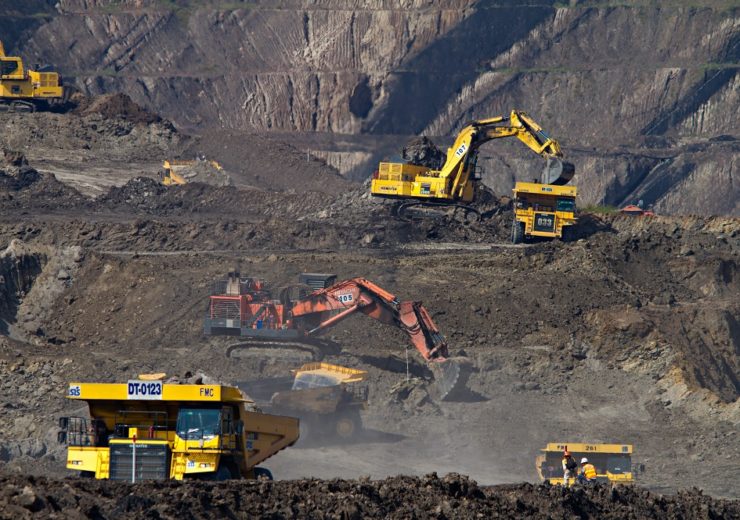

- Zambia’s State Investment Firm Eyes Bigger Stakes in Mining Assets
Zambia’s state investment company, ZCCM Investments Holdings, is seeking to raise its minority stakes in mining assets as the country positions itself to capture greater value from copper and other critical minerals. The company’s Chief Executive Officer, Kakenenwa Muyangwa, said ZCCM-IH wants more substantial stakes in mines where it already has exposure but stressed that any increase would be pursued on commercial terms rather than through forced sales.
“There is clear intent for us to have substantial stakes in our existing mining assets,” Mr Muyangwa said.
The shift reflects a broader resource governance trend across Africa, where governments are attempting to capture a greater share of mineral revenues as global demand rises for copper, cobalt, lithium and other minerals central to electric vehicles, battery storage and the clean-energy transition.
ZCCM-IH already holds minority interests in several mining assets, including mines owned by China Nonferrous Metal Mining Group, Canada’s First Quantum Minerals and India’s Vedanta Resources. Some of those holdings are as low as 10%, limiting the state investment firm’s influence over operational and strategic decisions.
Mr Muyangwa said the company is pursuing a gradual shift toward higher ownership where it believes a stronger minority position would provide more leverage.
“There’s a gradual move to higher ownership, where we believe being a significant minority gives you more say and leverage in the activities than if you have a very small minority stake,” he said.
ZCCM-IH has already increased its stake in Lubambe Copper Mines to 30% from 20%, after EMR Capital exited in 2024 and sold its majority shareholding to China’s JCHX Mining. The company is also raising its stake in KoBold Metals’ Mingomba Mining, backed by U.S. investors, to 25% from 20%.
The strategy comes at a decisive moment for Zambia, Africa’s second-largest copper producer.
The country aims to more than triple copper output to 3 million metric tonnes by 2031, a target tied directly to global demand for metals used in electric-vehicle batteries, grid infrastructure and renewable-energy systems.
For Lusaka, the challenge is to attract the investment needed to expand production while ensuring that the state receives a larger and more predictable share of mining value.
That tension is now shaping the role of ZCCM-IH.
The company says it is not seeking to take ownership of operating mines where it currently has no shareholding. Instead, it will focus on assets under development, where shareholding structures may depend on who holds the mining permit.
Mr Muyangwa said that where ZCCM-IH already owns the licence, it may seek an element of free carry before contributing to the remaining capital required to develop the mine. He suggested that a range of 5% to 15% would be appropriate, although the exact level would be subject to negotiation.
The company is also seeking to shift its revenue model from dividends to royalties.
ZCCM-IH currently receives 3.1% of revenue in lieu of dividends from Kansanshi Mining, where it holds a 20% stake. According to Mr Muyangwa, that arrangement has delivered US$110 million since 2022.
“What we are trying to do is to switch from dividends to royalties for predictable cash flows that are insulated from operating cost inflation,” he said.
The logic is straightforward. Dividend income depends on profitability, cost structures, reinvestment decisions and accounting outcomes. A revenue royalty, by contrast, can provide more predictable cash flow, especially in a sector where operating costs, capital expenditure and commodity cycles can sharply affect declared profits.
For a state investment firm seeking to finance expansion, predictability matters.
ZCCM-IH is also considering appointing a financial adviser to support capital raising for its expansion projects.
The strategy carries broader implications for African mining policy.
Across the continent, governments are rethinking how they participate in mineral wealth. Some are revising mining codes, increasing royalties, demanding local processing or insisting on larger state equity. Zambia’s approach, at least as described by ZCCM-IH, appears to be more commercially framed: build larger minority stakes, negotiate free-carry interests where appropriate, and convert uncertain dividends into more predictable revenue streams.
That distinction matters for investor confidence.
Forced localisation or expropriation-style policies may deter capital in a sector that requires long investment horizons. But commercially negotiated state participation can be more acceptable to investors if rules are clear, contracts are respected and project economics remain viable.
For Zambia, the stakes are high. Copper is central to the country’s export earnings, fiscal revenues and industrial ambitions. As global demand for critical minerals accelerates, Lusaka wants to ensure that the next investment cycle does not merely expand production, but also deepens national value capture.
The difficult balance will be between state leverage and investor certainty.
If ZCCM-IH can raise stakes and secure royalty-linked revenue without unsettling operators, Zambia could strengthen its fiscal position while maintaining its attractiveness to mining capital.
But if negotiations are perceived as coercive or unpredictable, the strategy could slow the very investment needed to reach the 3 million tonne copper target. For now, ZCCM-IH is presenting its approach as commercial, incremental and strategic.

