
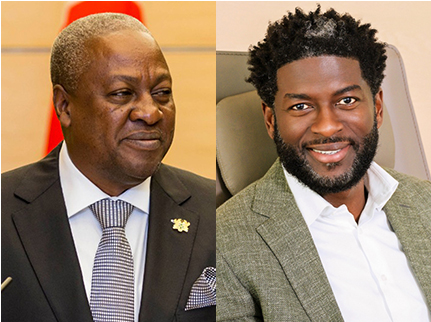

Mahama’s Dubai trip tied to Kevin Okyere’s release
….In US$94 million Petraco case; questions pop up
The Herald can confirm that Ghanaian businessman, Kevin Okyere, has been released from Dubai after spending more than three months trapped in the United Arab Emirates (UAE) on criminal charges.
His release has raised serious questions among close observers of the case, particularly given that he reportedly failed to pay the full bail bond required by the Dubai courts.
This paper is reviewing criminal case number 36407 of 2025 related to Kevin Okyere’s matter in Dubai to evaluate the disclosures he made and the extent to which Ghana has been exposed to liabilities owed to his accusers.
Ahead of that, however, The Herald is picking up intelligence indicating that President John Dramani Mahama’s recent visit to Dubai opened diplomatic channels that facilitated the release of the Springfield boss and enabled his return to Ghana. What remains unclear and highly speculative are the guarantees, if any, the Ghanaian state may have committed to secure his release, and the contingent liabilities that could fall on the state should Kevin Okyere fail to settle the outstanding debt.
The matter arises from a long-running commercial dispute between Kevin Okyere and Petraco, a Switzerland-based company, which alleges he defrauded the company of approximately US$94 million in a private business transaction. The transaction was linked to Ghana’s Gold for Oil programme under the previous Akufo-Addo government, which reportedly provided guarantees to Kevin Okyere and enabled Petraco to supply petroleum products to Ghana.
According to information available to The Herald, the products were supplied, received, and sold. However, the approximately US$94 million in proceeds were not paid to Petraco. The original arrangement following Kevin Okyere’s arrest in Dubai required him to pay US$5 million to secure his release from custody and remain in Dubai until the final settlement of the outstanding balance of US$90 million.
Kevin Okyere was detained during a business trip to Dubai in November last year after repeatedly refusing to appear before the courts concerning the alleged fraud. Before his arrest, he informed Petraco that the Government of Ghana had not paid him under the Gold for Oil programme, which he claimed prevented him from settling the debt.
However, subsequent communication between Petraco and the new NDC government revealed a different picture. The company maintains that Kevin Okyere had, in fact, received payment from the government but, with the alleged complicity of executives at the Bulk Oil Storage and Transportation Company, created the impression that the funds had not been paid.
Disappointed by what it viewed as a deliberate inaction by Ghanaian authorities, including the Police Criminal Investigation Department (CID) and the Economic and Organised Crime Office (EOCO), Petraco activated legal processes in Dubai, where the company is registered. Unlike in Ghana, where the matter appears to have stalled, Dubai authorities acted swiftly, leading to Kevin Okyere’s arrest. The law in Dubai, unlike in Ghana, proved far more potent.
The US$5 million payment reportedly secured Kevin Okyere’s release from handcuffs, but did not permit him to leave Dubai. His release from the country itself, according to information available to The Herald, required high-level diplomatic intervention.
This development has intensified public concern. What exactly did the state sacrifice to secure his release? What assurances were given to foreign authorities? And what liabilities does the state now carry if Kevin Okyere ultimately fails to pay the outstanding sums?
In the coming days, The Herald will ask the hard questions and is close to securing documents detailing commitments and undertakings allegedly made by the Energy Ministry and other government actors regarding Kevin Okyere’s release.
In the next episode, The Herald will examine the extent of influence and lobbying by traditional authorities and politically influential individuals that may have prompted the state to intervene on his behalf. One critical question will remain unanswered for many Ghanaians. How many ordinary citizens would ever receive this level of patronage and diplomatic support when facing criminal charges abroad?
As events continue to unfold, the controversy surrounding the Gold for Oil programme and its potential liabilities for the Ghanaian state appears far from over.
Meanwhile, Ghana’s Energy Ministry sources have denied claims that an undertaking, with signed documents, was made to Emirati Authorities, leading to Kevin’s release. Other reports indicate that the Mahama government argued to the UAE that Mr Okyere could not be tried in Dubai because the case against him was purely a civil matter, not criminal, and had occurred in Ghana.

