

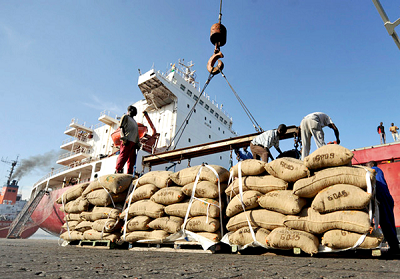

U.S. Lifts 15% Tariffs on Ghanaian Cocoa, Other Key Agricultural Exports
The United States has reversed the 15% tariffs imposed earlier this year on cocoa and a range of agricultural products from Ghana, a move expected to deliver significant relief to the country’s export sector. The announcement was made by Ghana’s Minister of Foreign Affairs, Samuel Okudzeto Ablakwa, who confirmed that the tariff withdrawal took effect on November 13, 2025, under a new Executive Order signed by U.S. President Donald Trump.
Mr Ablakwa, in a post on Facebook, disclosed that American diplomats had officially communicated the development, noting: “The 15% tariff reversal came into effect on November 13, 2025, following President Trump’s new Executive Order.”
According to the Minister, the commodities now exempt from the tariff regime extend beyond cocoa beans to include cashew nuts, avocado, banana, mango, orange, lime, plantain, pineapple, guava, coconut, ginger, and multiple pepper varieties — representing a broad spectrum of Ghana’s high-demand agricultural exports to the U.S.
Major Boost to Cocoa Revenue
The decision is expected to notably strengthen Ghana’s export earnings. With annual cocoa bean exports to the U.S. estimated at 78,000 metric tons and international prices currently hovering around US$5,300 per metric ton, Mr Ablakwa projects that the tariff removal could translate into an additional US$60 million (GHS 667 million) in revenue each year.
Ghana has welcomed the policy shift, with the Foreign Affairs Minister describing it as a positive step for bilateral economic cooperation. “Ghana and the USA will continue to forge closer and mutually beneficial relations,” he emphasized.
Background: Why the Tariffs Were Imposed
The 15% tariff was introduced through an Executive Order issued by President Trump on July 31, 2025, targeting a number of countries as part of a broader reciprocal tariff framework. The move triggered concern within Ghana’s agricultural export industry — particularly cocoa, which remains a cornerstone of national foreign-exchange earnings.
Ghana’s government responded swiftly. Deputy Trade Minister Sampson Ahi criticized the tariff decision at the time as unfair, arguing that cocoa is not produced in the United States and therefore should not be subjected to punitive trade measures. He indicated that Ghana was prepared to engage “at the highest levels” to defend its interests.
Trade analysts also viewed the episode as a reminder of the vulnerabilities African economies face in global trade, underscoring the need for stronger internal market integration through initiatives such as the African Continental Free Trade Area (AfCFTA).
With the tariffs now revoked, attention turns to how quickly exporters can capitalize on renewed market access and whether this development signals a more stable trade environment between the two countries moving forward.

