

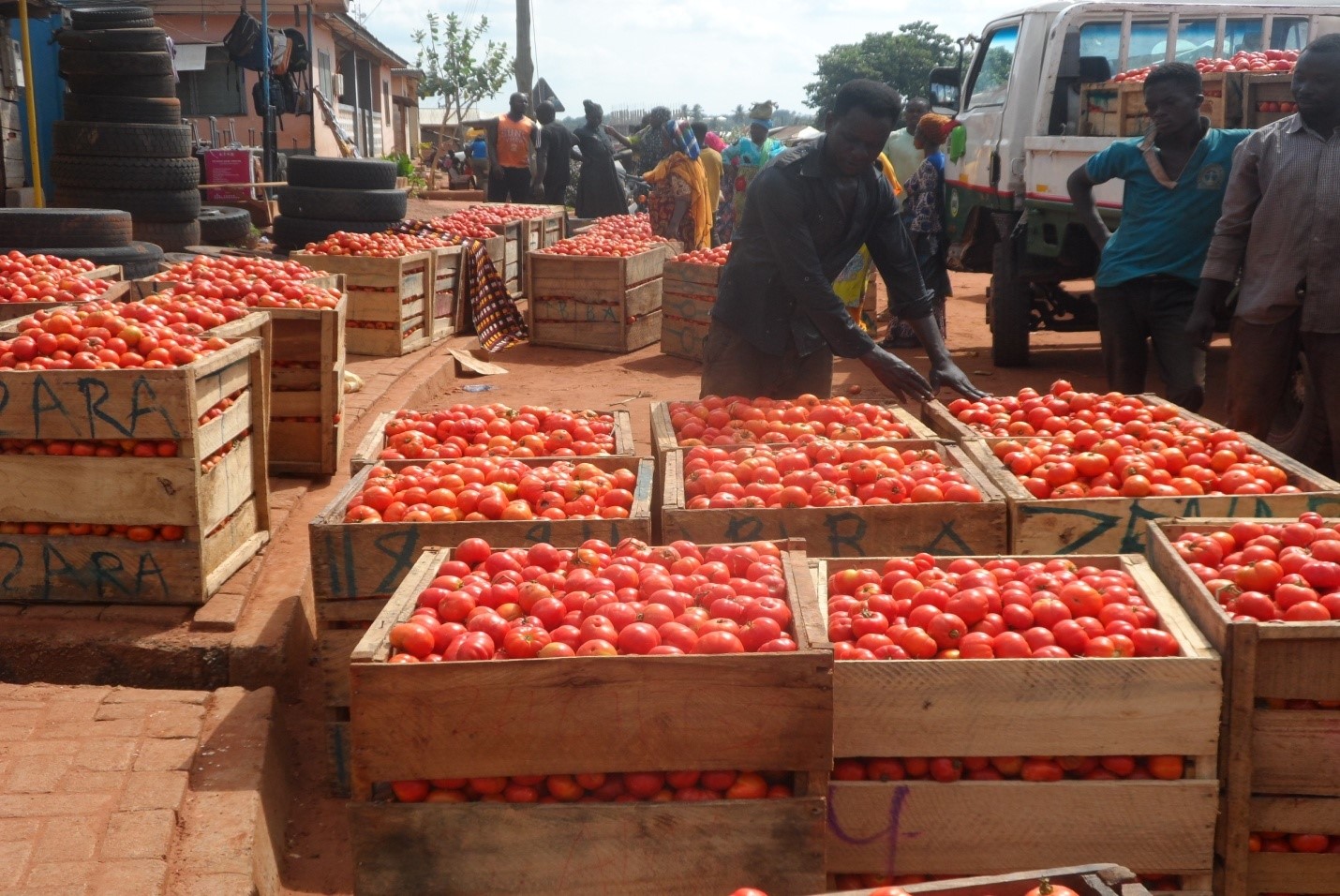

CAG Proposes GHS 430m Tomato Emergency Strategy to Achieve Self-Sufficiency by 2027
The Chamber of Agribusiness Ghana has proposed a GHS 430 million National Tomato Emergency Strategy anchored on public-private partnerships to address supply disruptions triggered by Burkina Faso’s export ban.
Outlined as a 12-month intervention plan, the strategy seeks to deliver year-round tomato sufficiency by March 2027 through a structured framework known as the Grow Ghana Agro-Corporate Partnership Framework.
Central to the strategy are five operational pillars, including rapid expansion of irrigation infrastructure, recovery of post-harvest losses, revival of dormant processing plants, scaling up farmer input support, and alignment of trade policy to protect the domestic industry.
Under the irrigation component, the Chamber proposes the addition of 15,000 hectares of productive land within 90 days through rehabilitation of the Tono, Vea and Pwalugu schemes, alongside deployment of solar-powered drip irrigation systems. This is expected to generate up to 225,000 metric tonnes of additional output in the first production cycle.
The strategy also targets the recovery of at least 100,000 metric tonnes of tomatoes lost annually due to inadequate storage and logistics, through the establishment of 20 aggregation and cold chain centres under private sector management.
On industrial processing, the Chamber is advocating a GHS 80 million rehabilitation of one of the dormant processing facilities in Pwalugu, Wenchi or Techiman to convert seasonal gluts into year-round supply of processed products.
To support farmers, the plan proposes input financing, certified seed distribution, fertiliser support and access to credit for over 50,000 producers, leveraging private sector participation through structured off-take agreements.
In addition, the Chamber is calling for immediate trade policy reforms, including the application of maximum ECOWAS Common External Tariff rates on tomato paste imports and the initiation of anti-dumping measures against subsidised imports from China and the European Union.
Implementation of the strategy is expected to follow a phased 12-month roadmap, beginning with a presidential declaration and budget allocation within the first 30 days, followed by infrastructure mobilisation, production scale-up, and eventual attainment of national sufficiency.
The Chamber emphasised that the success of the strategy hinges on a well-defined public-private partnership architecture, where government provides enabling infrastructure and risk mitigation, while private sector players drive investment, efficiency, and market access.
“Ghana has the land, the farmers, the water, and the market. What it needs now is the strategic commitment to use them,” the Chamber stated.

