

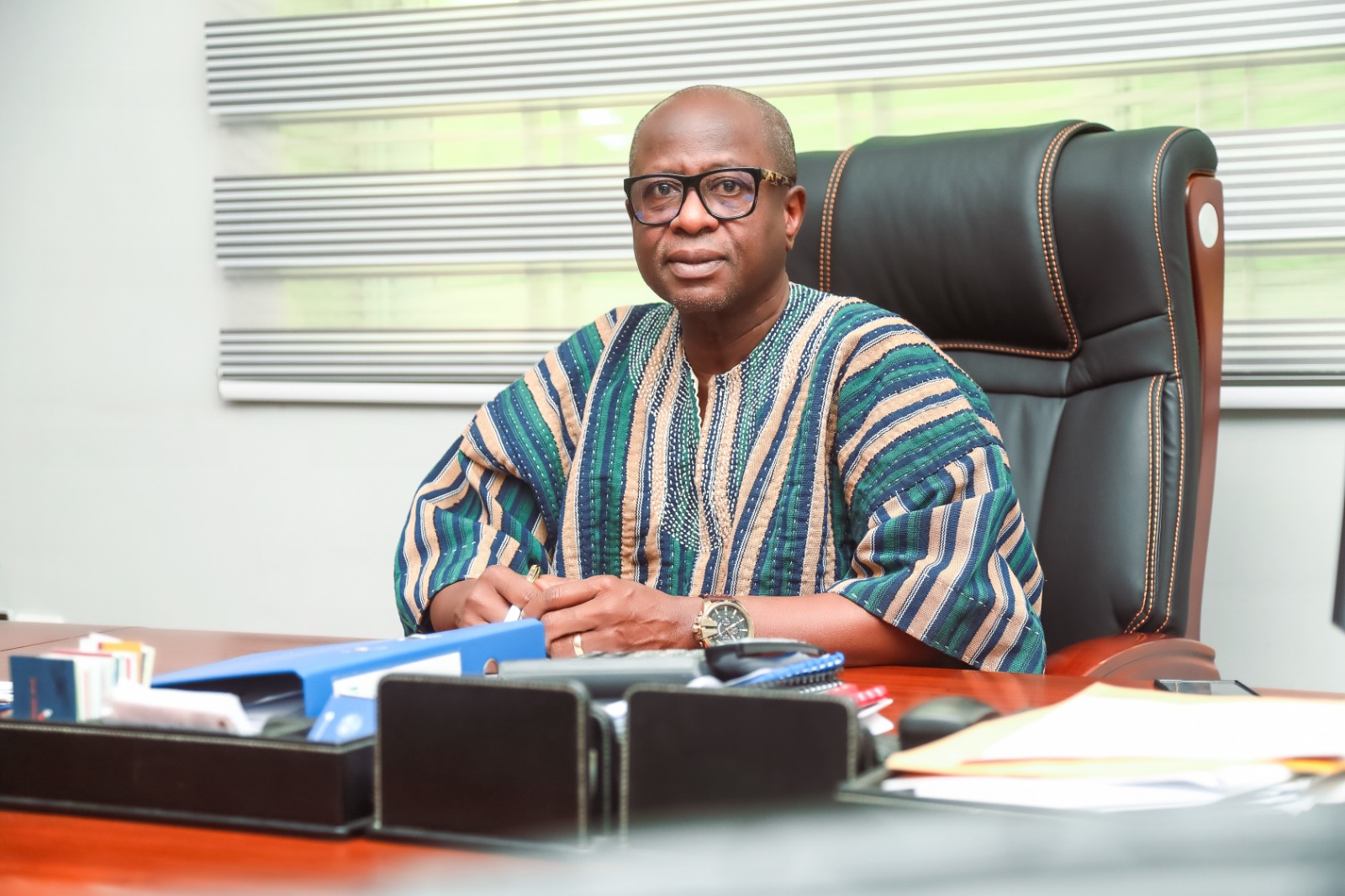

- NAFCO Seeks GHS 1.50 billion to Mop Up Excess Grains and Cut Waste
Ghana needs at least GHS 1.50 billion to establish a meaningful national food reserve system, far above the GHS 300.00 million currently available to the National Food Buffer Stock Company, its Chief Executive Officer, George Abradu-Otoo, has said.
Speaking on JoyNews’ PM Express Business Edition, Mr Abradu-Otoo said the current funding envelope, while important, is inadequate for the large-scale purchase of surplus grains from farmers and the creation of a credible buffer against food shortages, price shocks and post-harvest losses.
“Last year, Minister of Finance Dr Ato Forson announced that they were giving us further GHS 200.00 million to continue the good work that we were doing, so in other words, so far we had only GHS 300.00 million,” he said.
He explained that the allocation had allowed the company to begin building reserves, but said the amount falls significantly short of what is required to make a real national impact.
“If we need to do proper meaningful mopping up of excess grains, we need no less than GHS 1.50 billion, so you can imagine what GHS 300.00 million has done,” he stated.
The remarks bring renewed attention to Ghana’s long-standing food security challenge: the country produces food in large volumes during harvest periods, yet often struggles with storage, market stabilisation, post-harvest losses and price volatility.
For Mr Abradu-Otoo, the issue is not only about funding NAFCO. It is about creating a national system capable of buying surplus produce when farmers have excess supply, preserving that stock properly, and releasing it when shortages or price pressures emerge.
That system, he argues, cannot be built on GHS 300.00 million.
The gap between available funding and estimated need is substantial.
A GHS 1.50 billion requirement means the current allocation covers only about 20.00% of what NAFCO believes is necessary to build a meaningful reserve system.
That leaves an implied funding gap of about GHS 1.20 billion.
In practical terms, this means the company’s ability to mop up grains from farmers remains limited, especially during bumper harvests when unsold produce can lead to waste, distress sales and lower farm incomes.
For farmers, the absence of a strong national buyer of last resort creates uncertainty.
When supply is high and market demand weak, prices can collapse. Farmers may be forced to sell below cost, store produce under poor conditions or watch crops spoil.
A well-financed food reserve system can reduce that risk by providing a guaranteed market for surplus grains.
This would help stabilise farm incomes and encourage production.
For consumers, a stronger reserve system can also provide protection.
Food reserves allow the state to release stock during shortages, droughts or supply disruptions, helping to moderate price spikes and improve food availability.
This is particularly important in an economy where food inflation has historically contributed significantly to overall inflation.
The Buffer Stock CEO described the government’s intervention as a positive first step, even if the available resources are inadequate.
“But it’s a good beginning because it hasn’t been done before. That’s where I draw my comfort from,” he said.
According to him, the decision to prioritise the establishment of food reserves represents a significant policy shift.
“It’s a good beginning for the government to even think in the first place that we need to have a national food reserve,” he noted.
That point is important.
Ghana has often discussed food security through the lens of production, fertiliser support, school feeding, imports and market prices.
But a strategic reserve system requires a different approach.
It demands storage infrastructure, procurement systems, quality control, commodity financing, logistics, warehouse management, transparent stock reporting and clear rules for when food should be bought or released.
Mr Abradu-Otoo said Ghana has lagged behind its neighbours in building such a system, despite being a major agricultural producer.
“Because if you take the West African sub-region, Ghana is the only country that did not have a food reserve, can you believe that?” he said.
He pointed to countries such as Mali as examples of states that have recognised the importance of maintaining national food reserves.
That comparison should worry policymakers.
Ghana’s agricultural potential is significant, but production alone does not guarantee food security.
A country can produce enough food in one season and still face shortages later if it lacks storage, distribution and market stabilisation systems.
Food security is therefore not simply a matter of how much farmers produce.
It is also a matter of how much can be stored, preserved, moved and released at the right time.
This is where the National Food Buffer Stock Company is expected to play a central role.
Its mandate is not only to procure food for public institutions, but also to support price stabilisation, reduce post-harvest losses and build strategic reserves.
However, the scale of that mandate requires serious financing.
The CEO’s GHS 1.50 billion estimate suggests that Ghana’s food reserve ambition will remain limited unless government finds a more sustainable funding model.
Relying only on annual budget allocations may not be enough.
A credible reserve system may require a dedicated food security fund, commodity-backed financing, warehouse receipt systems, partnerships with development finance institutions, private sector storage investment and stronger links with farmer-based organisations.
The issue also has macroeconomic implications.
Food price instability feeds into inflation, affects household welfare and can trigger social pressure.
In a country where food accounts for a significant share of household spending, especially among low-income families, disruptions in food supply can quickly become a national economic problem.
A better-funded reserve system could therefore serve as both an agricultural policy tool and a macroeconomic stabiliser.
It could help reduce sharp seasonal price swings, protect vulnerable households and support inflation management.
However, more funding alone will not solve the problem.
Ghana’s history with public procurement and state-owned food systems has been marked by concerns over debt, arrears, politicisation, weak storage, poor targeting and governance failures.
Any expansion of NAFCO’s funding must therefore be matched by stronger accountability.
A GHS 1.50 billion food reserve programme would require transparent procurement, published stock levels, clear pricing rules, independent audits, quality assurance systems and safeguards against waste, leakage and corruption.
Without those controls, increased funding could create new fiscal risks rather than strengthen food security.
The programme must also be designed to avoid distorting private markets.
If NAFCO buys too aggressively at the wrong prices, it could crowd out private traders or encourage inefficient production.
If it releases stocks poorly, it could depress farmer prices or destabilise markets.
The goal should be strategic market stabilisation, not permanent state dominance of grain trading.
That requires technical discipline.
The company must know when to buy, how much to buy, where to store, when to release and at what price.
It must also coordinate with the Ministry of Food and Agriculture, the Ministry of Finance, the Ghana Commodity Exchange, farmer groups, private aggregators and warehouse operators.
The post-harvest loss dimension is particularly important.
Ghana loses significant volumes of agricultural produce each year because of poor storage, inadequate processing, weak transport links and limited market access.
If NAFCO is adequately funded and properly managed, it could help reduce these losses by purchasing excess grains and directing them into structured storage.
That would improve food availability while protecting farmers from losses.
But the storage infrastructure must be fit for purpose.
Grains require drying, cleaning, grading, pest control, packaging and monitoring.
Poorly managed reserves can deteriorate quickly, turning public investment into waste.
The CEO’s comments therefore should trigger a broader national conversation on what kind of food reserve system Ghana wants.
Is the objective emergency food security, farmer price support, school feeding supply, inflation management, humanitarian response, or all of these?
Each objective requires different financing, storage and release mechanisms.
If the policy is overloaded without clear priorities, it may fail.
The government’s GHS 300.00 million intervention is a start, but the CEO’s estimate makes clear that Ghana is still far from building a full reserve system.
The immediate policy question is whether government can scale financing without undermining fiscal consolidation.
At a time when the state is under pressure to control spending, allocating an additional GHS 1.20 billion to food reserves will require careful justification.
The best argument for such spending is that it can prevent larger future costs.
Food shortages, emergency imports, farmer distress, school feeding disruptions and food inflation can all become more expensive than planned reserve building.
A properly structured reserve system can therefore be viewed as insurance.
It protects farmers during surplus periods and consumers during shortage periods.
It also gives the state a practical tool for responding to shocks caused by drought, climate change, regional instability or global commodity disruptions.
Mr Abradu-Otoo’s warning is therefore timely.
Ghana cannot claim to be serious about food security while underfunding the institution expected to build national reserves.
The GHS 300.00 million allocation may mark a policy shift, but it is not enough to create the scale of reserves required.
The central challenge now is execution.
Government must decide whether food reserves are a temporary political initiative or a permanent national security asset.
If it chooses the latter, then financing, governance and infrastructure must match the ambition.
For farmers, consumers and the wider economy, the stakes are high.
A credible food reserve system could reduce waste, support incomes, stabilise prices and strengthen resilience.
But without adequate funding and strong governance, Ghana will continue to produce food in good seasons while remaining exposed to shortages and price shocks in bad ones.
The Buffer Stock CEO’s message is blunt: GHS 300.00 million is a beginning, but it will not cut it.

