


- New Jubilee Wells Begin Reversing Ghana’s Oil Production Slump, Rebounding 30%
Ghana’s crude oil production has increased by about 30 percent in 2026, breaking a prolonged decline that had cut national output almost in half and raised questions about whether the country’s mature offshore fields could continue supporting revenue, exports and domestic energy security.
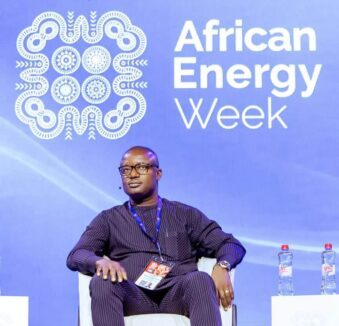
Energy and Green Transition Minister John Abdulai Jinapor announced the turnaround at African Energy Week in Cape Town, attributing it to renewed development activity following a US$2 billion agreement with Kosmos Energy and other partners in the Jubilee and Tweneboa-Enyenra-Ntomme fields.
“We have seen a continued systematic decline in oil output over the past five years. But this year, I am happy to announce that oil production has increased by about 30 percent,” Mr Jinapor said.
The rebound is significant because it interrupts one of the most troubling trends in Ghana’s petroleum industry. Production fell from 71.44 million barrels in 2019 to 37.3 million barrels in 2025, according to the Public Interest and Accountability Committee. The decline persisted for six consecutive years as ageing wells, maintenance interruptions and reservoir challenges reduced output.
Jubilee, Ghana’s largest producing field, delivered 22.21 million barrels in 2025, down 30.3 percent, with average production of 63,280 barrels per day. TEN produced 5.83 million barrels, while Sankofa-Gye Nyame contributed 9.26 million barrels.
Against that background, the reported 30 percent increase is more than a favourable annual statistic. It suggests that additional drilling and improved field management can still extract meaningful value from Ghana’s producing assets, provided operators receive sufficient commercial certainty to commit capital.
The agreement underpinning the recovery extends the Jubilee and TEN licences to 2040. It is expected to attract as much as US$2 billion in incremental investment, support increased crude output and expand the supply of affordable natural gas for electricity generation.
Ghana’s revised Jubilee development plan allows up to 20 additional wells. Kosmos has also indicated that the partnership is considering another campaign of as many as 10 wells during 2027 and 2028, beginning around the middle of next year.
Recent operational results give the government’s claim some credibility. Jubilee produced approximately 72,000 barrels per day during the second quarter of 2026, while two additional wells, J76 and J77, began producing in June and July. Earlier, the J74 well had reached about 13,000 barrels per day.
The immediate economic benefits could be substantial. Higher production supports petroleum exports, strengthens foreign-exchange earnings and raises potential receipts from royalties, taxes and the state’s participating interests. It can also improve the economics of associated gas supplied to Ghana’s power sector.
However, a production rebound does not automatically guarantee an equivalent increase in government revenue. Receipts depend on international prices, lifting schedules, production costs, tax arrangements and the precise distribution of output among the state and private partners.
The recovery must be measured over several years. New wells can deliver strong initial flows before decline resumes, making continuous drilling, reservoir management and facility reliability essential to sustaining national output.
That is why the licence extensions matter. Offshore petroleum investments require long planning periods and substantial upfront capital. Operators are unlikely to approve multi-well programmes if their production rights expire before they can recover costs and earn an acceptable return.
Kosmos Chief Executive Andy Inglis said the extensions provided the long-term certainty required for further investment in technology and gas development. That certainty can help Ghana retain existing investors at a time when global petroleum companies are increasingly selective about frontier and mature assets.
Yet the government must ensure that commercial certainty for operators is matched by fiscal certainty and transparent value for citizens. Extending licences to 2040 transfers a long-duration national resource opportunity to existing partners. The success of the arrangement should consequently be judged by production, state revenue, local participation, environmental performance and affordable gas—not investment announcements alone.
Gas may ultimately be as important as crude oil. Ghana’s power system continues to depend heavily on thermal generation, and locally produced natural gas can reduce exposure to imported liquid fuels and interruptions in regional supply. Affordable gas can lower generation costs, improve electricity reliability and ease pressure on public finances.
Mr Jinapor said energy security must be accompanied by affordability for consumers and companies. That is an important qualification. More gas does not automatically mean cheaper power if transportation constraints, payment arrears, inefficient utilities and expensive contractual structures remain unresolved.
The rebound also arrives while the government is preparing reforms to Ghana’s petroleum fiscal regime. The Energy and Finance ministries are backing proposals expected to proceed to Cabinet and Parliament, with the stated objective of making the industry more competitive.
Fiscal reform will require a careful balance. Terms must be attractive enough to secure capital for exploration and development, but generous incentives that do not generate additional investment or production could weaken the state’s long-term resource return.
Ghana is simultaneously engaging Chevron, Shell, CNOOC and Petrobras as it seeks investment beyond the producing fields. Those discussions are critical because rejuvenating Jubilee and TEN can slow decline but cannot substitute indefinitely for new discoveries and developments.
The country has not brought a major new oil development into production for years. Mature fields eventually decline regardless of improved technology. A durable petroleum strategy must therefore combine infill drilling in existing assets with exploration, appraisal and timely development of commercially viable discoveries.
The strongest interpretation of the 30 percent rebound is that policy certainty and investment can change the trajectory of an ageing petroleum province. The weakest interpretation would be that Ghana’s production challenge has already been solved.
For now, the turnaround deserves recognition. It has arrested a decline that appeared entrenched and demonstrated that Jubilee retains considerable potential. But the true measure of success will be whether higher output endures, gas reaches power producers affordably, state revenue rises transparently and new exploration replenishes the reserves being consumed.
Ghana has restarted the production engine. Keeping it running will require sustained capital, disciplined regulation and evidence that the petroleum recovery is delivering value beyond the offshore platforms.

