


- Nigeria Takes $78.5 Billion Project Pipeline to Bangkok, But Bankability Will Decide Its Fate
Nigeria has unveiled 65 projects requiring a combined investment of $78.5 billion, transforming its participation in the IMF–World Bank Annual Meetings in Bangkok from a conventional policy engagement into an ambitious search for private capital.
The portfolio covers energy, transport, manufacturing, mining, agriculture, technology, healthcare and urban development. It is intended to create an estimated 366,763 jobs while supporting the government’s ambition to raise economic growth to 7 per cent by 2027 or 2028.
The scale is striking. At an average capital requirement of approximately $1.21 billion per project, the programme amounts to more than a collection of modest investment opportunities. It is effectively a statement about how Nigeria intends to finance its next development phase at a time when public budgets, debt burdens and elevated global borrowing costs make state-led infrastructure expansion increasingly difficult.
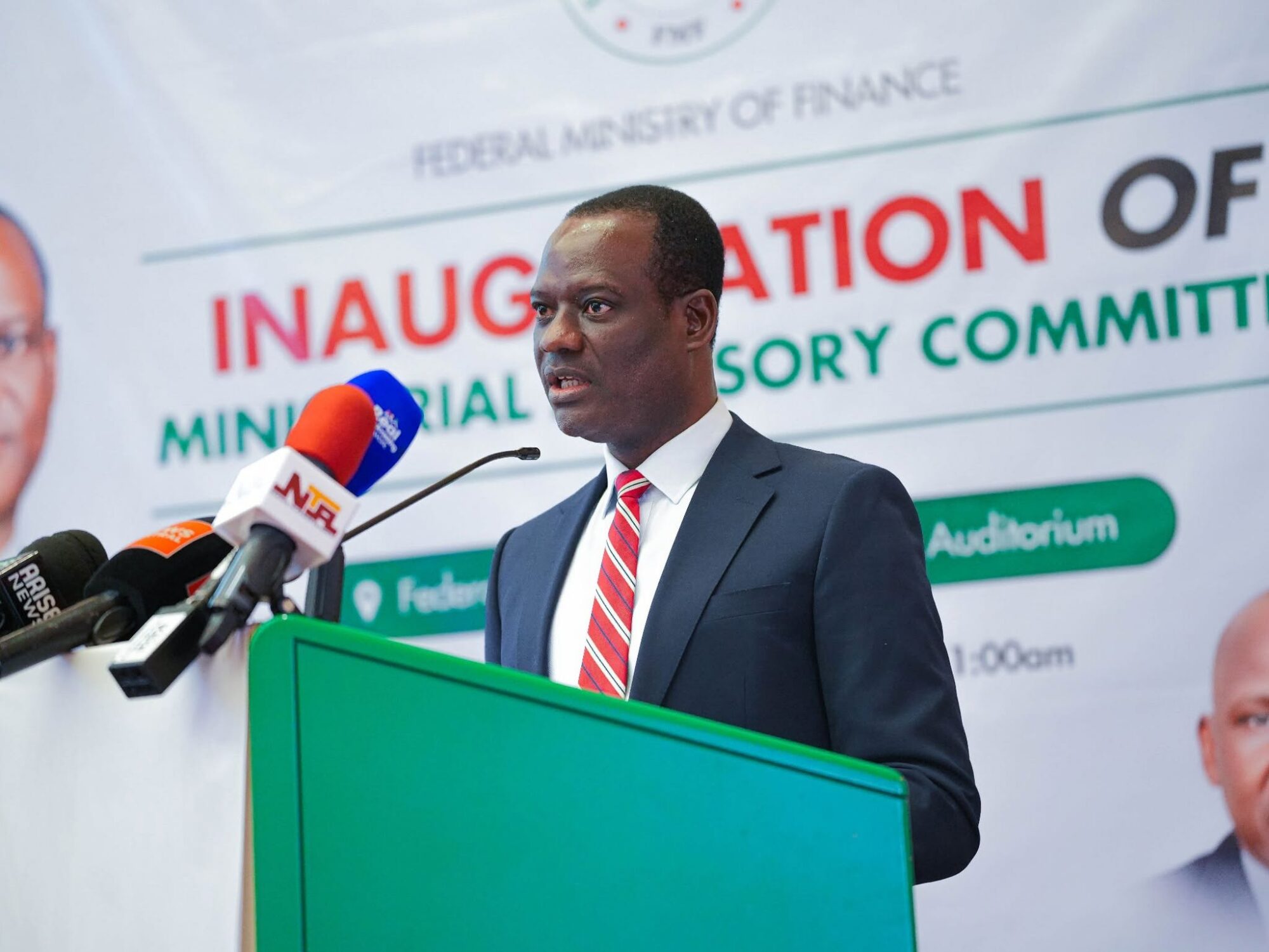
The portfolio was presented in Bangkok by Nigeria’s Minister of Finance and Co-ordinating Minister of the Economy, Taiwo Oyedele, and Central Bank of Nigeria Governor Olayemi Cardoso.
A dedicated investment deal room has been created to provide prospective investors with project information, capital requirements and direct access to the relevant authorities. The model is intended to reduce the distance between political announcements and actual transactions by giving financiers a central point through which to evaluate opportunities and resolve regulatory obstacles.
Nigeria’s challenge, however, will not be demonstrating that it needs investment. That has rarely been in doubt. The decisive issue is whether the 65 projects have been prepared to a standard at which commercial lenders, institutional investors and development-finance institutions can commit capital.
Oil, gas and power account for 25 of the projects, or more than 38 per cent of the entire portfolio. Industry, manufacturing and mining contribute another 17 projects, while transport and maritime infrastructure account for eight.
Agriculture and agro-processing represent six projects, with technology, healthcare and urban services contributing the remaining nine.
The concentration in energy reflects the continuing importance of oil and gas to Nigeria’s public finances, exports and foreign-exchange supply. It also reveals the extent to which inadequate electricity and energy infrastructure remain constraints on economic diversification.
Among the opportunities is Project Reliaxx, a $1.7 billion crude-oil evacuation and midstream infrastructure platform. The project is intended to address part of the logistical chain through which petroleum is transported, processed or delivered to markets.
The portfolio also includes the PELIA Flare-Gas AI Data Centre, with a stated capital requirement of $355.6 million. The proposed facility appears to connect three of Nigeria’s strategic challenges: reducing gas flaring, expanding digital infrastructure and securing reliable energy for data-intensive economic activity.
This combination could prove attractive to investors seeking exposure to both the energy transition and artificial intelligence. But its commercial prospects will depend on the availability and reliability of gas feedstock, electricity pricing, connectivity, customers and an enforceable framework for acquiring previously flared gas.
Nigeria’s ambition to increase oil production to three million barrels per day further explains the emphasis on energy infrastructure. Higher production could strengthen export earnings and public revenue, but achieving the target will require improvements in security, pipeline integrity, investment certainty and the settlement of regulatory concerns.
Oil production targets alone will not deliver development. The more important question is whether additional output can finance infrastructure and productive investment without recreating Nigeria’s historical dependence on petroleum revenue.
The Lagos Greenline Railway, requiring approximately $1.29 billion, is among the largest named transport projects. Urban rail investment could reduce congestion, improve labour mobility and raise the productivity of one of Africa’s most important commercial centres.
Yet railways present difficult financing questions. They generate broad economic benefits, but fare revenue alone is often insufficient to recover their full capital and operating costs. Investors will therefore want clarity on passenger projections, tariff policy, government support, land acquisition, construction risks and the allocation of foreign-exchange exposure.
Nigeria must avoid presenting socially valuable infrastructure as if it were automatically commercially viable. A railway may be essential to the economy and still require public guarantees, viability-gap funding or concessional finance.
The portfolio also contains a $2.69 billion ammonia and phosphate fertiliser project being promoted by Multipurpose Industrial Platforms Limited. The project could strengthen domestic fertiliser production, reduce import dependence and support agricultural productivity.
Its viability will be influenced by access to gas, logistics, export markets and the ability of Nigerian farmers to purchase its output. If production is heavily export-oriented, policymakers must ensure that the project still improves local availability instead of merely establishing another enclave industry.
Premium Steel and Mines is seeking approximately $1.25 billion for an integrated steel upgrade. A functioning domestic steel industry could support construction, manufacturing and infrastructure while reducing imports. But Nigeria’s past attempts to build large industrial complexes show that capital expenditure must be accompanied by reliable electricity, competent management, transport access and consistent industrial policy.
A further $1.6 billion is being sought for the proposed New Port City development, while the Integrainium Giri Agro-Processing and Cold-Chain Export Hub in the Federal Capital Territory requires $105 million.
The cold-chain project is particularly relevant to Nigeria’s food economy. Better storage and logistics could reduce post-harvest losses, improve food security and help producers meet export standards. Compared with the headline energy and urban projects, it is smaller, but its effects could be more widely distributed across farmers, processors and consumers.
The government estimates that the 65 projects will create 366,763 jobs. On a simple calculation, the proposed investment equals roughly $214,000 for each anticipated job.
That ratio should be interpreted carefully. Infrastructure projects create benefits that extend beyond direct employment, including lower transport costs, improved power supply, stronger industrial capacity and increased tax revenue. Large energy and transport investments are also naturally capital-intensive.
Still, the calculation raises a policy question. Nigeria has a large and youthful labour force, and economic growth will need to generate employment on a far greater scale than highly capital-intensive projects can deliver by themselves.
The portfolio should therefore be judged not only by direct jobs at the project sites, but by the businesses and supply chains those investments enable. A railway’s developmental value lies partly in the commerce around its stations. A fertiliser plant should improve agricultural productivity. Energy infrastructure should make thousands of smaller businesses more competitive.
Without such connections, Nigeria could mobilise substantial capital and still fall short of producing broad-based employment.
The creation of an investment deal room is an important administrative step. Investors frequently complain that African projects require engagement with several ministries, regulators and subnational authorities, each operating different approval systems and timelines.
A central platform could reduce information gaps, identify responsible officials and accelerate decisions. But it will matter only if it has authority to solve problems rather than merely record them.
Investors will expect more than polished project summaries. They will require feasibility studies, environmental and social assessments, financial models, legal documentation, procurement structures, land rights and clearly assigned risks.
A project is not bankable simply because it is commercially desirable or appears on a government portal.
The strongest test will be whether each opportunity has a credible revenue model. Projects relying on regulated electricity prices, transport fares or government payments will remain vulnerable if political decisions prevent tariffs from reflecting costs.
Mr Oyedele acknowledged some of these constraints, identifying electricity pricing, transmission limitations, agricultural productivity and regulatory inefficiencies as areas requiring further reform. He also pointed to lower inflation, falling borrowing costs and stronger co-ordination between fiscal and monetary authorities as conditions for sustainable growth.
Nigeria’s reformed tax framework includes an Economic Development Incentive offering tax credits to qualifying businesses. Such incentives can improve expected returns, but they should not substitute for a reliable operating environment. Investors are unlikely to commit billions of dollars merely because taxes are lower if contracts remain uncertain, power is unreliable or access to foreign exchange is restricted.
Mr Cardoso said monetary and structural reforms had strengthened confidence in Nigeria’s financial system and improved capital-market performance.
He disclosed that banks had raised approximately N4.6 trillion during the sector’s recapitalisation, with about 72 per cent sourced from the domestic capital market. This suggests Nigeria retains considerable internal financing capacity even after periods of inflation, currency weakness and economic disruption.
However, domestic bank recapitalisation and long-term project finance are not the same. Banks must manage maturity and currency mismatches, while many infrastructure projects may take years before producing stable cash flows.
Nigeria will therefore need a mixture of equity, long-term debt, guarantees, concessional funding, pension capital and risk-sharing instruments. The World Bank Group is already helping mobilise up to $5.79 billion in private financing for Nigeria during the 2026 fiscal year, through programmes expected to support approximately 850,000 direct and indirect jobs.
That support is substantial, but it represents less than one-tenth of the capital sought under the new portfolio. The gap illustrates why Nigeria must attract commercial investors rather than rely primarily on development institutions.
Nigeria is presenting its projects during a difficult period for development finance. High sovereign yields, expensive energy and rising debt-service burdens are restricting capital flows to emerging markets.
Developing economies are paying substantially more to service debt, while scarce public revenues are being diverted from infrastructure, healthcare and education.
In this environment, global investors can demand higher returns and stronger protections. Nigeria must compete not only with other African economies but also with emerging markets offering comparable yields with fewer perceived risks.
A stable naira, moderating inflation and stronger external reserves would help. But macroeconomic stability must be sustained long enough for investors to believe they can recover returns over the life of projects that may operate for several decades.
Nigeria deserves credit for presenting specific opportunities rather than relying solely on general appeals for investment. Naming projects, capital requirements and sectors creates a basis for serious commercial discussion.
The $78.5 billion headline, however, should not become the primary measure of success. The relevant numbers will be how many projects reach financial close, how much capital is actually disbursed and how many operations are completed on time and within budget.
Nigeria has no shortage of large ambitions. Its persistent weakness has been converting plans into functioning assets.
The Bangkok pitch offers an opportunity to change that record. But investors will ultimately respond not to the size of the portfolio or the prominence of the venue, but to project preparation, policy credibility and the government’s willingness to keep commitments after capital has been deployed.
The deal room may open the door. Only bankability, consistent regulation and disciplined execution will persuade investors to walk through it.

