

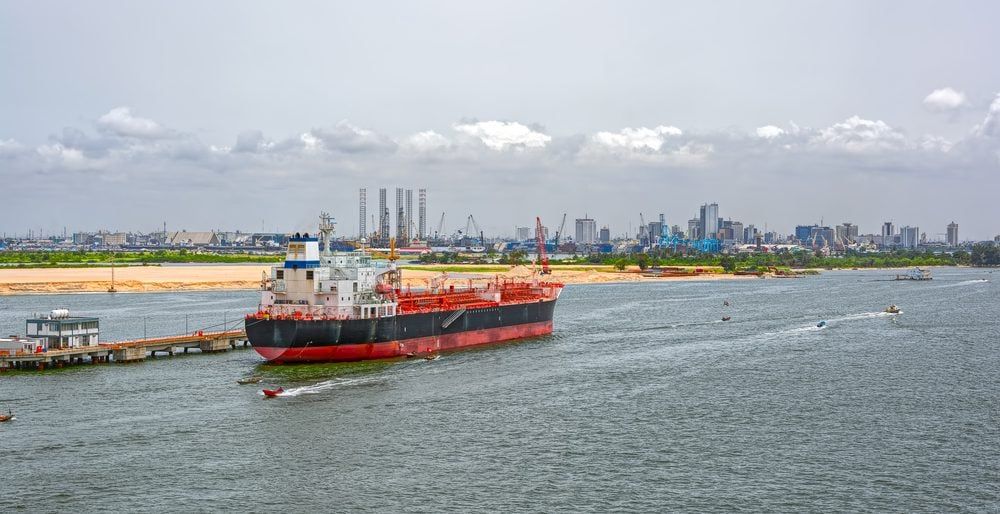

- Nigeria Wins Removal of US Port Security Restrictions After More Than a Decade
The United States has lifted security restrictions imposed on vessels arriving from Nigeria after more than a decade, removing additional compliance requirements that industry participants had blamed for increasing shipping costs, delays and insurance expenses.
Nigeria’s Minister of Marine and Blue Economy, Adegboyega Oyetola, said the decision would improve vessel turnaround times, strengthen schedule reliability and make Nigerian ports more attractive to international shipping lines. The restrictions, known as Conditions of Entry, had been in force since June 2014.
Under the measures, vessels travelling to the United States after calling at designated Nigerian ports were required to adopt additional security procedures and faced enhanced scrutiny before entering US waters. The US Coast Guard had imposed the restrictions after concluding that Nigerian ports were not maintaining sufficiently effective anti-terrorism measures.
The deficiencies identified at the time included weaknesses in Nigeria’s maritime-security legal framework, oversight by the designated security authority, access controls and cargo-handling procedures. Their removal therefore represents an important regulatory endorsement of changes Nigeria says it has made to its maritime-security architecture.
Oyetola said the US decision followed improvements in the country’s maritime-security framework and greater compliance with the International Ship and Port Facility Security Code. Reuters reported that US authorities could not immediately be reached for comment on the Nigerian government’s announcement.
The Nigerian Maritime Administration and Safety Agency said the US Coast Guard carried out four assessments of Nigeria’s maritime-security systems and port facilities between March 2024 and April 2026. Those assessments appear to have provided the basis for the eventual removal of the restrictions after 12 years.
The commercial implications could be considerable because shipping costs are influenced by more than the physical movement of cargo. Additional inspections, documentation, security procedures and delays can raise operating expenses for shipping lines, costs that are often ultimately reflected in freight rates paid by importers and exporters.
Industry participants had long argued that the Conditions of Entry regime imposed precisely those costs on Nigeria-linked shipping, including higher insurance expenses and delays. Removing them could therefore make direct calls at Nigerian ports relatively more attractive and reduce some of the compliance friction faced by vessels subsequently sailing to the United States.
For Nigerian exporters, any improvement in shipping efficiency could have wider competitiveness benefits. Businesses trading internationally are particularly sensitive to freight charges, port delays and unreliable sailing schedules because logistics costs can determine whether locally produced goods remain competitive once they reach foreign markets.
Nigeria also has a broader strategic interest in improving the attractiveness of its ports. As West African economies compete for transshipment, logistics and trade-related investment, regulatory confidence and maritime security have become increasingly important alongside port capacity, customs efficiency and transport infrastructure.
The lifting of the US restrictions could consequently strengthen Nigeria’s efforts to reposition its ports within regional shipping networks. International shipping lines generally allocate vessels and services according to a combination of cargo demand, turnaround times, security, operating costs and regulatory predictability, meaning the removal of an additional compliance burden can improve the commercial case for Nigerian calls.
The development is equally important from a security perspective. The original restrictions were not simply a trade measure but a response to concerns about whether Nigerian ports could adequately prevent security threats from reaching vessels bound for the United States.
Meeting the required standards therefore has implications for confidence in Nigeria’s wider maritime governance system. Maintaining that confidence will require continued enforcement of port-access controls, cargo-security procedures and other measures assessed under international maritime-security standards.
The decision does not, however, eliminate the wider operational challenges facing Nigeria’s maritime sector. Port congestion, inland transport links, customs procedures and the cost of doing business will continue to influence competitiveness even after the US security restrictions have been removed.
What changes immediately is one layer of additional friction that had applied specifically to vessels with recent Nigerian port calls before entering US waters. Those ships will no longer be subject to the extra requirements imposed under the Conditions of Entry programme.
For Nigeria, the removal of restrictions imposed in 2014 represents both a security milestone and a potentially useful trade advantage. The longer-term economic payoff will depend on whether improved international confidence can be matched by faster port operations, lower logistics costs and a sustained improvement in the competitiveness of Nigeria’s maritime trade.

