


- Nigeria’s Economy Grows 4.43% In Q2, Fastest Pace in Five Years as Oil Output Rebounds
Nigeria’s economy expanded at its fastest pace in five years in the second quarter of 2026, powered by a sharp acceleration in oil-sector activity alongside stronger growth in telecommunications, agriculture and other parts of the non-oil economy.
Real gross domestic product increased by 4.43% year-on-year in the three months to June, up from 3.89% in the first quarter and above the 4.20% median estimate of economists surveyed by Bloomberg. The expansion was also stronger than the 4.23% recorded in the corresponding quarter of 2025.
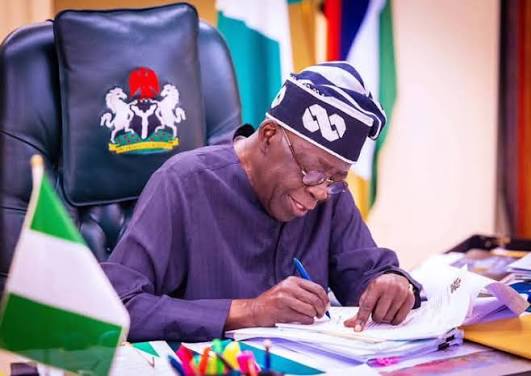
The performance represents Nigeria’s strongest quarterly economic growth in about five years and provides a boost to President Bola Tinubu’s administration as it seeks to demonstrate that a series of difficult economic reforms are beginning to strengthen the productive economy.
Nigeria’s oil sector expanded by 7.31% during the quarter, compared with growth of 2.57% in the preceding three months, benefiting from both higher crude production and elevated international oil prices.
Average crude production increased to 1.72 million barrels per day in the second quarter from 1.55 million barrels per day in the first quarter.
At the same time, crude prices averaged roughly US$93.00 per barrel during the quarter, compared with about US$73.00 during the previous three months, strengthening export receipts and foreign-currency liquidity for Africa’s largest oil producer.
The combination is particularly important for Nigeria because oil remains closely linked to government revenue and the supply of foreign exchange despite the sector accounting for a relatively small share of total economic activity.
Higher production allows the country to capture more revenue when international prices are favourable, while stronger export receipts can improve dollar liquidity and reduce some of the pressure that has characterised Nigeria’s foreign-exchange market in recent years.
But the latest GDP figures also suggest the recovery is broader than oil.
The non-oil economy expanded by 4.31%, up from 3.94% in the previous quarter, with telecommunications and agriculture among the important contributors.
Agriculture grew by 4.39% compared with 2.82% in the corresponding quarter of 2025, while services expanded by 4.60%, up from 3.94% a year earlier.
That composition matters because Nigeria’s long-term growth challenge cannot be solved by oil alone.
The petroleum sector can generate substantial revenue and foreign exchange, but sustainable economic expansion for a country with more than 200 million people requires stronger productivity and employment across agriculture, manufacturing, trade, technology, finance and services.
The fact that the non-oil economy continued to expand above 4.00% therefore provides a more encouraging signal than an oil-driven headline would on its own.
Telecommunications, financial services, trade, real estate and other service industries have become increasingly significant parts of the Nigerian economy, helping reduce the direct dependence of GDP growth on fluctuations in crude production.
Industrial-sector growth slowed to 3.96% in the second quarter from 7.46% in the comparable period of 2025, indicating that stronger headline GDP growth is not being shared uniformly across every part of the economy.
That leaves Nigeria with a familiar policy challenge: transforming an improvement in macroeconomic indicators into sustained gains in industrial capacity, household incomes and employment.
The Tinubu administration has implemented some of the country’s most consequential economic reforms in years, including changes to fuel subsidies and the foreign-exchange regime.
Those reforms were intended to correct long-standing fiscal and currency distortions, but they also contributed to severe pressures on household purchasing power during the adjustment period. The latest GDP performance strengthens the government’s case that the economy is becoming more resilient.
Nigeria’s real GDP grew 3.87% in 2025, up from 3.38% in 2024, and the acceleration to 4.43% in the second quarter of this year suggests momentum has continued.
International assessments have also become somewhat more favourable. Moody’s revised Nigeria’s sovereign outlook to positive in August while maintaining its B3 rating, citing stronger-than-expected economic growth, improving foreign-exchange reserves and greater resilience to external shocks.
S&P Global Ratings had earlier upgraded Nigeria to B, while Fitch maintained its B rating with a stable outlook.
Higher oil prices have strengthened that external position by widening the value of crude exports, while rising domestic refining capacity could potentially alter Nigeria’s historical dependence on imported petroleum products.
But the favourable oil environment also creates a test of economic management.
Commodity booms can provide temporary fiscal and foreign-exchange relief, but they do not automatically produce structural transformation.
Nigeria has experienced previous periods of high oil prices without translating the windfall sufficiently into stronger infrastructure, manufacturing capacity or broad-based improvements in living standards.
The current growth acceleration will therefore matter most if the additional revenue and FX liquidity are used to reinforce investment rather than simply ease short-term fiscal pressures.
The country also remains some distance from the growth rates required to match its demographic and employment challenge.
President Tinubu has targeted annual economic growth of around 7.00% by 2027, substantially above the 4.43% recorded in the latest quarter.
For an economy with rapid population growth, even expansion above 4.00% may produce relatively modest gains in output per person.
That makes productivity, job creation and private investment increasingly important measures of whether the recovery is improving living standards. The non-oil economy will ultimately determine whether the recovery becomes sustainable.
The latest figures nevertheless represent a meaningful improvement. Nigeria has combined higher crude production with stronger activity in agriculture and services to produce its fastest economic expansion in five years.
If oil production can be sustained, security around energy infrastructure continues to improve and reforms attract greater private investment, the country could enter a stronger growth phase.
But the durability of the recovery will depend on whether Nigeria can use the current oil windfall to strengthen sectors that remain productive long after crude prices eventually retreat.
For now, the country has achieved an important milestone: growth is accelerating, oil output is recovering and the non-oil economy is expanding alongside it.
The next test is whether that momentum can move Nigeria closer to the 7.00% growth required to deliver the jobs, incomes and investment gains its population increasingly demands.

