

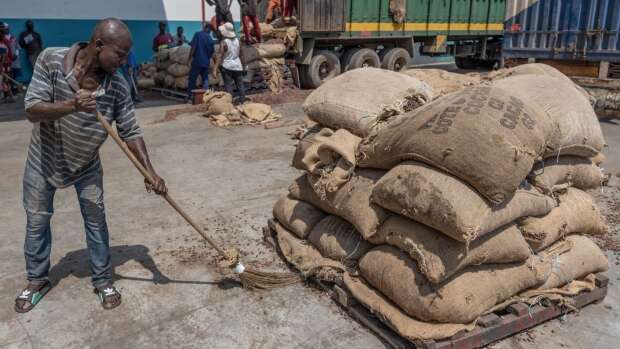

COCOBOD Targets 650,000MT Cocoa Output in bid to Revive Sector
Board Chairman of the Ghana Cocoa Board (COCOBOD), Samuel Ofosu Ampofo, has announced that the country is targeting cocoa production of 650,000 metric tonnes as part of renewed efforts to revitalise the sector following a sharp decline in output.
Mr Ofosu Ampofo revealed the new production target during a working visit to the Western North Region on November 19, 2025, where he engaged traditional leaders and key stakeholders in the cocoa value chain. His visit included an interaction with the Sefwi Wiawso Traditional Council to discuss strategies aimed at boosting production in one of Ghana’s most important cocoa-growing regions.
Addressing Nananom, the COCOBOD Chairman expressed concern about the continued slump in national cocoa output, noting that production has fallen to 450,000 metric tonnes—one of the lowest levels in recent years.
He stressed that the revised target of 650,000 metric tonnes is attainable through coordinated efforts among farmers, traditional authorities, government agencies and COCOBOD. According to him, the intention is to increase output steadily over the next four years, enabling Ghana to regain its competitiveness on the global market.
Mr Ofosu Ampofo appealed for sustained support from traditional leaders, particularly in the provision of additional farmlands for cocoa cultivation. He underscored that land availability remains central to reversing the recent production decline.
The COCOBOD Chairman also pointed to cocoa smuggling as a major impediment to national output, lamenting that significant volumes of beans continue to be transported illegally to neighbouring Côte d’Ivoire and Togo. He called on the traditional leaders to assist security agencies and COCOBOD in combating smuggling, which he described as a threat to Ghana’s revenue and production recovery goals.
Responding to the COCOBOD delegation, Nana Ofori Ahenkan II, Chief of Sefwi Boinzan and Acting President of the Sefwi Wiawso Traditional Council, commended the Board’s renewed commitment to strengthening the industry. He assured that traditional leaders remain ready to support government efforts, including making land available for large-scale cocoa farming.
Nana Ofori Ahenkan II further urged the government to make cocoa farming attractive to the youth through partnerships with private investors, an approach he believes would generate employment and enhance productivity across the value chain.
He also called for reforms to the COCOBOD Scholarship Scheme, noting that the initiative intended to support children of cocoa farmers has been overshadowed by abuse and limited access. He appealed to COCOBOD’s new leadership to ensure that the scholarship benefits genuinely reach the families of cocoa farmers as originally intended.

