


- Manchester United Show Fight Against Sporting, but Resilience Alone is Not Enough
Manchester United offered Mauricio Pochettino evidence of the spirit he wants to build, then reminded him how far the team remains from the reliability it needs.
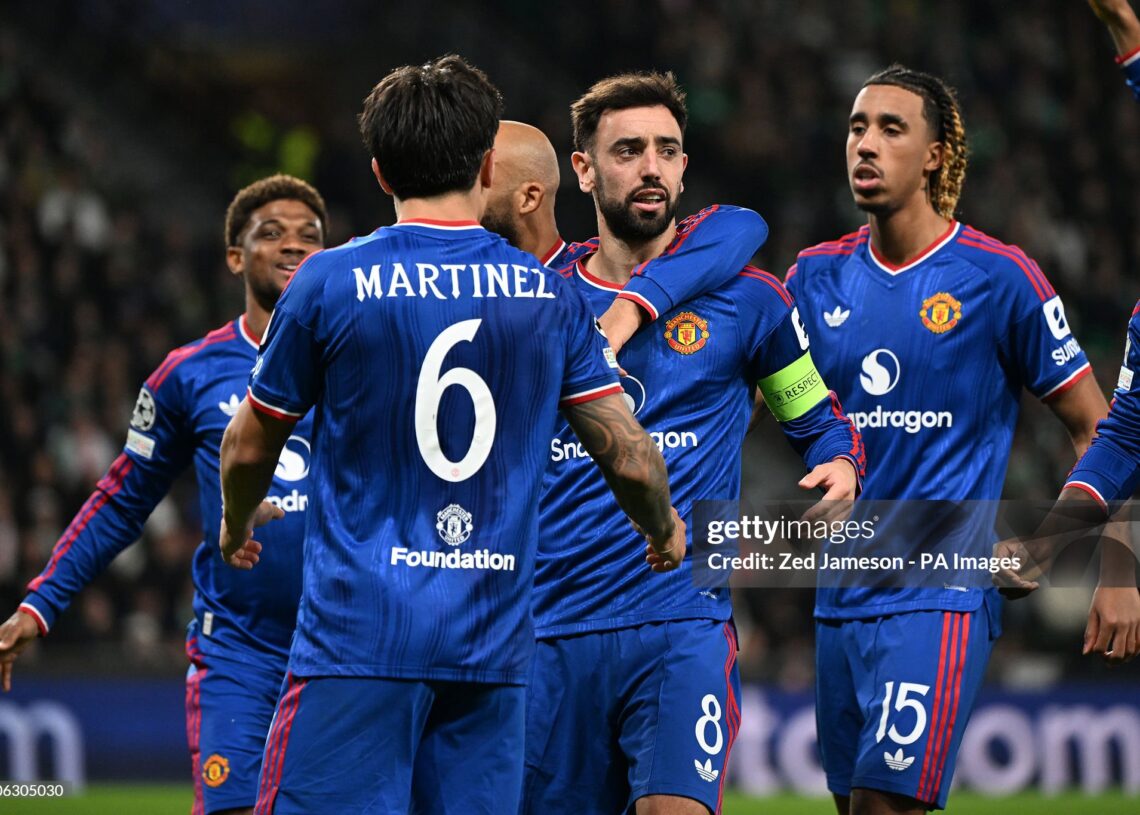
A chaotic 2–2 Champions League draw with Sporting in Lisbon on Wednesday gave United a first point under their new manager, but not the first win he was seeking. Bruno Fernandes scored twice against his former club to put United in front.
Two costly errors from goalkeeper Senne Lammens allowed Sporting back into the game, leaving Pochettino to praise the team’s character while reflecting on another match in which United failed to protect an advantage.
“I like the team, the personality, the character,” Pochettino said after the match. His words recognised the response United showed, but they also set a demanding standard for what must follow: character has to become a platform for consistent performances, rather than a consolation after points are dropped.
United had arrived in Portugal under pressure after a 4–0 loss to Liverpool in Pochettino’s first game in charge. At Anfield, an early sending-off left the team with a steep task. In Lisbon, United showed greater attacking purpose and resilience.
Fernandes’s goals suggested that the team could respond to adversity; the late equaliser showed how quickly that progress can be undone by individual mistakes.
The match was unsettled from the start. Sporting missed a penalty before taking the lead, and Fernandes then turned the game around with two goals in quick succession. His first came from the penalty spot; his second followed shortly after.
For a spell, United had done more than recover: they had seized control of a game that had threatened to run away from them.
That swing matters. Pochettino has had little time to work with the squad since taking over, and United’s season has been shaped by poor results and uncertainty.
A team that can absorb an early setback and respond with two goals in a difficult away fixture has something to build on. Yet the deeper test is whether it can sustain that response when the opponent pushes back.
Sporting did. United’s lead held until the 80th minute, when Lammens mishandled a high ball and allowed the hosts to equalise.
The goalkeeper’s mistakes were central to the result, but the responsibility cannot be confined to one player.
A team’s ability to see out a match depends on its organisation, communication and decision-making across the pitch. United again failed to manage the decisive moments.
That is why Pochettino’s praise should be read alongside his frustration. He said United had been punished in key actions and had shown how they wanted to play, while stressing that he had been working with the team for only a week.
The short preparation period is relevant: a new manager cannot quickly correct every habit or establish a complete system.
But it does not alter the immediate cost of mistakes. United left Lisbon with a draw when their second-half performance had put a win within reach.
The match offered a compressed picture of the job ahead. Fernandes supplied leadership and decisive quality. United recovered from going behind and produced a spell of attacking pressure.
But the game also featured three penalties, two disallowed United goals and a late red card for Youri Tielemans, underlining how disorderly the contest became.
In such conditions, composure is not a bonus; it is part of the work required to turn promising passages into results.
Fernandes’s performance was especially significant. Questions about his future at United have followed him, but in Lisbon he was central to the team’s best moments. His two goals brought United back into the match and then put them ahead.
After the final whistle, he urged unity around Lammens, saying the squad had to remain together in good and bad moments. That message matters in a team where a goalkeeper’s error can quickly become a wider verdict on confidence and competence.
Pochettino’s challenge is to turn that solidarity into accountability. Supporting a player after a mistake is not the same as ignoring the mistake.
If United are to improve, they must review how the equaliser happened, reduce the frequency of errors and make their defensive reactions more dependable. The measure of a new culture will be whether players can protect one another while still demanding higher standards.
The draw also leaves United with work to do in Europe. They were 19th in the Champions League league-phase standings after five matches, a position that makes each remaining point consequential.
A late equaliser against Sporting may feel like two points lost, but the performance also provided a basis for cautious optimism: United were competitive, Fernandes was influential and the team showed it could recover from a difficult start.
There is a temptation, when a new manager arrives, to treat every sign of energy as proof that a turnaround has begun. Pochettino’s comments resist that easy conclusion. He praised what he saw, while acknowledging that United were punished by decisive errors.
The distinction is important. Belief can help a team endure a bad spell; it cannot replace structure, concentration or the ability to close a match.
For now, the Sporting draw offers Pochettino a more useful starting point than a morale-boosting slogan. United showed fight, but fight alone did not secure the result.
The next stage is to make the character he admired visible in the details: better decisions under pressure, stronger protection of a lead and fewer moments that turn control into crisis.
United have begun to show Pochettino something to work with. Whether they can make it last is the question that remains.

