

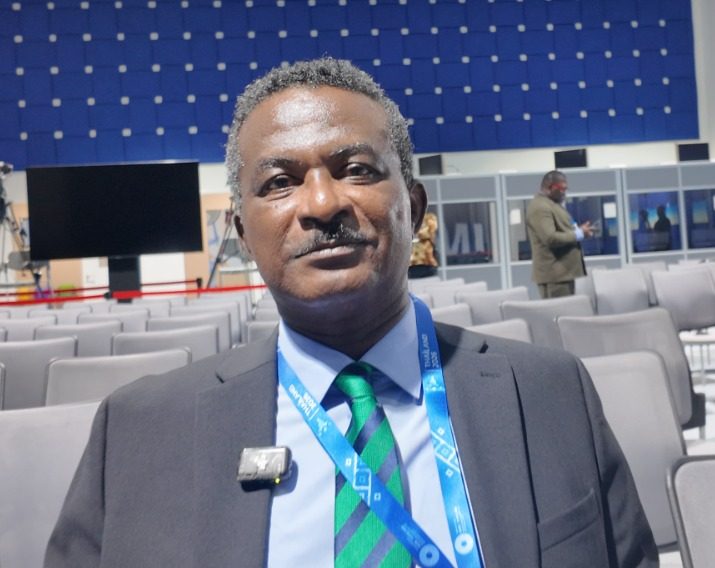

- Our Next Economic Test is Turning Stability into Jobs — Ricketts-Hagan
Ghana must now convert its restored macroeconomic stability into employment-creating growth by directing public expenditure towards productive sectors, Deputy Majority Leader Kweku George Ricketts-Hagan has said.
He argued that the country’s emerging economic recovery would remain incomplete unless growth produced opportunities for its youthful population, warning that unemployment could become a serious source of social and economic instability across Africa.
Speaking in an interview following engagements with the International Monetary Fund’s African Department on the sidelines of the 2026 Annual Meetings taking place in Bangkok, Thailand, Mr Ricketts-Hagan described Ghana’s movement from crisis towards stability as “quite a remarkable story”, considering the conditions inherited and the reforms subsequently undertaken.
However, he said stabilisation should be treated as a platform rather than the final measure of success. The next phase must focus on expanding productive activity, creating employment and ensuring that government spending supports economic transformation.
“After stabilising the economy, the next step is to grow it,” Mr Ricketts-Hagan said. “But growing the economy requires spending in the right areas, rather than spending for its own sake.”
His comments frame the central policy question facing Ghana as it moves beyond the immediate demands of economic repair. Fiscal restraint, debt management and tighter expenditure controls may rebuild confidence, but they do not automatically create businesses, raise household incomes or absorb new entrants into the labour market.
The challenge is therefore to preserve the discipline that produced stability while creating enough room for public investment in infrastructure, industry, agriculture, technology and skills. Poorly designed expenditure could revive fiscal pressure, while excessive caution could weaken growth and leave unemployment unresolved.
Mr Ricketts-Hagan acknowledged public claims that the government was not spending sufficiently. He suggested that this impression could reflect a change in the composition and visibility of expenditure rather than an absence of government activity.
“Some people say governments, including Ghana’s, are not spending,” he said. “That perception may arise because they are not seeing spending in the way they were accustomed to.”
The government’s emphasis, he explained, is to direct resources towards areas capable of expanding the economy instead of treating expenditure itself as proof of performance.
That distinction is economically important. Governments can increase spending without creating durable productive capacity. Consumption-heavy expenditure may provide temporary relief or political visibility, but it can also widen deficits and increase debt without strengthening the economy’s ability to generate future revenue.
Productive expenditure, by contrast, should remove barriers facing businesses, improve connectivity, support value addition and increase the capacity of workers. The quality of spending may consequently matter as much as its total size.
Yet defining “productive” spending requires transparency. Projects described as growth-enhancing must be assessed against their capacity to generate employment, crowd in private investment, improve productivity and produce measurable returns. Without those tests, the language of strategic expenditure could become a convenient label for conventional public spending.
Mr Ricketts-Hagan placed employment at the centre of the next economic phase, arguing that headline growth alone would not be enough.
“The next stage for Ghana and other African countries must be growth that creates jobs,” he said. “We have a youthful population across the continent, and unemployment is one of the potential time bombs we face.”
The warning reflects the gap that can emerge between national economic indicators and household experience. An economy may record stronger gross domestic product growth while employment remains weak if the expansion is concentrated in capital-intensive sectors, extractive industries or activities with limited connections to domestic suppliers.
For citizens, recovery becomes credible when it improves wages, creates employment, sustains businesses and reduces financial insecurity. Growth without these outcomes may strengthen government statistics without materially altering the economic conditions confronting households.
“If an economy grows without creating jobs, there could be a problem,” Mr Ricketts-Hagan said.
He said this concern informed the question he put to the IMF African Department: what policies should countries adopt to ensure that economic growth translates into employment?
The request for the Fund’s perspective is significant because many African economies are attempting to combine fiscal consolidation with demands for jobs, infrastructure and improved public services. The policy trade-offs are especially difficult where debt-service costs absorb substantial revenue and access to affordable financing remains constrained.
Ghana’s answer will likely require more than government spending. It will depend on whether public policy can encourage private investment, improve credit access, reduce business costs, strengthen vocational and technical skills, and connect domestic enterprises to regional and global value chains.
The African Continental Free Trade Area presents an opportunity, but Ghanaian businesses must possess the productive capacity to compete. Infrastructure investment will also have limited employment effects if procurement and supply chains exclude domestic firms or if skills shortages compel companies to import expertise.
Asked about the government’s proposed “new economy”, Mr Ricketts-Hagan declined to disclose details ahead of the Finance Minister’s formal budget presentation.
“I am not the Finance Minister, and I would not want to pre-empt him,” he said. “However, what I have just explained should give an indication of what a new economy means.”
He said the framework would involve building on the stabilisation already achieved while restructuring growth around employment creation.
“It involves building on the work already done while growing the economy in a way that creates jobs,” he said. “That is where we are in Ghana, and I believe that is the direction other countries should also take.”
The forthcoming budget will therefore be judged not only by its growth ambitions but by the mechanisms through which those ambitions are expected to produce work. Sectoral allocations, financing choices, tax measures and implementation timelines will reveal whether the new economy represents a material policy shift or a new description of existing programmes.
Mr Ricketts-Hagan said the Finance Minister would explain the framework and the responsibilities expected of government, businesses and citizens when presenting the budget.
Maintaining discipline while financing growth will require difficult choices. But if Ghana can direct scarce public resources towards investments that unlock private enterprise and employ young people, stabilisation could become the foundation of a broader economic renewal rather than a temporary pause between crises.

