


- Parliament Must Hold State Agencies Accountable for Royalty Delays — GHEITI
Parliament is facing renewed pressure to strengthen oversight of Ghana’s mineral royalty distribution system after transparency advocates warned that persistent delays in transferring statutory funds are disrupting development projects in mining communities.
The Ghana Extractive Industries Transparency Initiative Multi-Stakeholder Group has called on lawmakers to summon the state institutions responsible for administering mineral royalty payments and demand full compliance with the Minerals Development Fund Act, 2016.
The group argues that the failure to transfer funds on time is weakening local planning, delaying infrastructure projects and undermining confidence in Ghana’s management of extractive revenues.
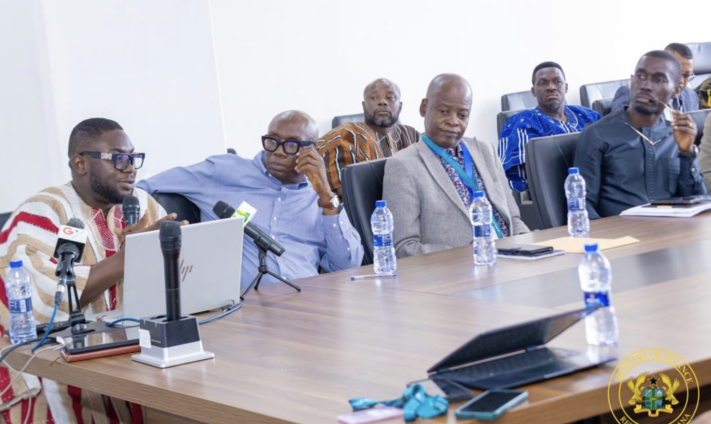
The call was made during the dissemination of the 2023 GHEITI Report in Accra, where Multi-Stakeholder Group member Dr Emmanuel Steve Asare Manteaw said weak parliamentary enforcement had allowed clearly defined statutory obligations to remain unfulfilled.
“A lot of development projects in some of these beneficiary communities have come to a standstill, and the uncertainty over the timing of disbursements makes it difficult for communities to plan development activities with any confidence,” he said.
Mining royalties are intended to give host communities a direct financial benefit from the extraction of mineral resources within their jurisdictions.
For district assemblies and traditional authorities, predictable transfers can support schools, roads, healthcare facilities, water systems and other public infrastructure.
When disbursements are delayed, projects may be suspended, contractors may remain unpaid and local authorities may be unable to establish reliable development budgets.
Dr Manteaw said Parliament had a direct responsibility to ensure that the legislation it passed was properly implemented.
He urged lawmakers to compel the relevant institutions to disclose the value of outstanding royalty payments, explain the causes of the delays and identify the agencies responsible.
Publishing those details, he argued, would strengthen accountability and allow mining communities to determine whether they are receiving their legally mandated allocations.
The concerns point to a wider contradiction within Ghana’s extractive economy.
The country generates significant revenue from gold and other minerals, but many resource-producing communities continue to face weak infrastructure, environmental pressure and limited economic opportunities.
This has intensified demands for a more transparent connection between mineral production, government revenue and visible improvements in the living conditions of host communities.
Delays in royalty payments can also deepen mistrust between communities, mining companies and the state.
Although mining companies may have fulfilled their fiscal obligations, residents may still perceive limited benefits if the revenues collected by government do not reach the local level promptly.
That disconnect can increase social tension, weaken the industry’s social licence to operate and create operational risks for mining companies.
Government officials maintain that reforms have improved the institutional framework for managing extractive revenues.
In remarks delivered on his behalf, Patrick Nomo, Chief Director at the Ministry of Finance and Co-Chair of the GHEITI Multi-Stakeholder Group, said changes to the royalty regime and the institutionalisation of subnational transfers through the Minerals Development Fund had strengthened arrangements for directing revenue to mining communities.
He nevertheless acknowledged that revenue leakages, weak coordination among public institutions and deficiencies in data management continued to limit the development impact of mineral income.
Mr Nomo called for stronger collaboration, improved information-sharing and more robust data systems to ensure that revenue collected from the extractive sector could be traced and translated into tangible outcomes.
The government, he said, remained committed to using evidence from GHEITI reports to guide policy reforms and strengthen accountability.
Under the mineral royalty distribution formula cited by the stakeholders, district assemblies receive 55.00% of allocations designated for the local level.
Mining-affected communities receive 25.00%, while traditional councils are allocated the remaining 20.00%.
The structure is intended to distribute mineral revenues among local government institutions, communities directly affected by extraction and traditional authorities responsible for land and customary governance.
However, the effectiveness of the formula depends on the funds being released consistently and accompanied by clear reporting on the amounts allocated, received and spent.
Without timely disclosure, it can be difficult to determine whether delays originate from revenue collection, central government transfers, fund administration or disbursement at the local level.
Stronger parliamentary oversight could therefore include regular reporting by the Ministry of Finance, the Minerals Development Fund and other responsible agencies.
Lawmakers could also require the publication of arrears, payment schedules and community-level allocations to improve public monitoring.
The issue carries implications beyond local development.
Effective royalty management influences social stability, investor confidence and the long-term sustainability of Ghana’s mining sector.
Companies operating in communities where promised development benefits fail to materialise may face protests, disrupted operations and deteriorating relations with residents, even where the companies themselves are not responsible for delayed government transfers.
The GHEITI intervention reinforces the argument that mineral production alone does not guarantee development.
The credibility of Ghana’s extractive governance system will increasingly be judged by whether revenues are distributed transparently, transferred on time and converted into measurable improvements in mining communities.
For Parliament, the immediate test is whether it will move beyond receiving reports and use its oversight powers to identify the causes of the delays, enforce the law and ensure that communities receive the funds legally due to them.

