
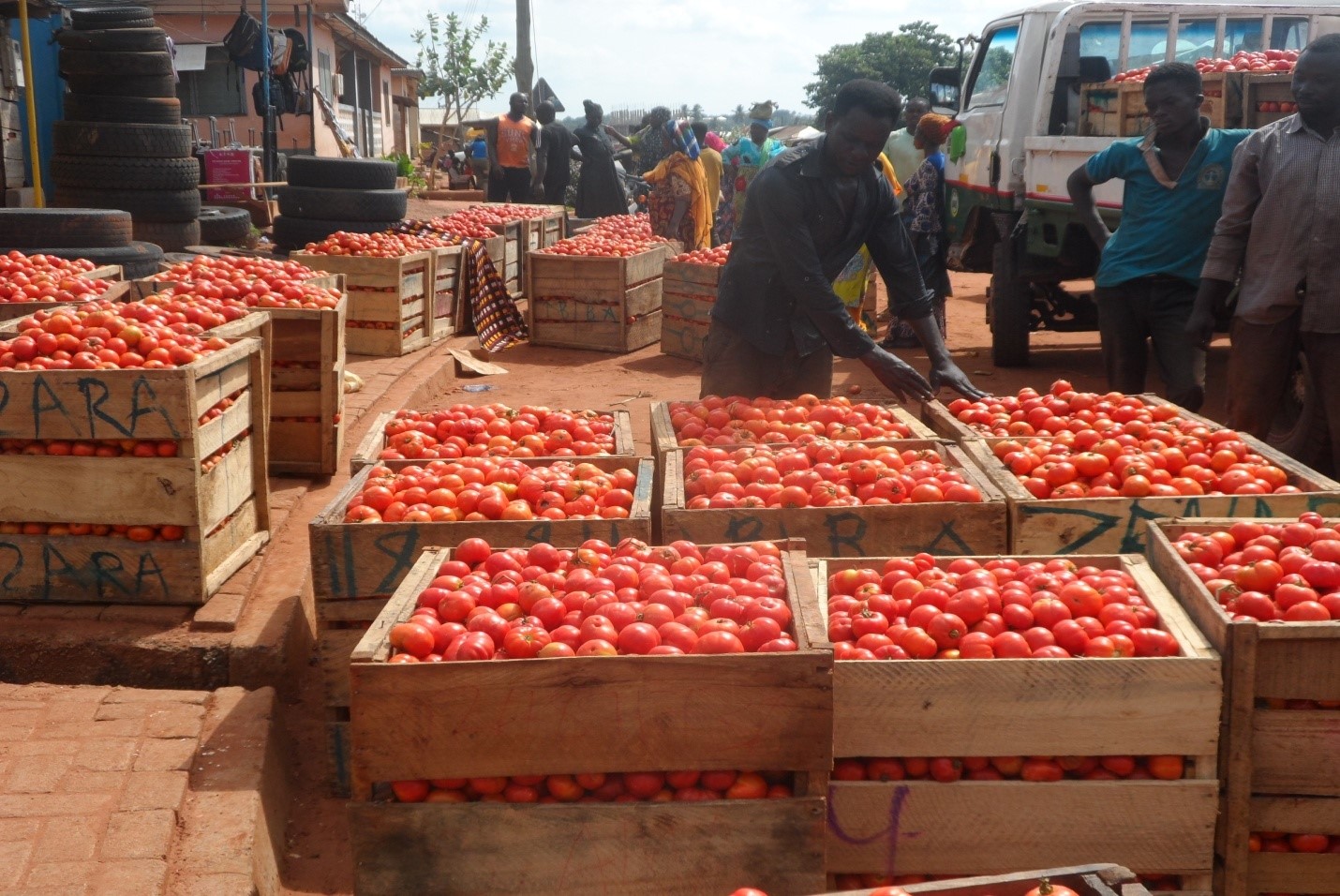

- Tomato imports resume as Ghana secures end to Burkina Faso export restriction
Ghana has welcomed the decision by Burkina Faso to lift its restriction on fresh tomato exports, in a move expected to ease supply shortages and moderate prices in local markets after months of disruption.
In a statement, the Ministry of Trade, Agribusiness and Industry described the development as a timely intervention that should improve the flow of tomatoes into the country and provide relief to both traders and consumers who have been grappling with tighter supplies and rising prices.
The government said the outcome was the result of sustained bilateral engagement between Accra and Ouagadougou, including discussions held on the sidelines of the WTO’s 14th Ministerial Conference in Yaoundé, Cameroon. According to the ministry, one of five key meetings between Trade Minister Elizabeth Ofosu-Adjare and her Burkinabe counterparts directly contributed to the immediate removal of the restriction on fresh tomato trade.
The decision matters because Burkina Faso remains a critical supplier of fresh tomatoes to Ghana, especially during periods when local output weakens because of erratic rainfall, low irrigation coverage and broader production constraints. In that sense, the reopening of the trade corridor offers immediate market relief, but it also serves as another reminder of Ghana’s continued dependence on imports to stabilise food supply.
The earlier restriction by Burkina Faso had been driven largely by domestic industrial policy. Authorities there sought to channel fresh tomato supply towards local processing factories as part of a broader push to promote agro-processing and value addition. But that decision had direct spillover effects for Ghana, where tighter imports quickly translated into supply pressure in Accra and other urban markets.
For policymakers in Accra, the episode has reinforced two realities at once. The first is that regional trade remains essential to short-term food stability. The second is that Ghana’s domestic tomato value chain remains too weak to absorb shocks without triggering price volatility.
The ministry said it would continue to work with state institutions and maintain close contact with Burkinabe authorities to ensure a smoother and more mutually beneficial trading environment. At the same time, government signalled that it sees the latest breakthrough not as a solution in itself, but as breathing space to strengthen local production.
Officials said programmes such as Feed the Industry and Feed Ghana are being intensified to improve domestic tomato output, raise yields and create a more stable local supply base. These measures include expanding irrigation infrastructure to support year-round cultivation, facilitating access to land for large-scale tomato farming, and encouraging closer integration between processors and farmers.
That push for backward integration is especially significant. For years, one of the central weaknesses in Ghana’s tomato economy has been the disconnect between producers and processors, leaving factories underutilised while farmers struggle with market access and unstable prices. A more coordinated value chain could help reduce that mismatch and improve resilience over time.
In the short term, however, the resumption of imports from Burkina Faso is likely to be welcomed across the market. Traders gain access to a key source of supply, consumers may see some easing in prices, and the government avoids the political pressure that often accompanies food inflation in urban centres.
But the broader lesson is harder to ignore. Ghana’s tomato market remains vulnerable not only to climate shocks at home, but also to policy decisions taken across the border. Until local production becomes more reliable and processing linkages stronger, that vulnerability is unlikely to disappear.
For now, the reopening of tomato imports offers relief. The bigger test will be whether Ghana uses that relief to build the self-sufficient tomato industry it has long promised.

