


- PDS Investigation Raises Deeper Question Over Transparency, Courts and Due Process
Ghana’s renewed investigation into the collapsed Power Distribution Services concession is becoming a broader test of whether the state can pursue suspected wrongdoing without weakening the legal safeguards that protect citizens from arbitrary power.
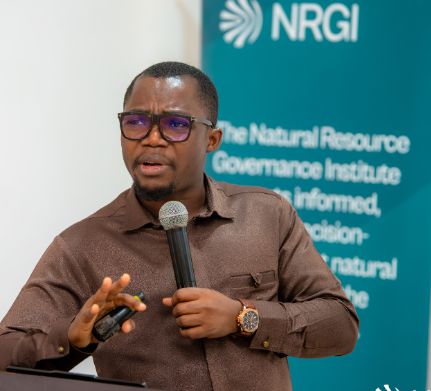
Patrick Stepenson, Country Manager of the Natural Resource Governance Institute, argues that the central issue is no longer simply whether the state has a legitimate interest in investigating PDS, but whether that interest is being pursued transparently, proportionately and under clear legal authority.
Speaking during a special edition of NorvanReports X Space, he said public confidence will depend heavily on whether institutions can show that law, rather than political rivalry, is driving the process.
The PDS controversy has already passed through concession agreements, termination, international arbitration and now a renewed phase of investigation.
PDS took operational control of the Electricity Company of Ghana’s distribution network in 2019 before the arrangement was suspended and later terminated after the guarantees underpinning the transaction were found to be invalid.
The dispute subsequently moved to arbitration, where the tribunal rejected PDS’s principal claims and upheld ECG’s entitlement to terminate the concession.
The collapse carried a wider national cost because Ghana lost approximately US$190m in Millennium Challenge Corporation funding after the concession was terminated. The MCC had determined that Ghana materially breached its compact obligations, adding a substantial fiscal and reputational consequence to an already controversial electricity-sector transaction.
That history helps explain why there is a legitimate public interest in understanding what went wrong and whether any recoverable losses or criminal acts remain unresolved.
Stepenson’s concern, however, is that seriousness of allegation cannot by itself justify unlimited coercive power. “You cannot but, you know, question these thoughts that people may have around, you know, the use of the powers of the state to sort of go after political opponents,” he said.
He stressed that such suspicions are understandable in a political system where prosecutions involving former officials or politically connected actors can easily be interpreted through a partisan lens, even where investigators believe they are acting lawfully.
His first proposed safeguard is transparency over the legal basis for state action. “I think a publication of a clear legal basis will make sense,” he said, arguing that citizens should be able to understand “what is the consideration of the state” and what information authorities possess that justifies intervention.
That does not mean investigators must reveal evidence that could compromise an active case, but Stepenson’s argument is that the public should at least be able to identify the statutory authority, legal theory and institutional mandate underpinning coercive measures.
The second safeguard is judicial oversight. Stepenson argued that courts should play an active role in scrutinising the exercise of investigative and prosecutorial powers, particularly where those powers affect liberty, property, reputations or commercial activity.
In that framework, judicial review is not an impediment to accountability but one of the mechanisms through which state action acquires legitimacy and remains bounded by law.
The third safeguard is public disclosure of outcomes. “Public disclosure of the findings” would help the public assess whether investigations produced evidence capable of justifying the actions taken by authorities, Stepenson said.
That is especially important in a case such as PDS, where arbitration resolved some contractual questions but did not necessarily determine every financial, accounting or criminal issue arising from the parties’ subsequent dealings.
The distinction between contractual findings and criminal liability is critical. The arbitration rejected PDS’s principal claims and upheld ECG’s termination rights, but jurisdictional limits surrounding the separate Interim Protocol meant not every later dispute was conclusively resolved.
Stepenson’s wider point is that an arbitral ruling validating termination does not automatically establish criminal responsibility for everyone associated with the transaction, just as unresolved contractual questions do not prevent the state from investigating genuinely new evidence of criminal conduct.
His fourth safeguard is due process and respect for individual rights. “And for me, I think that’s where it becomes a bit challenging,” he said, warning against the assumption that political control confers “this limitless extent to which we can deploy the powers of state”.
The warning is particularly relevant because investigations can affect bank accounts, businesses, reputations and personal liberty long before a court has finally determined guilt or liability.
Stepenson did not argue that authorities should be denied the tools needed to investigate financial crimes.
Asset preservation, account restrictions and evidence-gathering can be legitimate and necessary where there is a risk that funds may disappear or records may be destroyed.
His concern is whether those powers are being exercised proportionately, under judicial supervision and within a framework that respects the presumption of innocence.
He also acknowledged that Ghana already possesses institutions and civil-society mechanisms designed to provide checks. “There’s some level of disclosure around this. You’ve got significant civil society participation, not only in the transaction itself, but some advising,” he said.
But he added that the existence of formal safeguards does not automatically eliminate institutional risk, meaning continued vigilance is required even when processes appear procedurally compliant.
That observation goes to the deeper lesson from PDS. The original transaction passed through multiple institutions, professional advisers and approval processes, yet still collapsed with substantial financial and political consequences.
The retrospective question is who failed to identify or prevent those problems; the prospective one is how Ghana can design institutions strong enough to investigate such failures without allowing criminal justice to be perceived as an extension of political competition.
Stepenson’s proposed answer is to make the safeguards visible rather than merely assume they exist.
“The publication of legal basis, the extent to which we’re exercising judicial oversight, public disclosures, and a respect for due processes and the rights of individuals,” he said, are four principles capable of strengthening confidence.
“These four fundamental things will be very, very important,” he added.
He was careful not to suggest that such measures would eliminate suspicion entirely. “It will not do away with the risks completely,” Stepenson said, “but at least gets us to begin some meaningful discussions around the credibility of these safeguards.”
His argument is therefore institutional rather than partisan: the state must be able to investigate vigorously while simultaneously proving that its power is restrained by law.
For Ghana, that may be the most important question emerging from the renewed PDS fallout. The state must be capable of recovering legitimate public losses without presuming guilt, pursuing prosecutions without collapsing political accountability into criminal liability, and using coercive powers without undermining the rights those institutions are supposed to protect.
The real measure of the process will not simply be whether money is recovered or convictions secured, but whether citizens can ultimately see that the outcome was determined by evidence and law rather than the political power of the government of the day.

