


- Peasant Farmers Urges Ghana to Make Agricultural Innovation Work for Smallholder Farmers
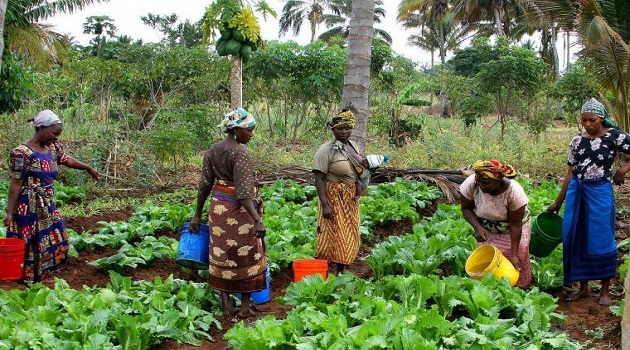
Ghana risks mistaking agricultural technology for agricultural progress unless innovations reach smallholder farmers and connect increased production to dependable markets, the Peasant Farmers Association of Ghana has warned.
Marking World Food Day 2026, PFAG said the country’s food-security strategy must respond directly to climate disruption, weak mechanisation, post-harvest losses and fragmented market access rather than celebrate technologies that remain beyond the reach of most producers.
The Association’s intervention challenges a recurring weakness in agricultural policy: programmes frequently concentrate on raising output while paying less attention to whether farmers can store, process and sell what they produce profitably. PFAG Press Release on World Food Day 2026…….pdf
“Improved seeds, irrigation, climate information, digital extension, soil-health practices, agroecology, storage and local processing can strengthen productivity and resilience,” PFAG Executive Director Bismark Nortey said.
“But these innovations will have limited impact unless farmers can access and use them affordably and connect their produce to ready markets.”
The warning is timely because innovation is often discussed as though deploying a digital platform, distributing improved seed or importing machinery automatically transforms agriculture. For smallholder farmers, however, technology creates value only when it solves a practical constraint without imposing costs that outweigh the expected benefit.
PFAG argued that farmers should not be treated merely as recipients of externally designed solutions. They are already innovators, applying generations of knowledge about soils, rainfall, crops and local food systems. Effective agricultural programmes must therefore combine scientific and technological advances with farmers’ experience.
That approach would require involving farmer organisations when policies are designed, not after budgets, technologies and delivery models have already been selected. Participation would help policymakers distinguish between innovations that look impressive in demonstrations and those that remain usable under real farming conditions.
The climate challenge provides the clearest test. PFAG cited the Kassena area of the Upper East Region, where prolonged dry spells and erratic rainfall threaten crop establishment, yields and household food security.
Farmers facing increasingly unreliable rainfall need more than general warnings about climate change. They require timely and locally relevant climate information, affordable irrigation, drought-tolerant seed varieties and extension officers capable of translating forecasts into decisions about planting, inputs and harvesting.
Without those supporting systems, climate information may arrive without providing farmers with the resources needed to act. A producer can know that rainfall will be delayed and still lose a crop because irrigation, suitable seed or financing is unavailable.
PFAG consequently called for investment in affordable irrigation and water-management innovations, climate services, agroecological practices and drought-tolerant seeds. The emphasis on affordability is crucial: public policy achieves little if solutions technically exist but remain commercially inaccessible to the farmers most exposed to climate risk.
Mechanisation presents a similar problem. Limited access to tractors, planters, harvesters, threshers and post-harvest equipment raises labour costs, delays farming operations and increases losses. These pressures are particularly severe for women and young farmers, who may have weaker access to land, finance and machinery services.
Expanding mechanisation cannot simply mean importing more tractors. Equipment must suit farm sizes, crops and local maintenance capacity. Service centres must also be located close enough to farming communities and operate under pricing arrangements that smallholders can realistically use during critical planting and harvesting periods.
The deeper issue raised by PFAG is that greater production can itself become a source of financial distress when markets fail. Tomato farmers in parts of the Volta Region and Ada have experienced gluts in which increased output did not produce higher incomes because storage, processing capacity and reliable buyers were inadequate.
This is the contradiction at the centre of Ghana’s agricultural system. Farmers are encouraged to produce more, yet the infrastructure required to preserve surplus food and convert it into stable earnings remains insufficient. When perishable crops flood local markets simultaneously, prices collapse and part of the harvest is lost.
PFAG said similar market and infrastructure difficulties affect rice and maize producers, who need stronger aggregation systems, processing capacity, storage facilities and predictable commercial linkages. Rice farmers also require innovative responses to migratory birds that destroy fields and undermine yields.
These examples show why agricultural innovation must cover the entire value chain. Better seed without irrigation remains vulnerable to drought. Higher yields without storage create waste. Processing without reliable electricity raises costs, while production without structured purchasing leaves farmers exposed to exploitative pricing.
PFAG therefore called on government, development partners, academia, financial institutions and private businesses to coordinate investment rather than pursue disconnected interventions. Its priorities include irrigation, climate services, mechanisation, storage, processing, aggregation, fair markets and targeted support for women and young farmers.
The inclusion of finance is particularly important. Even appropriate technologies will remain unused if farmers cannot obtain credit on terms aligned with agricultural cycles. Repayment schedules must recognise that farm income is seasonal and exposed to risks that producers cannot completely control.
Women and young farmers also require more than training programmes. Without secure access to land, finance, equipment and markets, capacity-building may improve knowledge without expanding the productive assets needed to apply it.
Consumers have a role as well. Mr Nortey urged Ghanaians to choose locally produced food and reduce waste. Stronger domestic demand can support farmers, processors and rural employment, but consumers will choose local products consistently only when quality, availability and pricing are competitive.
Government must avoid treating one fashionable technology as the answer to food insecurity. It must build a system where research responds to farmers, finance supports adoption, infrastructure protects output and markets reward production.
World Food Day’s theme, “Innovate today, nourish tomorrow,” will have meaning for Ghana only if innovation improves farmers’ incomes while making food more reliable and affordable for consumers.
PFAG’s message is ultimately about accountability. The success of an agricultural innovation should not be measured by equipment procured, applications launched or farmers registered. It should be judged by reduced losses, stronger resilience, improved incomes and a more secure national food supply.
For Ghana’s smallholder farmers, innovation must cease being something announced to them. It must become something designed with them, delivered within their reach and connected to a market capable of rewarding their work.

