

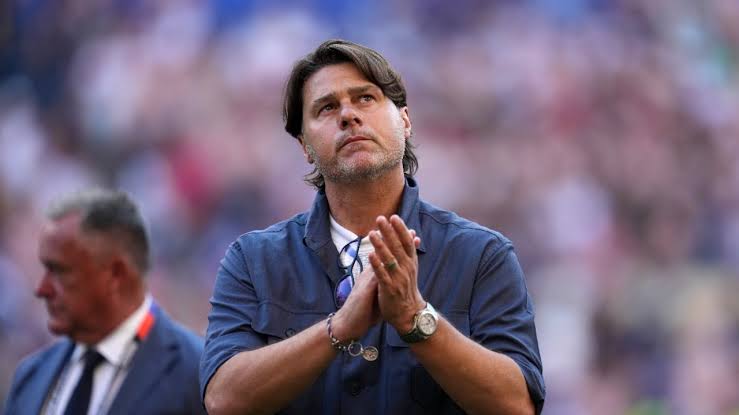

- Pochettino Leaves USA With Haiti Win Before Beginning Manchester United Role
Mauricio Pochettino’s final match as United States head coach ended with a win, a place in the Concacaf Nations League finals and a fitting glimpse of the younger talent he believes can shape the team’s future.
The United States beat Haiti 2–0 in Cincinnati on 17 November to complete an 8–0 aggregate victory in their quarter-final. Christian Pulisic opened the scoring with a bicycle kick in the 25th minute, and 18-year-old Julian Hall added a second before half-time.
The result closed Pochettino’s national team tenure on a six-match winning run and secured the United States’ place in the competition’s March 2027 finals. It also concluded the responsibilities he had agreed to finish before taking charge at Manchester United.
The club said he began work on 18 November, with his first match expected to be against Liverpool at Anfield on 22 November.
For the United States, the final score was only part of the send-off. Pulisic’s goal was his 36th for the national team and his third against Haiti across the two legs. Hall’s goal continued a striking run: the teenager had scored five times in six senior international appearances, according to U.S. Soccer.
Pochettino’s departure leaves the Americans with a competition place secured and a younger player making a case for a central role in the next phase. The challenge for the federation will be to turn that promising end into continuity. A farewell victory can strengthen confidence; it cannot guarantee that the team will preserve its momentum under a new coach.
The Argentine ended his spell with a record of 23 wins, 12 defeats and two draws in 37 matches. The United States had won six consecutive games and recorded four clean sheets in a row by the time he left.
Those results give his tenure a strong closing sequence, though they are not, by themselves, a complete measure of progress across the full period.
The 8–0 aggregate score against Haiti was emphatic. The first leg in Miami ended 6–0, giving the United States room to control the return match.
Still, the second-leg victory carried its own value: Pochettino’s side did not approach the match as a ceremonial goodbye. They scored twice, kept another clean sheet and completed the tie without conceding.
Pulisic supplied the moment that defined the night. His overhead finish put the United States ahead and gave the crowd an early reason to celebrate. Hall’s goal, assisted by Weston McKennie, then turned a comfortable advantage into a more decisive farewell.
The teenager’s contribution was especially notable because it linked the team’s present leaders with a player still establishing himself at senior level.
That balance between experienced players and emerging talent was central to Pochettino’s message after the match.
He said he believed the group could “achieve big things in the future” and described the blend of established players and younger talent as a “perfect combination”. He also said the connection with the fans had “really touched” him.
The comments offered a final endorsement of the squad he is leaving behind but also an implicit standard for the next coach.
The United States have reached the Nations League finals, built a six-game winning streak and brought Hall into the team’s scoring picture.
The next challenge is to make those gains durable, especially as the programme moves into a new cycle.
Pochettino’s exit is unusual in its timing. He did not leave after a defeat or a breakdown in the relationship with the national team; he completed the two matches against Haiti before beginning a new club role.
That allowed the United States to close the quarter-final with the coach who had prepared the team, while Manchester United waited for his international duties to finish.
The transition now moves quickly from national-team football to one of the Premier League’s most scrutinised jobs. Manchester United confirmed that Pochettino would become head coach on 18 November after reaching an agreement with U.S. Soccer.
The club’s announcement framed the appointment around his high-intensity style, team-building and record of developing players.
At United, the context is markedly different. Pochettino inherits a club under pressure to improve results, and his first assignment is a high-profile away match against Liverpool.
The demands of rebuilding a club team cannot be compared directly with managing a national side, where training time and player availability are more limited. But his emphasis on structure, intensity and player development will be tested quickly.
The switch also places the United States’ succession question in sharper focus. Pochettino leaves after helping deliver a strong run of results and a convincing quarter-final, but the federation must now decide whether to preserve the tactical direction or begin a broader reset.
Hall’s emergence may offer one point of continuity; the next coach will determine whether his progress becomes part of a sustained development plan.
For Pochettino, the Haiti victory offered a clean ending. He leaves the United States in the Nations League finals, with a 23–12–2 record and an 8–0 aggregate result in his final tie.
The farewell was positive, but its longer-term meaning will depend on what follows for both teams: whether the United States can carry its momentum into March and whether Pochettino can translate his methods into immediate progress at Old Trafford.

