

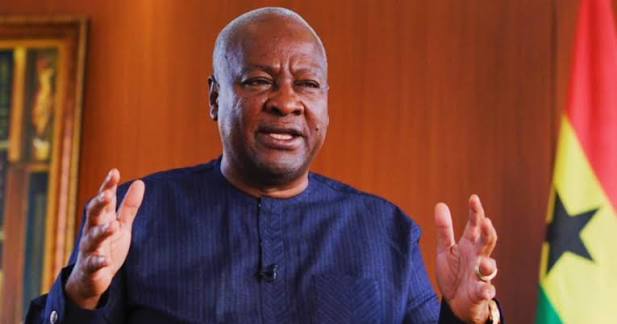

- President Mahama Bets on VALCO Revival to Rebuild Tema’s Industrial Economy
President John Dramani Mahama has placed the revival of the Volta Aluminium Company at the centre of a broader strategy to restore Tema’s industrial strength, expand domestic manufacturing and reposition Ghana as a producer of value-added goods for African and international markets.
The proposed rehabilitation of VALCO forms part of a wider industrial agenda covering energy infrastructure, port expansion, industrial clustering and export-oriented production.
Speaking during a working tour of Nestlé Ghana Limited, Three Dreamers Manufacturing Company and Kasapreko PLC in Tema, President Mahama pointed to renewed activity within the industrial enclave as evidence that Ghana’s manufacturing base was beginning to recover.
“The ports of Tema have expanded. Tema Oil Refinery is back at work again. We’re working on reviving VALCO. The industrial enclave is progressing, and many industries like Nestlé existing in the Tema enclave are expanding their production,” he said.
VALCO’s revival could become one of the most consequential tests of the government’s industrial policy. Ghana possesses substantial bauxite resources but has struggled to build an integrated industry that connects mining to refining, smelting and the manufacture of finished aluminium products.
A commercially viable smelter could provide raw material for producers in construction, packaging, electrical equipment, transport and engineering. It could also reduce Ghana’s dependence on raw mineral exports and retain a larger share of the aluminium value chain within the domestic economy.
However, restarting or expanding production at VALCO will require more than rehabilitating ageing machinery.
Aluminium smelting is highly energy-intensive, making the availability and price of electricity central to the company’s competitiveness. Without reliable power at a commercially sustainable tariff, modern technology and adequate working capital, increased production could deepen VALCO’s financial difficulties rather than resolve them.
The government will therefore need to demonstrate that the company can operate without creating an unsustainable burden for the electricity sector or national budget.
The proposed restructuring of VALCO’s relationship with the Ghana Integrated Aluminium Development Corporation will also be important. A closer institutional connection could align smelting operations with Ghana’s wider plan to develop an integrated aluminium industry, but success will depend on clear governance, investment discipline and commercially realistic production targets.
President Mahama’s visit coincided with the commissioning of an expanded evaporated milk production line at Nestlé Ghana’s Tema factory.
The investment has increased annual production capacity from about 12,960 tonnes to almost 30,000 tonnes—an expansion of more than 130 per cent.
The development provides a tangible example of how established manufacturers can deepen local production when operating conditions support investment. Higher domestic capacity could reduce imports, strengthen local supply chains and generate demand for packaging, logistics, maintenance and other industrial services.
Yet installed capacity is not the same as actual production. The economic effect will ultimately depend on consumer demand, access to raw materials, energy and financing costs, and Nestlé’s ability to serve markets beyond Ghana.
President Mahama linked the expansion to the government’s 24-Hour Economy programme, which seeks to increase the utilisation of factories and other productive assets. For manufacturers, operating for longer hours could improve the return on capital-intensive equipment, but only where demand, power supply, transport and labour arrangements can support additional production shifts.
The planned 120-hectare Tema Integrated Industrial Park, located near VALCO and Tema Port, is another component of the government’s strategy.
Its location could encourage industrial clustering by bringing aluminium processors, manufacturers, warehouses and service providers closer to the country’s largest port and existing industrial infrastructure.
Such clustering can reduce transport costs and allow companies to share utilities, logistics networks and specialised services. It could also improve Ghana’s ability to attract manufacturers seeking access to regional markets under the African Continental Free Trade Area.
But infrastructure alone will not guarantee investment. The park’s success will depend on transparent land and investment arrangements, dependable utilities, efficient customs processes and access to affordable long-term capital.
AfCFTA gives Ghanaian manufacturers access to a much larger potential market, but preferential access will not compensate for high production costs or unreliable delivery. Ghanaian products must remain competitive on price, quality, volume and compliance with regional standards.
Tema’s industrial recovery should therefore be judged not by the number of projects announced but by measurable increases in factory output, employment, exports, capacity utilisation and domestic value addition.
VALCO sits at the centre of that test. If the government can provide competitive energy, attract capital and connect the smelter to downstream manufacturing, its revival could help turn Ghana’s mineral resources into a platform for industrial development.
If those conditions are not secured, VALCO risks remaining a recurring industrial ambition—strategically attractive, but commercially difficult to sustain.

