

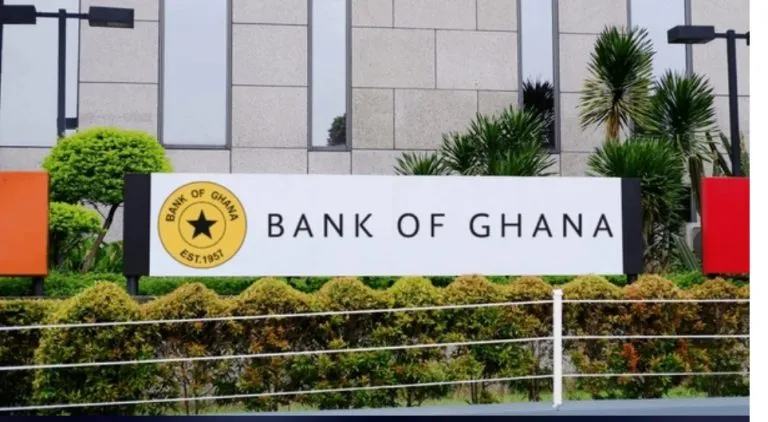

- Microfinance Reform Will End Regulatory Arbitrage And Strengthen Depositor Protection — BoG
Savings and loans companies in Ghana have until December 31, 2026, to raise their minimum capital to GH¢50mn if they want to transition into microfinance banks under the Bank of Ghana’s revised regulatory framework.
New institutions seeking to enter the microfinance banking market will be required to provide minimum capital of GH¢100mn.
Second Deputy Governor Matilda Asante-Asiedu said the new framework was intended to build stronger financial institutions, protect depositors and eliminate regulatory arbitrage caused by the fragmentation of the existing system.
Speaking at the inauguration of Advans Ghana’s new head office, she said the reform would replace the former Tier 1-to-Tier 4 arrangement with four clearly defined categories.
These are microfinance banks, community banks, credit unions and last-mile providers.
Existing savings and loans companies will be permitted to transition into microfinance banks, which will operate as deposit-taking institutions serving mainly micro, small and medium-sized enterprises, groups and individuals.
“Existing institutions have until 31 December 2026 to meet the minimum capital of GH¢50mn required to transition into a Microfinance Bank, while new entrants face GH¢100mn,” Mrs Asante-Asiedu said.
The capital requirement presents a major test for existing institutions, particularly smaller savings and loans companies that may be unable to raise fresh equity before the deadline.
The central bank has consequently provided several compliance options.
An institution may meet the GH¢50mn requirement independently, merge with another financial institution or be acquired by a stronger operator. It may also transfer its assets and liabilities to a qualified institution in an orderly process or exit the market voluntarily.
“The aim is a sector in which every institution is strong enough to protect its depositors and keep serving its clients,” the Second Deputy Governor said.
The range of options suggests that the Bank of Ghana expects some consolidation within the sector.
Mergers and acquisitions could create larger institutions with stronger capital and wider operational networks. However, the process could also reduce the number of independent lenders serving specific communities and business groups if it is not managed carefully.
The reform follows years of concern about weak capital, poor governance and uneven supervision within Ghana’s microfinance and specialised deposit-taking sector.
Mrs Asante-Asiedu said fragmentation under the existing structure had allowed institutions performing similar activities to be supervised under different standards.
“Fragmentation has allowed uneven supervision and regulatory arbitrage to persist,” she said.
“With clearer categories, institutions of the same kind will be held to the same standards.”
The central bank also expects boards and management teams to demonstrate the professional competence, experience and ethical standards needed to operate deposit-taking institutions.
Mrs Asante-Asiedu said accountability for the safety and soundness of each financial institution must begin with its board.
The new structure is intended to provide clearer rules, more consistent supervision and a defined path for institutions seeking to comply with the revised requirements.
Addressing international investors, the Second Deputy Governor said regulators must answer three basic questions: whether the rules are clear, whether they will be applied consistently and whether institutions have a fair route to compliance.
Her remarks reflect the central bank’s attempt to reassure investors that the regulatory overhaul will not be implemented arbitrarily, even as institutions face significant capital demands.
The Bank of Ghana expects the reforms to rebuild public confidence, deepen financial inclusion and attract fresh investment into the subsector while increasing local participation and ownership.
Mrs Asante-Asiedu commended Advans Ghana for committing to meet the new capital requirement and acknowledged the support of the wider Advans Group.
She urged other international shareholders to provide similar backing to their Ghanaian subsidiaries before the year-end deadline.
“We encourage other foreign shareholders to show a similar level of commitment to support their Ghanaian subsidiaries as all institutions work towards the end-of-year deadlines, for capital and for non-performing loans alike,” she said.
Advans Ghana was incorporated in November 2007 and licensed by the Bank of Ghana in October 2008. It has since expanded to more than 20 branches across several regions.
The institution provides financial services to low-income customers and MSMEs and has introduced products such as the MyAdvans GH application, AdvansHER and the Shea Business Empowerment Programme.
Mrs Asante-Asiedu said Advans Group’s decision to hold its annual Group Board Week in Accra demonstrated confidence in Ghana’s financial system and broader economy.
The central bank’s reform will nevertheless require more than recapitalisation. Stronger balance sheets must be accompanied by better governance, transparent ownership, effective risk controls and responsible treatment of customers.
Institutions that raise the required capital but continue to record weak loan quality or poor governance may remain vulnerable.
The success of the new framework will therefore depend on whether the Bank of Ghana applies the new classifications and requirements consistently while ensuring that consolidation does not reduce access to finance for underserved communities.
For savings and loans companies, the options are now clear: raise capital, combine with stronger institutions, transfer their operations or leave the market.
The December deadline will determine which institutions enter Ghana’s next phase of microfinance regulation and which are unable to make the transition.

