


- Private Capital Backs Ghana’s Digital Future, But Fragile Infrastructure Threatens Telecom Gains
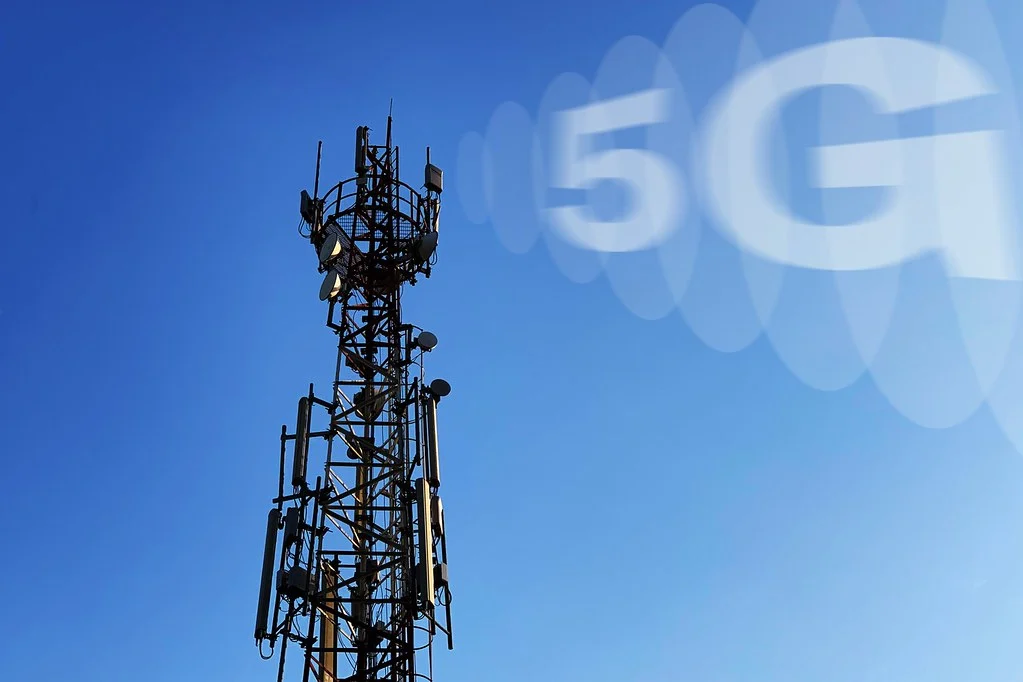
MTN Ghana is committing more than US$1.10 billion over the next three years to expand coverage, deploy new network sites and support the rollout of 5G, providing a major private-sector boost to Ghana’s digital economy at a time when repeated infrastructure damage is raising the cost of keeping networks operational.
Communications, Digital Technology and Innovations Minister Samuel Nartey George disclosed the investment during the Government Accountability Series, saying the programme includes roughly US$380.00 million in spending this year. The commitment will support coverage expansion, new site deployment and preparations for 5G.
The programme includes 800 new cell sites, which the minister described as MTN’s largest annual build in a decade. Particular attention is being directed towards rural and peri-urban communities where coverage and service-quality problems have been most pronounced.
The size of the investment is significant because telecommunications infrastructure now carries far more than conventional voice traffic. Mobile networks underpin banking, mobile money, commerce, education, government services and employment, making network quality increasingly important to the productivity of the wider economy.
MTN’s commitment is also a bet on the continued growth of data consumption. Ghana’s telecommunications market has shifted from one dominated by voice towards data, fintech and digital services, while the next stage is expected to be shaped by 5G, cloud computing, artificial intelligence and more sophisticated mobile financial services.
The economics of that transition, however, remain challenging. Telecommunications infrastructure is capital-intensive and much of the equipment and technology required is effectively foreign-currency linked, while operators generate a large share of their revenues in Ghana cedis.
That makes the US$1.10 billion programme more than a routine capital-expenditure plan. It represents a long-term commitment to Ghana’s digital market, but its effectiveness will depend heavily on whether the physical infrastructure supporting those investments can be protected.
The same government presentation that highlighted MTN’s investment also exposed the scale of the infrastructure problem. Mr George said Ghana had recorded 8,578 fibre cuts so far this year, with repair costs exceeding US$20.00 million.
According to the minister, road construction under the government’s Big Push programme has become a major source of fibre cuts, while galamsey accounts for about 25.00% of incidents and private developers and estate projects also contribute materially.
The result is a costly form of economic leakage. Telecommunications companies deploy capital to expand capacity, only to divert part of that spending towards repairing infrastructure damaged by unrelated economic activities, meaning some investment merely restores capacity rather than creating new productive assets.
That raises an important policy question around MTN’s planned expenditure. The value of US$1.10 billion in private investment ultimately depends not only on how much is spent but on how much of that capital survives long enough to improve coverage, reliability and data capacity.
Government’s proposed response is the Dig Once policy, which would require road projects to make provision for telecommunications infrastructure, including dedicated fibre chambers. The objective is to shift the infrastructure model from repeated excavation and reactive repairs towards coordinated construction.
The policy could reduce future network costs by protecting fibre routes during road construction and making subsequent expansion easier. Government is also developing a coordination framework requiring road agencies and contractors to engage telecommunications operators before excavation begins.
Power reliability presents another constraint. Cell sites rely primarily on the national grid, with batteries and generators serving as backup, leaving telecommunications infrastructure exposed to electricity interruptions and wider failures in the energy system.
The Greater Accra floods illustrated that vulnerability when some electricity supplies had to be switched off for safety while backup generators at certain telecom sites were themselves submerged. In such circumstances, even newly built towers cannot guarantee reliable service because they remain dependent on electricity, fibre backhaul and resilient backup infrastructure.
That distinction will become even more important with 5G. Faster speeds and lower latency have limited economic value if the underlying fibre network is repeatedly disrupted or if power supply cannot support continuous operation.
MTN’s investment could therefore become a test of Ghana’s wider digital strategy. If government can improve infrastructure protection, coordinate road works with telecom deployment and strengthen power resilience, the spending could generate wider productivity gains across mobile money, remote work, agriculture, logistics, healthcare and education.
The rural component is particularly significant. MTN says the 800 new sites will focus partly on areas where network challenges have been most severe, complementing government plans to upgrade rural telephony infrastructure to 4G while preparing for broader 5G deployment.
The final accountability test will be what consumers experience. Government has indicated it intends to strengthen quality-of-service regulation and introduce customer-remediation mechanisms where operators fail to meet expected standards, creating obligations for both the state and network providers.
MTN’s US$1.10 billion commitment demonstrates that substantial private capital is available for Ghana’s digital future. But the economic return will depend on whether new towers, fibre routes and data systems can remain operational rather than being repeatedly damaged, disconnected or left without reliable power.
Ghana’s telecommunications challenge is therefore no longer simply about building more infrastructure. It is about creating an environment in which that infrastructure can survive, perform and generate productive economic value.

