


- All 54 African Associations Back Infantino for Another FIFA Term — Motsepe
All 54 African football associations have agreed to support Gianni Infantino unconditionally in the 2027 FIFA presidential election, according to Confederation of African Football President Patrice Motsepe.
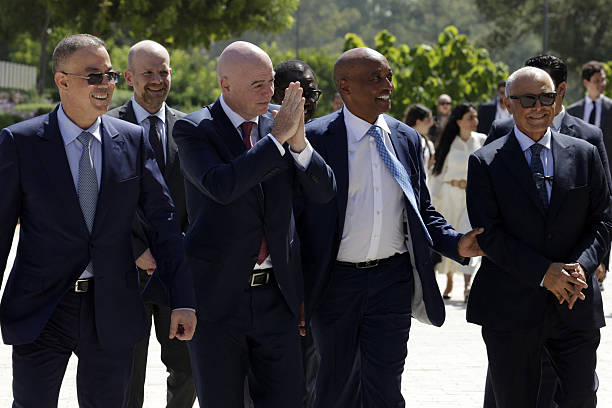
The endorsement was announced at the CAF Strategy Conference in Santa Maria, Cabo Verde, where the leaders of the continent’s national football associations met to discuss the development and long-term sustainability of African football.
“There is a unanimous decision by the 54 CAF member associations to unconditionally support Gianni as president of FIFA,” Mr Motsepe told delegates.
“Thank you, Gianni Infantino, for all you do for African football.”
The declaration gives Mr Infantino the backing of more than a quarter of FIFA’s 211 member associations ahead of the presidential election scheduled for March 2027.
Each eligible FIFA member has one vote, regardless of population, footballing strength or financial contribution. A unified African bloc could therefore prove decisive, particularly if opposition to Mr Infantino remains divided across the other confederations.
The CAF endorsement comes as the FIFA president faces resistance in parts of Europe and North America following controversy over his aborted plan to sell an interest in FIFA’s commercial and tournament operations to private investors.
Several associations withdrew or reconsidered their support for Mr Infantino after concerns were raised about the proposal’s governance, transparency and potential implications for the future control of FIFA competitions.
Africa, however, has maintained its support.
Mr Infantino used the Cabo Verde conference to promise continued financial and technical assistance for African football.
CAF and its member associations have repeatedly identified infrastructure, youth development, women’s football, administration and sustainable domestic competitions as areas requiring greater investment.
FIFA is reported to have invested approximately US$1bn in African football over the past decade through its Forward development programme.
Mr Motsepe argued that Mr Infantino’s support had delivered tangible benefits to the continent and said African football required investment rather than policy statements alone.
“We cannot just talk beautifully about these wonderful plans. We have to invest,” the CAF president said.
The relationship is mutually beneficial. African associations receive development funding, infrastructure support and access to FIFA programmes, while their 54 votes constitute one of the most important political blocs in world football.
The unanimous declaration consequently strengthens Mr Infantino’s electoral position at a time when his leadership is facing greater scrutiny elsewhere.
CAF’s declaration presents the continent as a united political force within FIFA. But the promise of unconditional support also raises questions about accountability and whether member associations should commit their votes before assessing all candidates and their programmes.
A collective position can increase Africa’s bargaining power, particularly when negotiating for development funding, greater World Cup representation and more prominent positions within FIFA.
However, unconditional endorsement could also weaken the continent’s ability to demand specific reforms or hold FIFA’s leadership accountable.
African associations must ultimately decide whether unity is being used as leverage to secure measurable gains for the continent or simply to reinforce an existing political alliance.
The declaration is particularly significant because it comes amid continuing criticism of football governance in Africa, including concerns about transparency, financial management and the independence of CAF from FIFA.
Mr Motsepe defended Mr Infantino’s integrity and suggested that formal allegations should be submitted to FIFA’s ethics institutions rather than debated through speculation.
FIFA’s presidential contest is scheduled for March 18, 2027, in Rabat, Morocco. The deadline for candidates to enter the race is expected in November 2026.
Former Swiss international Ramon Vega has indicated an intention to challenge Mr Infantino, while other potential candidates have either withdrawn from consideration or chosen to seek re-election within their respective confederations.
UEFA President Aleksander Čeferin has ruled himself out of the FIFA race, while Concacaf President Victor Montagliani has decided to seek another term leading the North and Central American confederation.
The absence of a single, widely supported challenger strengthens Mr Infantino’s position. Africa’s public commitment of 54 votes reinforces that advantage before the campaign formally enters its decisive stage.
Yet the value of the endorsement to African football will eventually be measured by outcomes rather than access to FIFA’s leadership.
The continent continues to face inadequate infrastructure, weak domestic leagues, delayed payments, governance disputes and limited commercial development. Many national associations remain heavily dependent on FIFA funding.
The central issue is therefore not only whether Africa can help Mr Infantino retain the FIFA presidency, but what African football receives in return for its most powerful collective bargaining asset.
A united bloc of 54 associations can influence who controls world football. Whether that unity also produces stronger leagues, better facilities, transparent administration and more opportunities for African players will be the more consequential test.
The endorsement gives Mr Infantino control of a bloc representing more than one-quarter of FIFA’s 211 voting associations ahead of the March 2027 election.

