


- Road Fund Needs More Money as Potholes Turn Into Gullies – CUTS
CUTS International, Accra, has called on government to increase allocation to the Ghana Road Maintenance Trust Fund in the 2026 Mid-Year Budget Review, warning that the country’s deteriorating road network is imposing rising costs on commuters, drivers, businesses and households.
The policy think tank said the damage caused by this year’s heavy rains to roads, bridges and drains has made additional funding urgent, particularly as many damaged sections have moved beyond ordinary potholes into deeper gullies that now pose safety and economic risks.
According to CUTS, bad roads are no longer merely an inconvenience. They have become a daily economic burden, slowing traffic, increasing vehicle repair costs, raising fuel consumption and making transport more expensive for traders, farmers, workers and businesses.
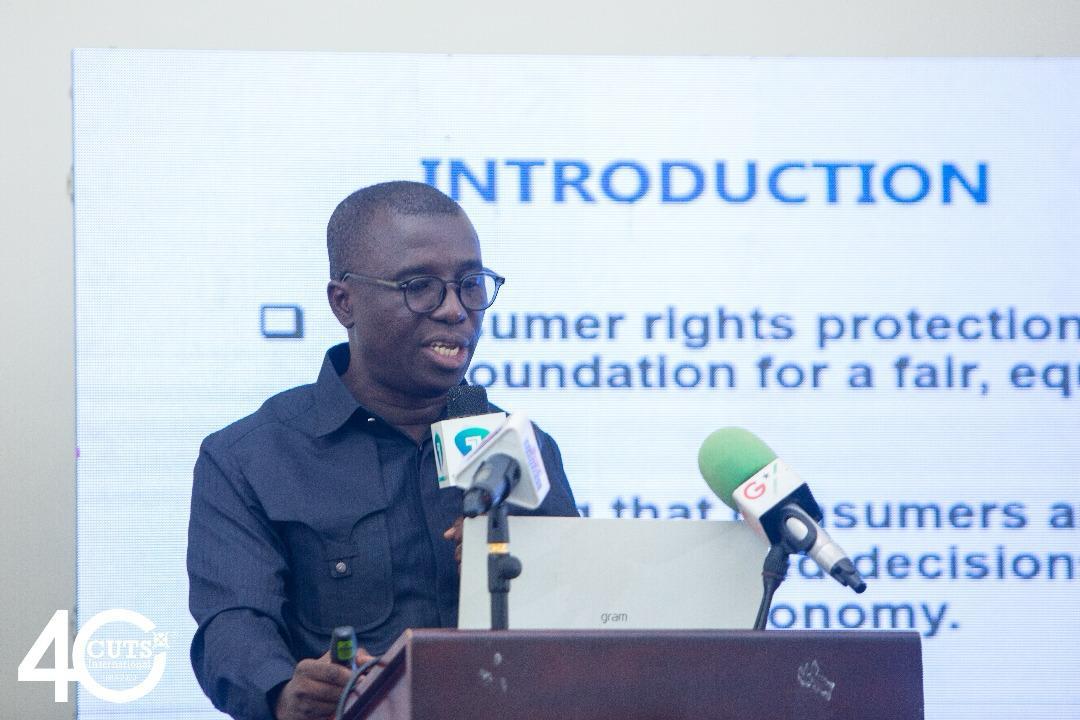
“Every day, ordinary Ghanaians are paying the price for bad roads. They spend more time in traffic, pay more to fix their cars, use more fuel and face higher risks on the road. This is no longer about minor potholes. In many places, the roads are breaking down badly, and the government must respond with urgency,” said Appiah Kusi Adomako, Director of the West Africa Regional Centre of CUTS International, Accra.
The call comes as government prepares the 2026 Mid-Year Budget Review, a key fiscal policy moment that allows the state to revise expenditure priorities in response to emerging pressures.
CUTS said road maintenance should feature prominently in the review because waiting for the rainy season to end before acting could worsen the damage and increase the eventual cost of repairs.
The organisation acknowledged that road maintenance works are more durable when carried out in the dry season. However, it argued that some sections of the road network now require emergency intervention to keep them safe and usable.
The group warned that temporary patching alone will not solve the problem.
Many patched potholes fail quickly because the underlying causes are not addressed. Poor drainage, weak road bases, flooding and poor supervision continue to damage the same road sections repeatedly.
CUTS is therefore urging government to invest not only in patching, but also in proper maintenance, drainage works, bridge repairs and stronger supervision of road construction and rehabilitation.
The think tank also cautioned that government’s focus on new road construction under the Big Push agenda should not come at the expense of existing roads.
It commended the government’s infrastructure drive, noting that new roads are important for national development, trade, connectivity and economic growth. But it warned that the country risks weakening the entire transport system if existing roads are allowed to deteriorate while new ones are being built.
“As government pursues its Big Push in road construction, we must remember that a road network is only as strong as its weakest link. New roads are important, but existing roads must also be protected. We cannot build new roads with one hand and allow older roads to collapse with the other,” Mr Adomako said.
That warning speaks to one of Ghana’s long-standing infrastructure challenges.
Successive governments have placed strong political emphasis on new roads, but maintenance has often received less attention. The result is that roads constructed at significant public cost are allowed to deteriorate, requiring far more expensive rehabilitation later.
CUTS said protecting existing road assets is one of the most cost-effective ways to preserve public investment and reduce the burden on road users.
The organisation noted that the 2026 Budget allocated about GHS 3.00 billion to the Ghana Road Maintenance Trust Fund, while an estimated GHS 3.10 billion went into the Fund in 2025.
While welcoming these allocations, CUTS said the scale of damage caused by the rains requires additional support in the Mid-Year Budget.
“The Road Fund must be strong enough to do what it was created to do. If we do not put enough money into road maintenance today, the cost will not disappear. It will be paid by drivers, passengers, businesses, farmers, traders and families through higher transport costs, damaged vehicles, lost time and avoidable accidents,” Mr Adomako said.
The statement also called for Metropolitan, Municipal and District Assemblies to be properly resourced to respond quickly to local road and bridge failures.
CUTS argued that assemblies are closer to communities and are often the first to see road problems. They should therefore be given the funding and authority needed to deal with urgent maintenance needs before they worsen.
In that regard, the organisation urged the Ministry of Roads and Highways to resolve all outstanding issues surrounding the suspended National Roads Authority Act, 2024, Act 1118.
According to CUTS, the continued suspension of the Act weakens decentralised road management and slows institutional response to road maintenance challenges.
The group further called on government to fast-track the return of road tolls through a modern, technology-driven tolling system.
Road tolls were suspended in 2021, cutting off an important revenue source for road maintenance. CUTS said a modern tolling system could provide a transparent and efficient way to raise funds for road repairs if revenues are directly channelled into maintenance and citizens are able to see visible results.
The organisation stressed that Ghanaians do not expect perfect roads overnight, but they do expect unsafe roads, deep potholes and damaged bridges to receive urgent attention.
Roads connect people to schools, hospitals, markets, farms, workplaces and businesses. When they fail, the whole economy suffers.
CUTS is therefore urging government to use the Mid-Year Budget Review to demonstrate a clear commitment to preserving existing road assets, financing emergency repairs and reducing the daily burden poor roads place on citizens.
The central message is straightforward: Ghana cannot build a modern economy on a road network that is allowed to decay faster than it is maintained.

