

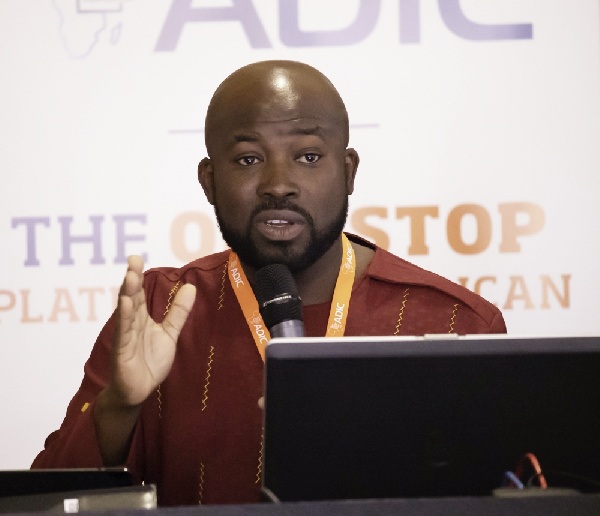

- Senyo Hosi Backs SOE Shake-Up But Warns Against Politicised Boardroom Cycles
President John Dramani Mahama’s decision to dissolve the boards of nine state-owned enterprises has reopened a deeper debate over how Ghana governs institutions that control some of the country’s most strategically important commercial and public assets.
Policy analyst and One Ghana Movement convenor Senyo Hosi has welcomed the intervention but raised concerns about the wider implications of repeatedly changing SOE leadership, particularly where the public is given limited explanation about the reasons for such decisions and the performance failures they are intended to correct.
The controversy extends beyond the fate of individual directors. At its core is a question that has long confronted Ghana’s public-enterprise sector: can SOEs become commercially disciplined and financially sustainable institutions when their governance structures remain closely tied to changes in political administration?
That question matters because Ghana’s SOE problem has never simply been about personalities. It is about whether public enterprises operate under long-term commercial mandates, professional oversight and measurable performance obligations strong enough to protect them from political cycles.
The dissolution gives the Mahama administration an opportunity to reset expectations around SOE performance. But it also carries governance risks if board changes are perceived as routine political transitions rather than part of a transparent and rules-based reform programme.
The distinction is important because state-owned enterprises operate across energy, transport, finance, infrastructure and other strategic areas of the economy. When those entities perform poorly, the consequences often extend beyond their own balance sheets.
Losses, arrears, government guarantees, recapitalisation requirements and weak dividend payments can eventually migrate onto the public balance sheet. For a country still trying to preserve fiscal discipline after debt distress, poor SOE governance is therefore an economic risk rather than simply an administrative weakness.
The immediate temptation is to treat board dissolution as evidence of decisive action. But changing a board does not automatically change the financial condition of an enterprise.
The more difficult questions are why the previous board failed, what the incoming board is expected to achieve and how its performance will be measured independently.
That is where the credibility of the latest intervention will ultimately be tested.
Hosi’s concerns are consistent with his longstanding argument that leadership appointments to public institutions should be anchored in competence rather than patronage. He has previously argued that prospective leaders should demonstrate clear plans for the institutions they seek to manage and that appointments should be subjected to greater scrutiny.
“Leadership appointments must hinge on merit, not patronage,” he has argued.
That principle provides an important benchmark for the current reset. If dissolved boards are replaced largely on the basis of political loyalty, the exercise risks reproducing the same governance cycle under different personnel.
If, however, appointments are based on industry knowledge, financial expertise, operational competence and clearly defined performance obligations, the shake-up could become part of a more credible SOE reform programme.
There is nevertheless a legitimate argument for political accountability.
A new administration inherits boards appointed under a previous government and may reasonably conclude that some are not aligned with its policy objectives or have failed to deliver acceptable results. Governments therefore need some ability to intervene when public enterprises underperform.
But institutional continuity matters as well.
Frequent leadership changes can disrupt corporate strategy, delay procurement and investment decisions, unsettle employees and create uncertainty for creditors, investors and commercial partners. In capital-intensive enterprises, major strategic decisions often require several years to produce measurable returns.
A state-owned enterprise should not have to rediscover its strategic direction every time political power changes hands.
The stronger governance model is therefore one that combines political accountability at the ownership level with operational independence at the enterprise level.
Government should determine what it expects from an SOE. Boards and management should then be given sufficient professional autonomy to deliver against those expectations, subject to transparent performance contracts and independent oversight.
The most important question now is what happens after the dissolution.
The administration could use the opportunity to publish clear performance expectations for incoming boards covering profitability, debt management, operational efficiency, procurement, service delivery, dividend payments and capital investment.
Such an approach would turn the current controversy from a political reshuffle into a measurable governance exercise.
It would also allow taxpayers, Parliament, civil society and investors to assess whether the new boards are actually improving enterprise performance.
Without clear metrics, however, board changes risk becoming recurring political events with little demonstrable impact on the underlying financial health of SOEs.
Ghana’s experience provides ample warning. State enterprises have historically generated fiscal risks through losses, arrears and inefficient operations, meaning reform requires more than replacing individuals.
It requires changing incentives.
Greater transparency around appointments would also help. Publishing the professional qualifications and relevant experience of incoming directors, alongside the reasons for major appointments, would make it easier to determine whether public enterprises are being governed as commercial institutions or treated as extensions of political administration.
For President Mahama, the SOE sector offers an important test of his administration’s broader economic reset.
If the new boards reduce losses, strengthen financial controls, improve service delivery and limit recurring demands on taxpayers, the dissolution may eventually be viewed as a necessary intervention.
If the same weaknesses return under different appointees, the episode will reinforce a more difficult conclusion: that Ghana’s SOE problem is not the absence of new boards but the absence of durable governance systems.
That is why the latest shake-up should be judged less by how many directors leave office and more by what changes after they are gone.

