

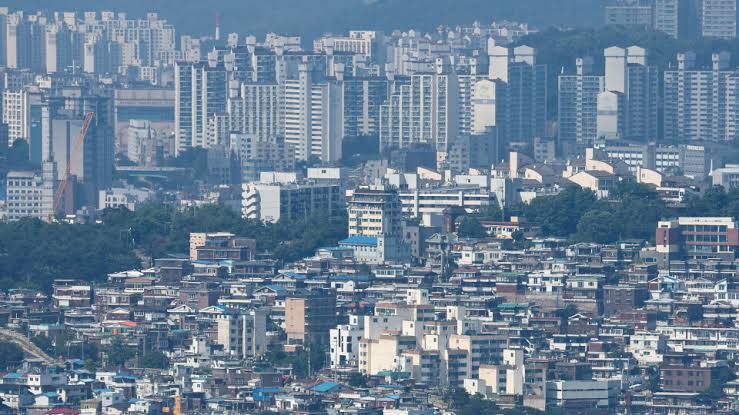

- Seoul Rent-to-Buy Gap Hits 357 Years as Global Housing Costs Reshape Homeownership Economics
The economics of homeownership are being reshaped across some of the world’s largest cities, with Seoul emerging as the most extreme example in a new global housing study that estimates a renter would need 357 years of payments to spend the equivalent of the purchase price of a typical 90-square-metre home.
The September 2026 study by BC Game compared median rents, house prices, rental availability and household income across major global cities as property values continue to outpace rents in several urban markets.
In Seoul, the study estimates median monthly rent at US$609.71, equivalent to 17.24% of average net salary, while putting the price of a 90-square-metre home at about US$2.61 million.
On a simple comparison of current monthly rent against the estimated purchase price, cumulative rent payments would take 357 years to equal the cost of the property.
That gap is substantially wider than in any other city included in the top 10 and illustrates how far purchase prices have moved away from rents in parts of the global housing market.
Bangkok ranked second, with a median monthly rent of US$359.13 and an estimated 90-square-metre property price of US$547,141. At current levels, the study calculates that it would take about 127 years of rent payments to equal the cost of buying.
Vienna followed at 113 years, with average rent of US$988.37 and a home price of about US$1.34 million, while Tokyo recorded a 96-year gap based on median rent of US$698.23 and an estimated property value of US$804,690.
Paris ranked fifth with a 94-year rent-to-buy gap. Its median monthly rent was estimated at US$1,188.84, compared with a house price of about US$1.34 million.
The French capital also had the largest rental inventory among the top-ranked cities, with 17,600 available properties, ahead of Seoul’s 14,214 and Vienna’s 4,287.
Zurich stood out for the outright cost of buying.
The study puts the price of a 90-square-metre home in the Swiss city at about US$2.49 million, second only to Seoul among the top 10. Median rent was also considerably higher at US$2,468.60, but the rent-to-buy gap still reached 84 years.
Singapore and Helsinki both recorded gaps of 80 years, while Stockholm stood at 79 years and Munich at 77.
The data point to a widening divide between the cost of occupying a home and the cost of owning one outright in several high-value urban markets.
BC Game argues that the shift reflects a broader change in the global buy-versus-rent equation following a decade in which real estate prices have risen sharply, while higher interest rates have also increased the effective cost of borrowing for prospective homeowners.
The company’s chief executive said that in much of the 2010s, buying was cheaper than renting in many markets, but that higher mortgage costs and elevated property prices have altered that relationship.
“Just this year, monthly mortgage payments in the US became 20% higher than median rent,” the executive said, adding that the gap is even wider in cities such as Paris, Vienna and Tokyo.
The study also suggests that established rental cultures may be better positioned for the shift than markets where renting has traditionally been treated as a temporary stage before homeownership.
But the figures require careful interpretation.
The “years of rent equal to home price” measure is a simplified ratio based on current rent and estimated property values. It does not, by itself, prove that renting is financially superior over an individual’s lifetime.
Long-term housing decisions also depend on mortgage rates, deposits, property taxes, maintenance costs, future rent increases, house-price appreciation and the investment return that renters may earn on capital they do not commit to buying a home.
The comparison can also be influenced by whether the rental unit being measured is directly comparable in size and quality with the 90-square-metre property used for the purchase-price estimate.
What the data do show more clearly is the scale of the affordability gap between renting and buying in certain cities.
In Seoul, for example, rent consumes only 17.24% of average net salary, the lowest proportion among the cities highlighted, while the cost of ownership is among the highest.
Bangkok presents a different affordability picture. Although it has the lowest median rent in the top 10 at about US$359 a month, rent still takes 56.69% of average net salary, suggesting that low nominal rent does not necessarily mean housing is affordable relative to income.
Singapore shows a similar tension, with median rent of US$2,187.38 accounting for 51.93% of average net pay.
That contrast underlines the importance of looking beyond headline rents or purchase prices alone.
For renters, affordability depends on income as much as price. For buyers, access to credit, mortgage costs and the ability to accumulate a deposit can be decisive.
The findings also highlight how housing markets are becoming increasingly segmented.
In some cities, renting may offer relatively affordable access to locations where ownership has become financially inaccessible for most households. In others, high rents still impose significant pressure even when buying is considerably more expensive.
For policymakers, the wider issue is whether housing markets can continue functioning effectively when the gap between ownership costs and rental costs becomes so large.
A market in which large numbers of households can afford to rent but have little realistic prospect of buying may produce greater long-term dependence on rental housing, increasing the importance of tenant protections, rental supply and institutional investment in residential property.
The BC Game study therefore captures a broader shift in the economics of housing.
Homeownership remains an important form of wealth creation in many countries, but in some of the world’s most expensive cities, the financial distance between renting and buying is becoming exceptionally wide.
Seoul’s 357-year rent-to-buy gap is the most dramatic illustration, but the larger message is global: as property values rise faster than incomes and borrowing remains expensive, renting is increasingly becoming not simply a temporary arrangement, but a long-term housing strategy for many urban households.

