


- Services and Mining Drive Ghana’s 6.40% First-Quarter GDP Growth
Ghana’s economy expanded by 6.40 percent in the first quarter of 2026, signalling continued recovery momentum as services, mining, trade and transport activities supported stronger output growth.
The latest figures from the Ghana Statistical Service suggest that the economy remains on a recovery path after years of macroeconomic stress, fiscal adjustment and debt restructuring.
According to the data, key growth drivers for the first quarter included information and communication, mining and quarrying, trade, crop production, and transport and storage. These sectors helped lift overall economic performance despite contractions in some sub-sectors.
The performance reinforces recent signs that Ghana’s recovery is gaining broader traction, supported by stronger activity in services and extractives, improved investor sentiment, and gradual stabilisation in the macroeconomic environment.
Services remained a central pillar of growth, reflecting continued expansion in digital activity, trade, transport, communication and other market-based services.
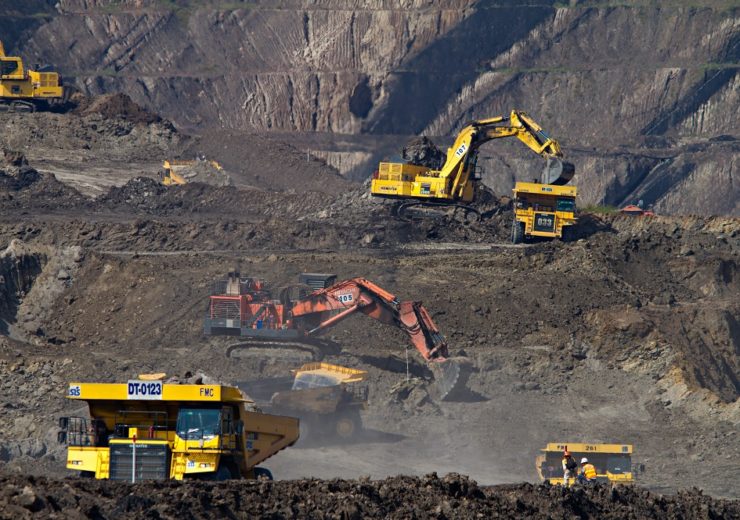
Mining and quarrying also played a major role, helped by strong activity in the gold sector at a time when global bullion prices remain elevated.
Ghana’s gold industry has become increasingly important to the country’s external sector, supporting export earnings, foreign exchange inflows and fiscal revenues.
The strong first-quarter performance therefore suggests that the extractive sector continues to provide critical support to national output, even as policymakers seek to diversify growth beyond commodities.
Trade and transport activity also contributed to the expansion, pointing to improving commercial movement, supply-chain activity and business operations across the economy.
Crop production was also identified as one of the key drivers, highlighting the continued importance of agriculture to growth, employment and household incomes.
However, the data also showed weaknesses in some parts of the economy.
The weakest-performing sub-sectors included fishing, which contracted by 18.50 percent, accommodation and food services, which declined by 13.60 percent, water and sewerage, which fell by 3.70 percent, real estate, which contracted by 3.20 percent, and health and social work, which declined by 1.00 percent.
The contraction in accommodation and food services suggests that parts of the hospitality economy may still be struggling, despite broader recovery in services.
The sharp decline in fishing also raises concerns about the sustainability and productivity of Ghana’s fisheries sector, which continues to face pressure from illegal fishing, declining fish stocks, high operating costs and climate-related vulnerabilities.
The weakness in real estate points to possible pressure from high construction costs, financing constraints and affordability challenges.
Still, the overall growth figure gives government and policymakers some room for optimism.
A 6.40 percent expansion in the first quarter suggests that Ghana’s recovery may be running ahead of earlier expectations, particularly if growth momentum is sustained through the rest of the year.
The figures also come at a time when government is seeking to consolidate fiscal discipline, protect macroeconomic stability and rebuild confidence among investors and development partners.
For the Bank of Ghana, stronger growth must be balanced against the need to keep inflation expectations anchored, especially as renewed food price pressures threaten to complicate the disinflation path.
For the Ministry of Finance, the growth numbers provide evidence that fiscal consolidation has not completely choked economic activity. However, the challenge will be to ensure that growth becomes more inclusive and translates into jobs, incomes and improved living conditions.
This is particularly important because recent assessments by development institutions have warned that unemployment, youth joblessness and inequality remain major concerns despite improving headline indicators.
The first-quarter growth performance therefore tells two stories.
On one hand, Ghana’s economy is expanding strongly again, supported by services, mining, trade, transport and agriculture.
On the other hand, the recovery remains uneven, with parts of the economy still contracting and many households yet to fully feel the benefits of macroeconomic stabilisation.
Government must sustain fiscal discipline while investing in sectors that can create jobs, raise productivity and strengthen domestic value addition.
That means supporting agro-processing, manufacturing, mining services, digital services, transport infrastructure and small and medium-sized enterprises.
It also means addressing structural weaknesses in sectors such as fishing, hospitality and real estate so that the recovery does not become overly dependent on a narrow group of sectors.
For now, the latest GDP figures offer a positive signal.
Ghana’s economy is growing again at a strong pace.
The deeper test is whether that growth can be sustained, broadened and converted into jobs and income gains for ordinary Ghanaians.

