

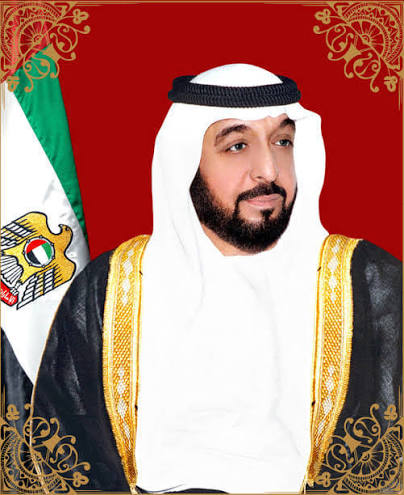

- Sheikh Mohamed Bin Zayed Pardons Abdul Rahman Al-Qaradawi After UAE Conviction
United Arab Emirates President Sheikh Mohamed bin Zayed Al Nahyan has pardoned Egyptian-Turkish poet and activist Abdul Rahman Yusuf al-Qaradawi, days after an Abu Dhabi court sentenced him to 10 years in prison and imposed a fine of AED200,000, equivalent to about US$54,452.
The state-run Emirates News Agency confirmed the pardon on September 4, saying the necessary procedures had been initiated to implement the presidential decision. Qaradawi had been convicted by the Cybercrime Circuit of the Abu Dhabi Federal Court of Appeal on August 27.
The decision represents a sharp turn in a case that had attracted criticism from international human rights organisations and United Nations experts over Qaradawi’s extradition from Lebanon, his detention in the UAE and the broader implications for freedom of expression.
Qaradawi was detained in Lebanon in January after both Egypt and the UAE sought his extradition. Lebanese authorities subsequently acted on the Emirati request and transferred him to the UAE on January 8.
The case stemmed from a video recorded during a visit to Syria in which he criticised authorities in Egypt, the UAE and Saudi Arabia. His transfer to the UAE subsequently became the focus of sustained criticism from rights organisations that questioned whether the extradition process met international legal standards.
Middle East Eye reported that Qaradawi was not publicly accounted for for more than 200 days after his extradition, prompting human rights groups and UN experts to raise concerns about his whereabouts and legal status. Amnesty International also criticised the extradition, arguing that it violated due-process guarantees and the principle of non-refoulement.
UN experts separately warned that international mechanisms used to pursue critics across borders could be abused by governments to suppress dissent. Those concerns placed Qaradawi’s case within a broader debate over the use of extradition, cybercrime legislation and national-security frameworks against political activists operating outside their home countries.
The presidential pardon removes the immediate prison sentence but does not erase the controversy surrounding the legal process that preceded it.
That distinction matters because pardons are exercises of executive clemency rather than judicial findings that a conviction was invalid. The case therefore leaves unresolved wider questions about the circumstances of Qaradawi’s extradition, the basis of the prosecution and the extent to which political speech conducted across borders can expose activists to criminal liability in other jurisdictions.
Samar Elhussieny, executive director of the Egyptian Human Rights Forum, welcomed the decision and called for Qaradawi’s release procedures to be completed quickly so that he could reunite with his family.
Qaradawi is a prominent Egyptian poet and opposition activist who supported the 2011 uprising that ended Hosni Mubarak’s decades-long rule. He was associated with the Kefaya opposition movement and later worked on Mohamed ElBaradei’s political campaign before relocating to Turkey after facing restrictions on his media appearances and publications in Egypt.
He is also the son of the late Yusuf al-Qaradawi, one of the Arab world’s most influential Islamic scholars, who died in Qatar in 2022.
The younger Qaradawi’s profile made the case politically sensitive from the beginning. His criticism of several Arab governments, combined with his opposition activism and family background, ensured that the legal proceedings attracted attention well beyond the UAE.
The pardon may ease some of the immediate diplomatic and human-rights pressure surrounding the case, but it does not necessarily settle the wider policy debate.
Governments across the region have increasingly relied on cybercrime and online-content laws to regulate speech conducted through digital platforms. Supporters argue such laws are necessary to address disinformation, incitement and online abuse, while critics warn that broadly drafted provisions can also be used against political expression and dissent.
Qaradawi’s case sits directly within that tension.
His conviction followed statements made outside the UAE but deemed actionable within the country’s legal framework, raising questions about the reach of domestic cybercrime laws when speech crosses borders through digital platforms.
The presidential intervention has therefore changed the personal outcome for Qaradawi without fully resolving the institutional issues raised by his prosecution.
For human-rights advocates, the immediate priority is his release and reunion with his family. For governments and legal observers, however, the episode is likely to remain part of a wider debate over extradition, freedom of expression and the increasingly transnational reach of cybercrime legislation.
For now, the most consequential development is clear: a 10-year prison sentence imposed only days earlier has been set aside through presidential clemency, bringing an abrupt change to one of the region’s most closely watched activist cases.

