


- South Africa, France and Argentina Top List of Best 2026 FIFA World Cup Jerseys
The FIFA World Cup is often remembered for goals, heartbreaks and histoic performances, but every tournament also produces another passionate debate: which nation has the best jersey?
Ahead of the 2026 FIFA World Cup, manufacturers have taken bold creative risks, producing a mix of striking designs, cultural references and controversial kits that have divided football fans. According to a ranking released by Sports Mole, South Africa, France and Argentina have emerged among the standout nations for jersey design.
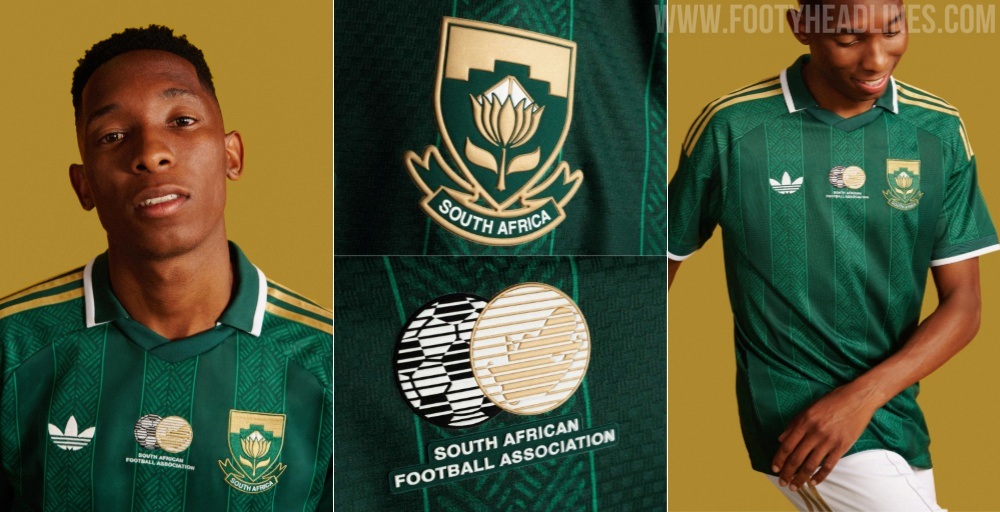
South Africa’s away jersey has been widely praised as one of the most impressive designs of the tournament.
The lush green shirt is elevated by detailed traditional patterns and the familiar green-and-gold colour combination long associated with South African sport. Adidas also included the King Protea, South Africa’s national flower, beside the federation crest, giving the design a strong cultural identity.
Reviewers said the jersey succeeds because it combines heritage and modern football fashion without becoming visually excessive. The result is a shirt many fans believe could become a collector’s item, not only for South Africans but also for neutral football supporters.
France also impressed with kits described as a masterclass in retro-modern design.
The French home jersey features a deep blue base with chevron patterns and a vintage-inspired collar, evoking memories of classic French football shirts. The away jersey takes a more symbolic approach, using a teal shade inspired by the Statue of Liberty, which France gifted to the United States, one of the host nations of the 2026 World Cup, in 1884.
The design has been praised for blending football, fashion and history while preserving France’s reputation for elegance and sophistication in tournament kits.
Defending world champions Argentina also earned widespread praise for their away jersey, which features swirling blue floral patterns layered across the country’s traditional colours.
Although the shirt was released earlier, its popularity has remained strong. The design has been praised for allowing the artistic print to dominate while keeping the collar simple and understated, producing a bold but elegant look.
South Korea and Japan were also highlighted for bold creativity.
South Korea’s bright red home jersey reflects the team’s energy and intensity, while its away kit has generated attention for its soft lavender colours, floral motifs and flowing high-fashion feel. Critics praised the design for being artistic without losing the country’s football identity.
Japan, meanwhile, took one of the biggest creative risks with an away jersey featuring soft pastel colours and twelve multicoloured stripes instead of the country’s traditional shades.
The design has split opinion, but many believe its experimental character makes it distinctively Japanese and likely to gain cult status among football shirt collectors.
Not every country received favourable reviews.
Switzerland were criticised for an away jersey featuring neon-style patterns that reviewers compared to “highlighter scribbles,” with critics arguing that the design looked messy rather than modern.
Turkey were also judged to have played it too safe with a plain white shirt, thick red stripe and oversized national flag at the centre. Reviewers described the jersey as functional but lacking imagination.
Spain’s traditional red-and-yellow home jersey was criticised for awkward blue accents on the sleeves, shorts and socks, while Croatia disappointed some supporters after its famous checkerboard pattern was hidden beneath a heavy blue overlay.
Paraguay also came under criticism for overcomplicated stripes, blurry pink-leaning lines and clashing blue trim, with one reviewer comparing the overall look to “supermarket-brand crab sticks.”
The debate shows how World Cup jerseys have become more than sporting uniforms.
They are now cultural products, fashion statements and commercial assets, capable of shaping national image and driving merchandise sales long before the first ball is kicked.
On that measure, South Africa, France and Argentina appear to have won the early fashion battle of the 2026 FIFA World Cup.

